Key Takeaways
- GalaxEye, an Indian space-tech startup, has obtained a US patent for its OptoSAR satellite imaging technology.
- The technology merges optical imaging and Synthetic Aperture Radar (SAR) for comprehensive Earth observation.
- GalaxEye plans to launch a 30-satellite constellation to enhance global Earth-monitoring capabilities.
GalaxEye’s Breakthrough in Satellite Imaging Technology
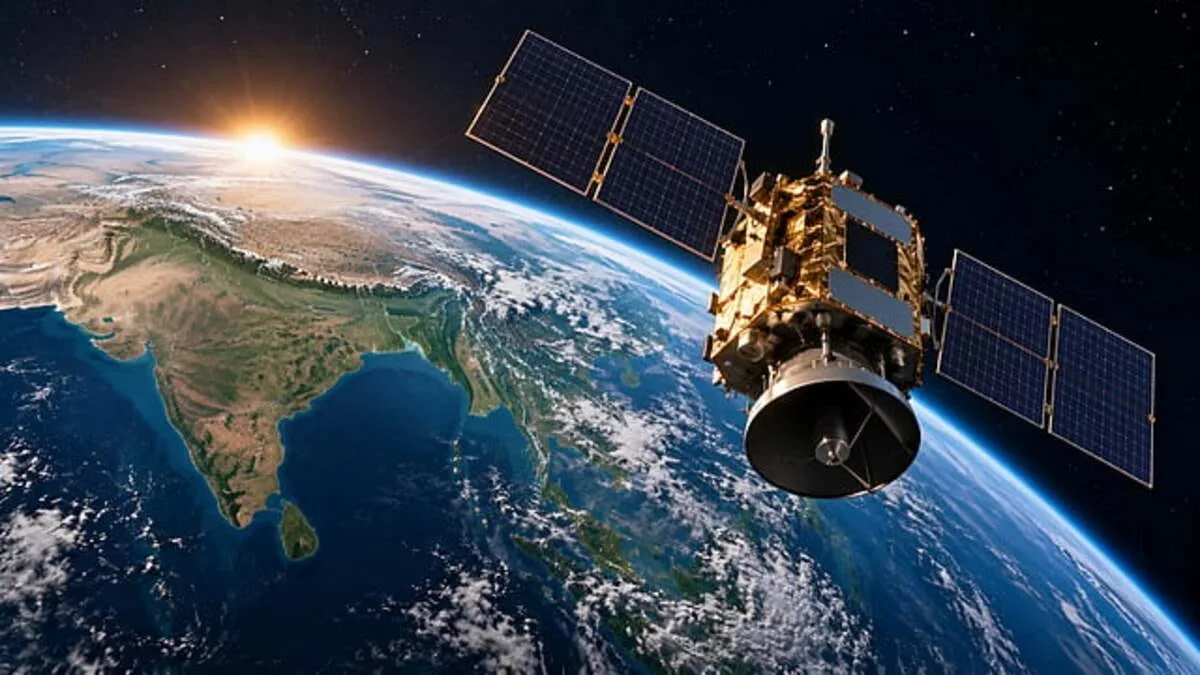
Indian space-tech startup GalaxEye has announced a significant achievement by securing a US patent for its innovative OptoSAR satellite imaging technology. This development marks a crucial milestone for India’s burgeoning private space and deep-tech industries. OptoSAR uniquely combines optical imaging with Synthetic Aperture Radar (SAR) on a single spacecraft, allowing for simultaneous data collection from both sensors. This synergistic approach aims to deliver a more comprehensive and reliable representation of Earth’s surface by leveraging the advantages of each technology.
Traditional optical imaging relies on sunlight, limiting its effectiveness during nighttime or cloudy weather. In contrast, SAR operates using microwave signals, enabling it to capture imagery regardless of lighting conditions or cloud cover. By integrating both capabilities, GalaxEye’s OptoSAR technology is poised to offer a spatially and temporally aligned view of Earth, providing enhanced monitoring of land use, disaster management, and environmental changes.
The potential applications for this technology are vast, encompassing sectors such as defense, agriculture, disaster response, insurance, and infrastructure monitoring. For defense agencies, the combination of optical and radar imagery ensures consistent surveillance under varying weather conditions. In agriculture, it can facilitate monitoring of land conditions, crucial for timely interventions. SAR’s ability to penetrate clouds becomes particularly valuable during natural disasters when traditional optical satellites may fail to deliver critical imagery.
Despite a recent setback in the form of the loss of their spacecraft during Mission Drishti—a mission aimed at demonstrating the OptoSAR concept—GalaxEye remains focused on its broader vision. The company has ambitious plans to establish a constellation of 30 satellites over the next five years. This satellite array would markedly enhance monitoring frequency and deliver more current Earth-observation data to users.
Achieving this vision would position GalaxEye as a notable player in the global Earth-observation market and bolster India’s reputation as a key developer of advanced commercial space technologies. The US patent awarded to GalaxEye is an important strategic step, providing legal protection for its unique technological framework in the US market and reinforcing its intellectual property as it seeks collaborations and opportunities for commercialization.
Overall, GalaxEye’s advancements reflect a significant shift within India’s space sector toward indigenous innovation and a competitive edge in global space technology markets. The ongoing growth of private space enterprises indicates a bright future for India’s contributions to satellite technology and Earth observation. As GalaxEye pushes forward, it stands at the crossroads of progress, potentially allowing for enhanced capabilities in global Earth monitoring.
The content above is a summary. For more details, see the source article.