


Key Takeaways
- The 2026 Crop Robotics landscape report identifies 400 companies, a 25% increase since 2024, reflecting a dynamic and competitive market.
- Notable growth is observed in spraying and weeding technologies, with major equipment manufacturers investing in startups.
- Harvesting remains a significant challenge in crop robotics, but labor shortages and rising costs are accelerating innovation in the sector.
Trends in the Crop Robotics Market
The agrifood innovation hub, The Mixing Bowl, has released its latest Crop Robotics landscape report, which highlights the ongoing “robotic revolution” in agriculture. Originally launched in 2022, this landscape now tracks developments across 15 segments, including weeding, harvesting, tractors, and scouting. It notably excludes nursery and post-harvest areas.
The report reveals the presence of 400 companies in the 2026 Crop Robotics landscape, showing a considerable 25% growth since 2024. However, Chris Taylor, a partner at The Mixing Bowl, notes that around 20% of these companies were not present last year, highlighting continuous churn. Furthermore, over a third of those listed this year are newcomers, pointing to a highly active but challenging innovation landscape.
Europe dominates the landscape, housing half of the tracked companies, while the U.S. takes the lead among individual countries, representing 18%, with California alone accounting for more than 40% of these firms.
Investment trends in this sector, although not as high as in 2021, remain steady. The companies included in the report have collectively secured $600 million in funding across various stages, from seed rounds to substantial raises exceeding $100 million.
Key Areas of Growth
Spraying and weeding technologies are experiencing substantial growth and are increasingly popular among investors. Ben Palone from Western Growers emphasized the progress in commercialization and adoption within these sectors during the recent report launch event. The emergence of market competition in weeding is even causing shifts in business models among various companies.
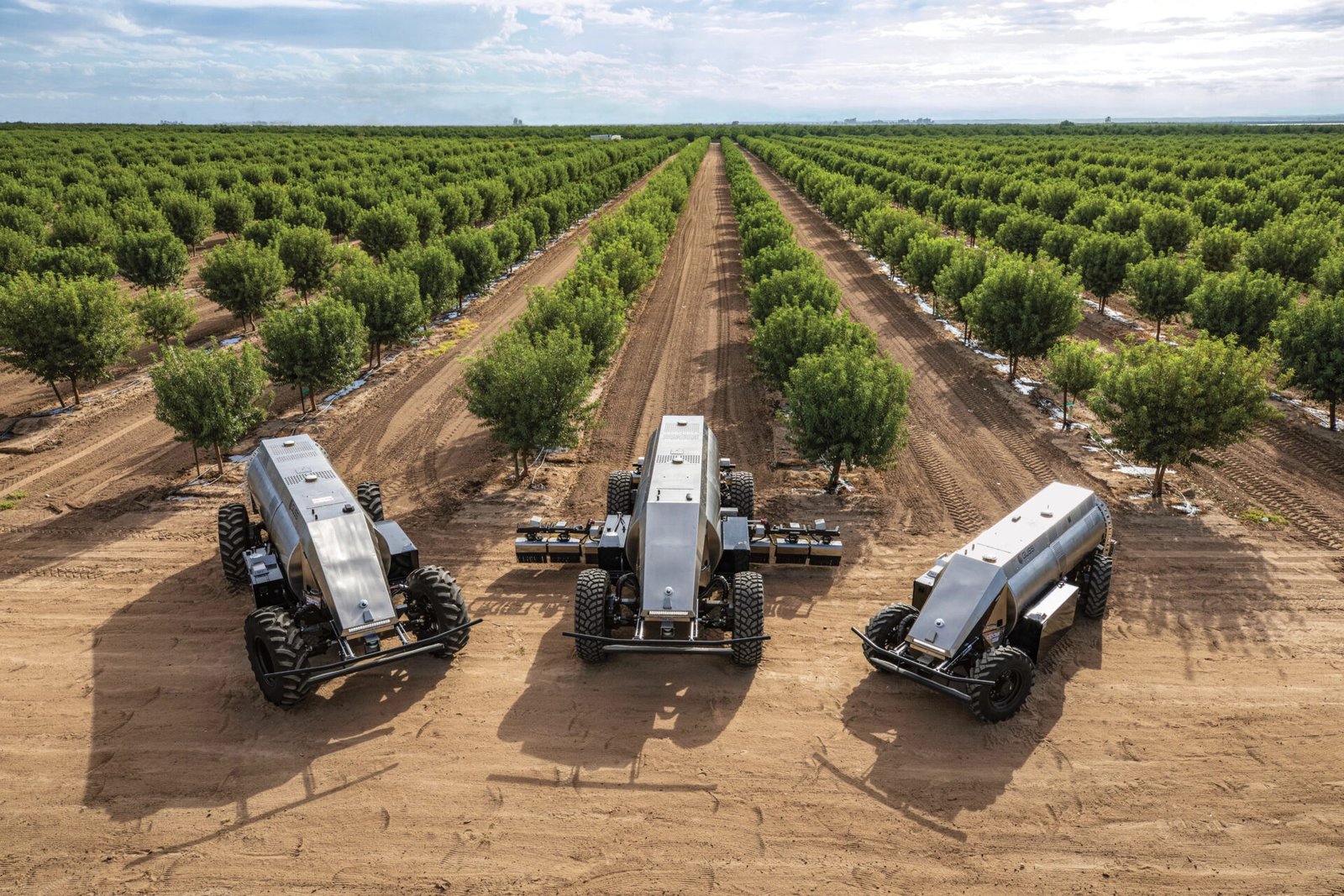
Major equipment manufacturers, including Yamaha, Deere, Caterpillar, and Kubota, are actively engaging with the robotics sector through acquisitions and partnerships with startups. For instance, Kubota recently invested in the precision sprayer startup Kilter, while Deere acquired GUSS, a maker of semi-autonomous sprayers, and has a $10 million partnership with ag robotics incubator Reservoir.
Taylor observes that these Original Equipment Manufacturers (OEMs) recognize the sector’s potential and are exploring diverse strategies from mergers and acquisitions to partnership arrangements.
In addition, some well-funded startups are progressively acquiring smaller companies; examples include Bonsai Robotics absorbing Farm-ng and FarmX acquiring AMOS Power. Taylor points out that these activities indicate a capital and talent consolidation rather than market maturity.
Challenges and Future Outlook
Despite advances, harvesting remains the most intricate and challenging aspect of crop robotics. Taylor notes that this area still lags behind other sectors but is regarded as the “holy grail” of agricultural innovation. The technical challenges include the need for machines to accurately identify, locate, and harvest crops without causing damage, requiring a complex integration of technologies tailored for specific crops.
External factors, including labor shortages, rising input costs, and evolving regulations regarding crop protection, are accelerating the push towards robotics solutions. Technologies, particularly AI, are anticipated to drive future advancements, improving the speed of development and application in agricultural settings. Taylor emphasizes that innovations in machine learning and computer vision are integral to distinguishing crops from weeds and suggests that upcoming changes will enhance the predictive capabilities of farming machines.
As the sector evolves, crop robotics is set to remain both a beneficiary and a catalyst for advancements in agricultural technology.
The content above is a summary. For more details, see the source article.









