


Key Takeaways
- Research highlights the growing risk of compound solar and wind droughts in Australia due to climate change.
- Studies indicate a worldwide increase in extreme power shortages for wind-solar systems from 1980 to 2022.
- Climate impacts are seen as critical factors influencing the reliability of renewable energy sources globally.
Understanding the Impact of Climate Change on Renewable Energy
Research conducted by Richardson, Pitman, and Ridder sheds light on the increasing risk of simultaneous solar and wind droughts across Australia, which result from compounded climate variations. These droughts pose significant challenges for the reliability of renewable energy resources in the region.
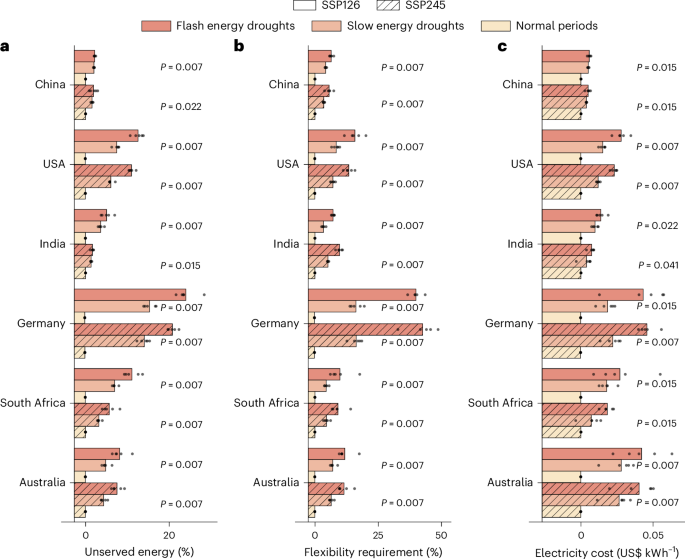
The phenomenon of compound droughts—when both solar and wind energy outputs decline concurrently—has been observed to increase, raising concerns about energy security. These events compel a reevaluation of current energy strategies, especially in light of predictions that such occurrences may escalate under future climate scenarios.
Moreover, a comprehensive analysis by Zheng et al. covers a global perspective, indicating a marked rise in extreme power shortage events related to wind and solar energy systems from 1980 to 2022. This upward trend emphasizes the urgent need for innovative approaches to energy management, particularly in areas dependent on intermittent renewable resources.
In addition to these findings, various studies have examined the broader implications of climate change on energy infrastructures. Research illustrates that urban density and extreme weather events complicate the energy transition in the European Union, as highlighted by Perera and colleagues. Such findings suggest a need for integrated strategies that encompass urban planning and renewable energy development.
The collective insights from these studies underscore that climate variability is a crucial factor affecting the operational reliability of renewable energy sources, complicating efforts to meet energy demands. It raises critical questions about the future of energy reliance on wind and solar sources, suggesting that policymakers and stakeholders must adapt their strategies to mitigate the impacts of climate-induced fluctuations.
There is a consensus among researchers that enhancing climate resilience in renewable energy systems is imperative. As nations work towards carbon neutrality and sustainable energy practices, understanding the nexus between climate trends and energy production will be vital. Strategies such as energy storage improvements and diversification of energy sources can play significant roles in reinforcing the stability of renewable energy systems against climate fluctuations.
In summary, ongoing research presents a complex picture where climate change significantly challenges the efficacy of renewable energy sources. Continuous adaptation and innovative energy solutions are pivotal to thriving in a changing climate while pursuing sustainable energy goals.
The content above is a summary. For more details, see the source article.









