Key Takeaways
- Cool marine air caused a significant layer of clouds over western Washington and Oregon in mid-September 2026.
- The MODIS satellite captured images showing the cloud coverage and smoke from wildfires in the North Cascades.
- While skies cleared by the afternoon of September 19, marine clouds persisted along the Oregon coast due to cooler temperatures.
Cloudy Conditions in the Pacific Northwest
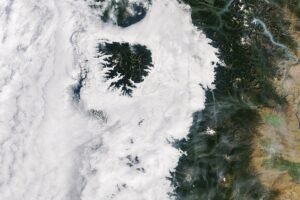
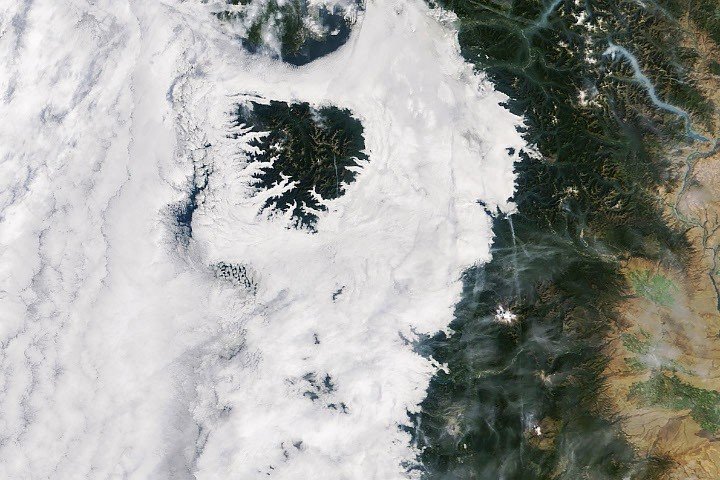
In mid-September 2026, a cool marine air mass rolled in from the Pacific Ocean, creating an impressive layer of morning clouds over western Washington and Oregon. Low-lying stratus clouds and fog extended inland, reaching the Cascade Range’s western foothills. The taller peaks of the Olympic Mountains and the Oregon Coast Range emerged above this cloud layer, giving them an island-like appearance.
On September 19, 2026, NASA’s Terra satellite utilized its Moderate Resolution Imaging Spectroradiometer (MODIS) to capture the extent of these cloud formations, clearly showing an expansive cloud cover across the Pacific Northwest. The images taken at about 10:45 a.m. PT (17:45 UTC) displayed not only the clouds but also smoke from ongoing wildfires filling the valleys in the North Cascades.
According to the National Weather Service, a series of nights featured marine air flowing onshore, resulting in low-level clouds, known as marine stratus. These clouds form when moist air near the ground is trapped under a warmer air layer, leading to cooling that condenses the water vapor. The impact of the cool, moist conditions was particularly prominent early on September 19, where extensive cloud cover reached up to the Cascade foothills, creating foggy conditions in some areas.
Later that day, when NASA’s Aqua satellite passed over at around 4:15 p.m. PT (23:15 UTC), skies had cleared considerably across the region. Nonetheless, some marine clouds lingered along the Oregon coast, where temperatures remained cooler compared to inland areas.
This weather pattern highlights the dynamic atmospheric conditions characteristic of the Pacific Northwest, emphasizing the interplay between marine influences and local geography.
The content above is a summary. For more details, see the source article.