


Key Takeaways
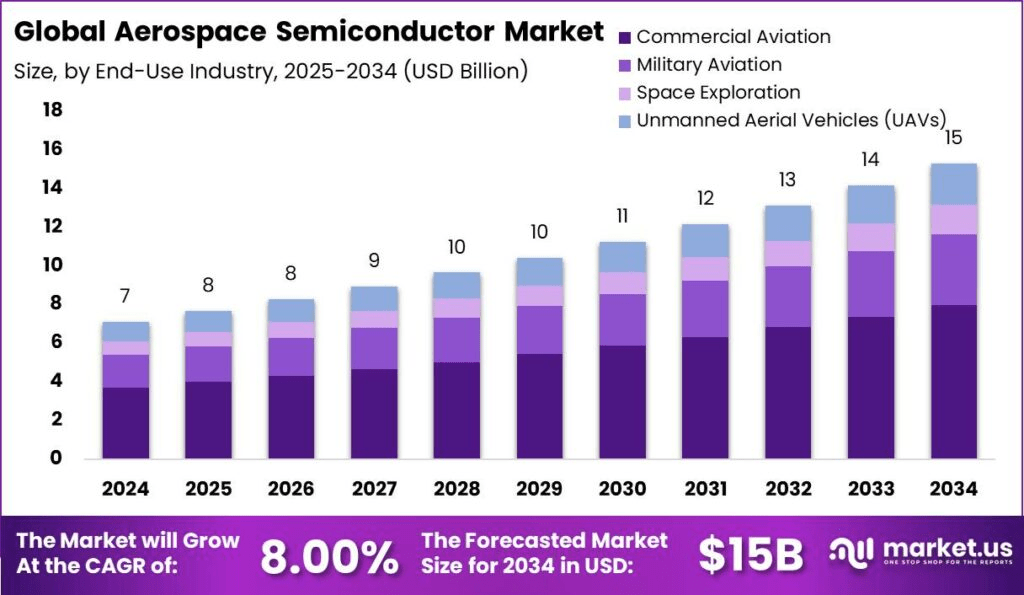
- The Global Aerospace Semiconductor Market is set to grow from USD 7.1 billion in 2024 to USD 15 billion by 2034.
- This growth is anticipated at a CAGR of 8.0% between 2025 and 2034, particularly driven by advancements in avionics and space technology.
- North America leads the market with a 38% share in 2024, generating USD 2.6 billion, spurred by strong defense budgets and commercial aircraft production.
The Global Aerospace Semiconductor Market is expected to expand significantly, increasing from USD 7.1 billion in 2024 to approximately USD 15 billion by 2034. This growth is projected at a compound annual growth rate (CAGR) of 8.0% during the period from 2025 to 2034. Key factors driving this market include an increased demand for high-performance semiconductors utilized in avionics, satellite communications, and defense applications. The adoption of advanced technologies such as AI-driven flight controls and autonomous aircraft further fuels this demand.
In 2024, North America captured a dominant market position, contributing over 38%, equivalent to about USD 2.6 billion in revenue. The United States alone accounted for USD 2.5 billion, with an expected growth rate of 6.2%. The region’s strong electronics sector is bolstered by significant defense budgets, a rise in commercial aircraft production, and substantial investments in space exploration initiatives. This concentration of aerospace and semiconductor manufacturers, along with government backing for cutting-edge military and satellite technologies, solidifies North America’s leadership in the market.
The aerospace semiconductor sector is energized by growing pressures for enhanced connectivity and streamlined operations, as space exploration and advanced avionics demand smaller, efficient, and reliable components. Innovations directed at creating semiconductors that adhere to strict aerospace standards are crucial. There is a surge in demand for technologies that bolster computational capabilities in applications like digital twins and augmented reality. The integration of radiation-hardened semiconductors is also rising, as they are pivotal for equipment used in outer space.
Market players are poised to benefit from the growing need for sophisticated electronic systems across commercial and military aircraft as well as satellite missions. The sector is, therefore, an attractive opportunity for companies that design and manufacture these essential components, allowing them to tap into new revenue streams.
Looking ahead, significant investment prospects are predicted in the development of innovative semiconductor solutions tailored to the aerospace industry’s evolving needs, including miniaturization, enhanced power management, and reliability in extreme conditions. Regulatory frameworks governing the safety and performance of semiconductor components remain stringent, ensuring high standards across this vital industry. As this landscape evolves, the need for reliable semiconductors will underpin advancements across aviation, defense, and space exploration sectors.
The content above is a summary. For more details, see the source article.









