Key Takeaways
- Anak Krakatau volcano in Indonesia erupted in early September 2026, disrupting air traffic and affecting air quality.
- Nearly 3,000 flights were canceled, prompting temporary airport closures due to ash clouds reaching altitudes of up to 15,000 meters.
- The eruption subsided by September 6, but Anak Krakatau remained at a high alert level as sporadic volcanic activity continued.
Volcanic Activity Disrupts Air Travel in Indonesia
Anak Krakatau, a small volcano situated between the Indonesian islands of Java and Sumatra, erupted dramatically in early September 2026. While normal activity remains mild, this event presented a significant threat, with an explosive eruption that lasted over 24 hours, sending gas and ash into the atmosphere. This eruption significantly impacted air travel, forcing airport closures in the region and degrading air quality, particularly in Jakarta.
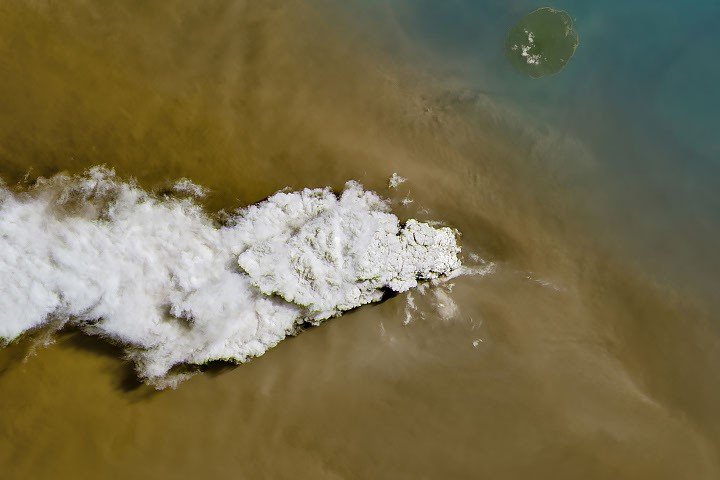
During the eruption on September 5, satellite imagery from NASA confirmed vigorous activity. The Operational Land Imager (OLI) on Landsat 8 captured images showing a notable plume of volcanic gas emerging from a brown ash cloud. A broader view from the Visible Infrared Imaging Radiometer Suite (VIIRS) indicated the dispersal of volcanic materials over a large area.
Indonesia’s meteorological agency reported that ash clouds reached impressive heights—up to 6,000 meters (20,000 feet) to the east and up to 15,000 meters (50,000 feet) to the west of the volcano by September 6. The resultant ash prompted the temporary closure of eight airports across Java and Sumatra, disrupting approximately 3,000 flights and leaving many travelers stranded.
Areas to the east of Anak Krakatau, particularly Jakarta and regions in West Java, experienced significant ashfall. The Indonesian Humanitarian Coordination Platform (IHCP) advised that the volcanic ash poses serious health risks, including irritation to the respiratory system, skin, and eyes. Notably, the type of ash differs from smoke generated by peatland fires, in terms of particle characteristics and required protective measures.
By September 6, the eruption’s intensity began to decrease, although the volcano continued to emit low-level activity. It transitioned to a Strombolian eruption pattern, characterized by non-continuous bursts of ash and volcanic material. As the volcanic activity calmed, airport operations resumed by September 8. However, Anak Krakatau remained at the second-highest alert level, where it has been since early July, indicating ongoing potential for further eruptions.
Overall, the event underscores the volatility of Anak Krakatau and highlights the importance of monitoring volcanic activity in mitigating risks to public health and air travel in Indonesia. The situation continues to evolve, requiring updated assessments from relevant authorities.
The content above is a summary. For more details, see the source article.