


Key Takeaways
- The U.S. Army aims to enhance autonomy in missile defense systems by incorporating artificial intelligence (AI) solutions.
- Plans include integrating robotic systems to reduce manpower and streamline operations for the Golden Dome missile defense architecture.
- The Army is collaborating with AI firms and adapting lessons from the Guam Defense System to achieve these goals by 2027.
Army’s AI Integration in Missile Defense
The U.S. Army is actively pursuing the integration of artificial intelligence to increase autonomy and decrease the reliance on personnel for managing the Golden Dome missile defense framework, a system advocated by former President Donald Trump. In an interview at the Association of the U.S. Army’s Global Force Symposium in Huntsville, Alabama, Maj. Gen. Frank Lozano detailed ongoing efforts to adapt the Army’s capabilities for the upcoming air and missile defense architecture for Guam as they relate to Golden Dome.
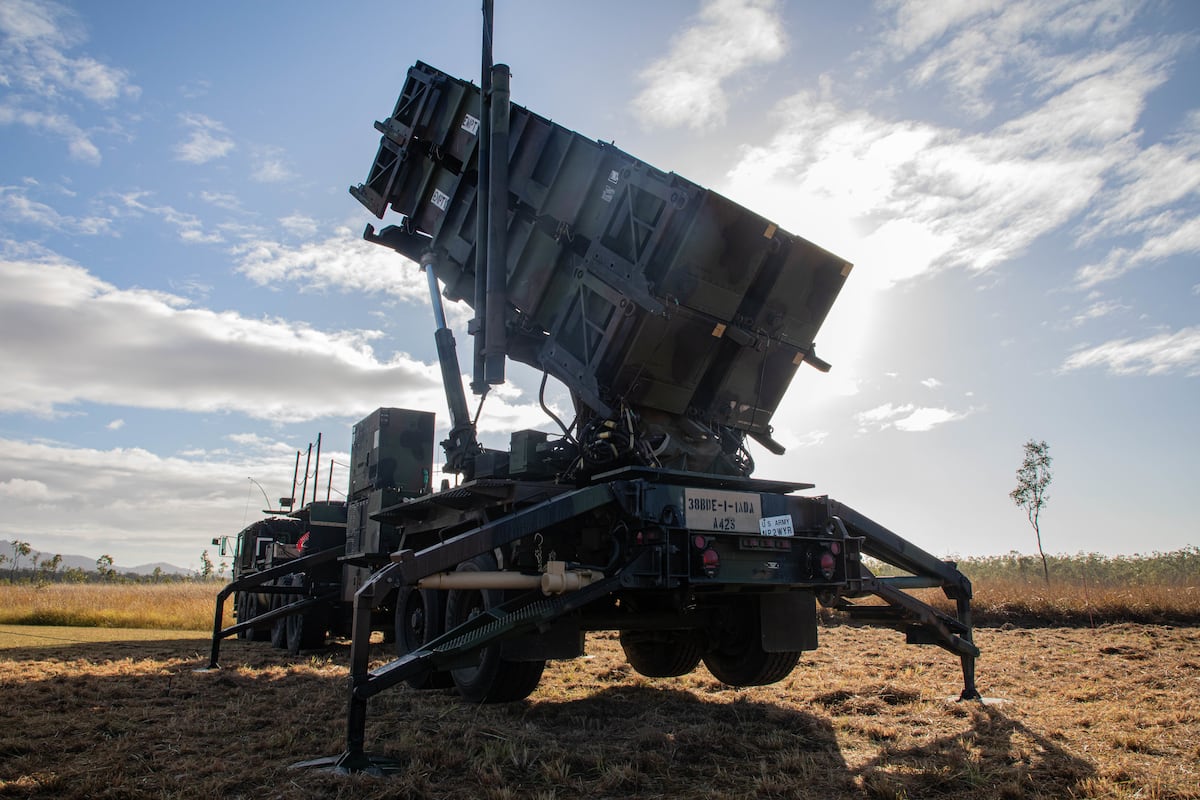
The Army’s contributions to the Guam Defense System include advanced radar technologies, the emerging Indirect Fire Protection Capability, and the new Integrated Battle Command System (IBCS). As part of this process, Lozano highlighted three primary objectives: integrating AI-enabled fire control systems, enhancing remote operation capabilities, and developing autonomously operated systems. Currently, each missile launcher typically requires a crew of two to three soldiers. The envisioned design for Golden Dome could involve containerized missiles or underground missile installations, which would necessitate less frequent maintenance and allow for status checks only every few weeks.
To advance such capabilities, the Army will leverage insights gained from the developmental stages of the Guam Defense System, targeted for operational readiness around 2027. Additionally, the Army’s Integrated Fires Test Campaign (IFTC) will pivot from incremental testing of the Guam architecture to prioritizing the incorporation of autonomy and AI technologies for Golden Dome beyond 2026. This transition is expected to culminate in the 2026 IFTC, which is considered a critical milestone.
Lozano explained that the Army will first focus on clearly defining the functions human operators perform at fire control centers and launching stations. This includes identifying the data sources that facilitate decision-making. A critical component will involve developing an algorithmic framework that processes data to inform human decisions while ensuring that significant decisions return to the operator for approval.
For the first time, the Program Executive Office Missiles and Space is engaging with new entrants in the AI market. This includes meetings with French defense contractor Safran, which is considering expanding into the U.S. Safran has significant involvement in various Army missile programs. Lozano expressed the need to minimize human interventions in automated processes, such as ensuring synchronization with satellite timing data.
The Army is also exploring partnerships with innovative companies, such as Anduril, which recently acquired Numerica, the provider of the IBCS fire control software. Discussions with Anduril involve integrating more AI functionalities into the Army’s missile defense command-and-control systems.
Over the next six to nine months, the Army plans to refine its objectives from industry collaborators and will initiate industry days to gather further information and proposals. This strategic approach aims to establish a collaborative environment that fosters advancements in missile defense automation and effectiveness.
The content above is a summary. For more details, see the source article.









