


Key Takeaways
- A Black Hawk crew may not have received crucial air traffic control messages before colliding with a commercial jet at Reagan National Airport.
- The NTSB indicated potential inaccuracies in the helicopter’s cockpit altitude data during the flight.
- All 64 passengers aboard the jet and three crew members of the Black Hawk perished in the collision.
Investigation Insights into the Collision
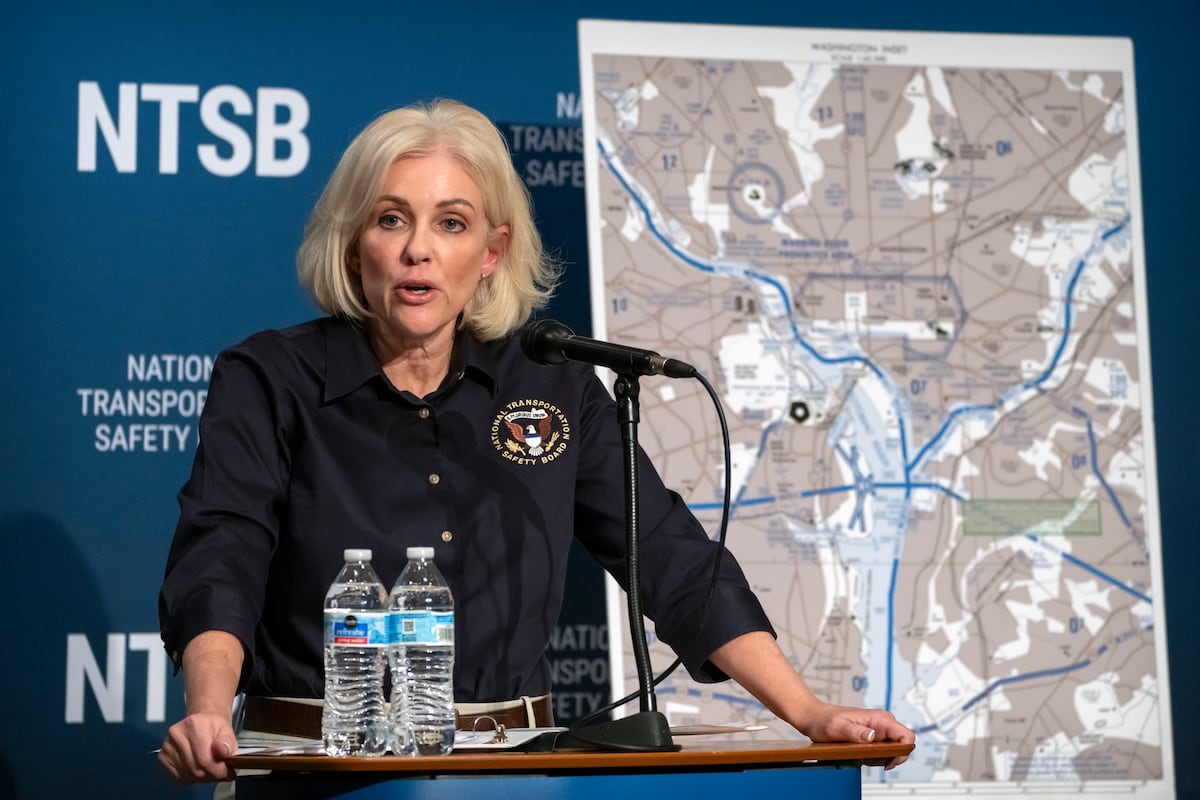
On January 29, a U.S. Army Black Hawk helicopter collided midair with an American Airlines jet near Reagan National Airport. Preliminary findings from the National Transportation Safety Board (NTSB) suggest that the helicopter crew may not have received critical air traffic control (ATC) messages instructing them to maintain distance from the commercial aircraft. At a media briefing, NTSB chair Jennifer Homendy stated that the investigation into the incident continues off-site after the on-scene portion has concluded.
The Black Hawk was engaged in a routine training flight when it collided with the American Airlines flight arriving from Wichita, Kansas. Tragically, all 64 individuals aboard the passenger jet and the three Black Hawk crew members—Chief Warrant Officer 2 Andrew Loyd Eaves, Captain Rebecca M. Lobach, and Staff Sergeant Ryan Austin O’Hara—lost their lives. The debris from the jet was found submerged and inverted in the Potomac River.
Homendy mentioned that there was no evidence that the helicopter crew could have foreseen the collision. During their flight, it is believed they were using night vision goggles, a requirement for the training exercise. NTSB officials noted that there is no record of a discussion among the crew about removing the goggles, which would have been necessary if they sought to fly without them.
In the moments leading up to the crash, radio transmissions from ATC indicated the presence of the jet circling at an altitude of 1,200 feet. Data from the cockpit voice recorder (CVR) of the Black Hawk suggest the crew may not have received the critical message. Approximately two minutes before the incident, the Black Hawk was instructed to keep track of another aircraft, which they reported as being in sight. However, recordings indicate that the specific instruction to pass behind the commercial jet might not have been conveyed to the Black Hawk crew due to a timing overlap where they were also transmitting.
Further complicating matters, the investigation has uncovered discrepancies in the altitude readings reported by the helicopter’s crew. Preliminary data indicated that the crew was uncertain about their altitude, reporting 300 feet while they were, in fact, at 278 feet at the time of impact. The NTSB is currently looking into why these conflicting altitude readings occurred and how it may have impacted the crew’s spatial awareness.
As part of the investigation, the NTSB plans to study the visibility conditions that the Black Hawk crew experienced while using night vision goggles. This analysis will ascertain whether or not the crew would have had the necessary visual cues to avoid the collision. Additionally, the investigation is keen on examining the helicopter’s systems for any faulty data that may have contributed to the accident.
The tragic event has spurred a thorough investigation as officials work with the helicopter’s manufacturers to delve into the technical factors involved. NTSB officials have emphasized the importance of accuracy and meticulousness in their investigative process to gather insights for their final report, which will address the critical questions surrounding altitude perception among the pilots and the effectiveness of communication among air traffic control.
The content above is a summary. For more details, see the source article.









