Key Takeaways
- Comet C/2024 G3 (ATLAS) may shine as brightly as Venus as it approaches Earth.
- Its closest approach to the sun is predicted for 13 January, with visibility for the northern hemisphere from 12 to 14 January.
- Brightening of the comet could be a sign of its survival through its orbit close to the sun.
Surprising Brightness of Comet C/2024 G3 (ATLAS)
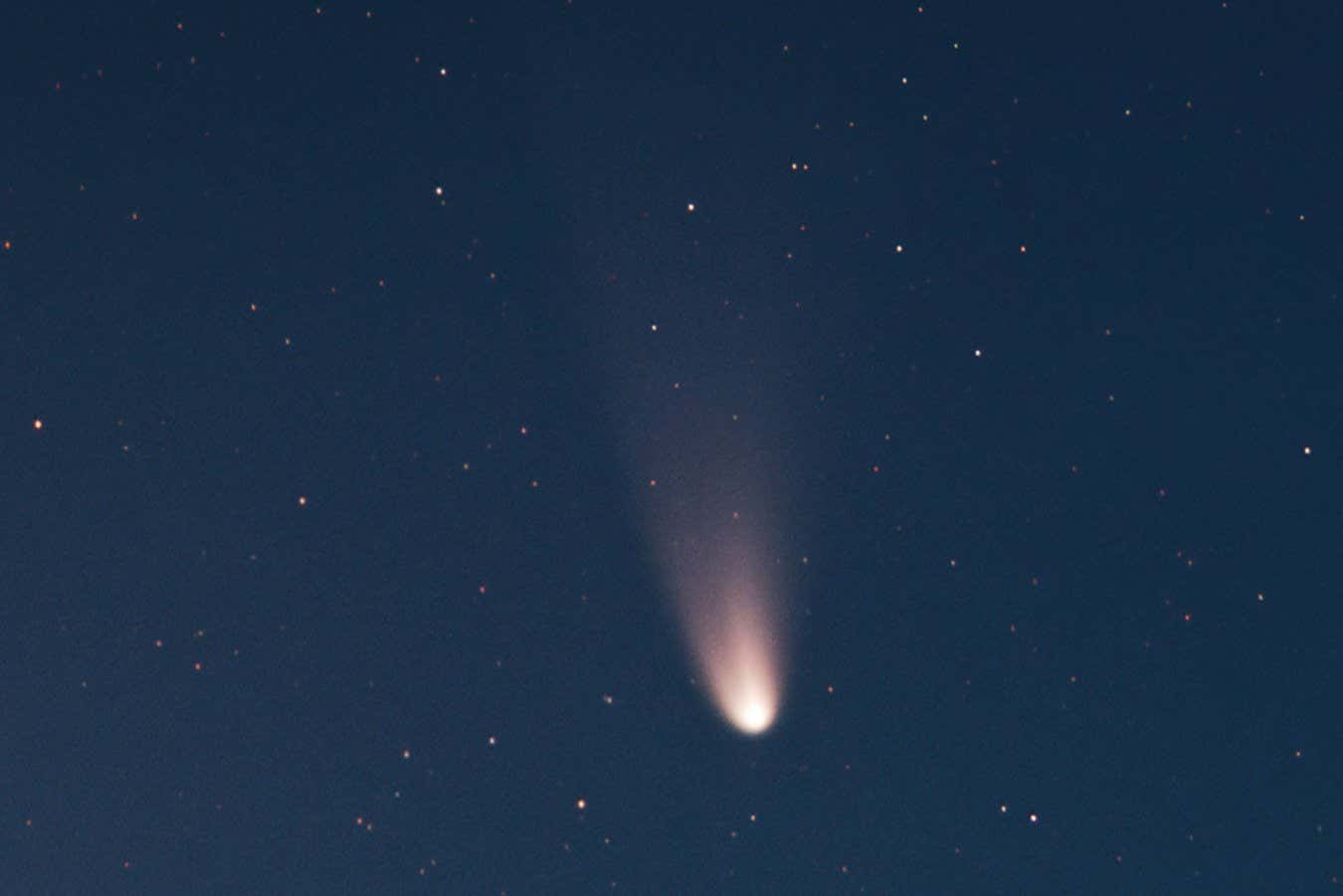
Comet C/2024 G3 (ATLAS) has captured the attention of astronomers and skywatchers alike as it approaches Earth with the potential to shine as brightly as Venus. Discovered in April 2023 by NASA’s Asteroid Terrestrial-impact Last Alert System when it was more than 600 million kilometers away, initial assessments suggested the comet would not survive its perihelion, or closest approach to the sun. However, new observations indicated a different trajectory that may allow the comet to endure for its close encounter with Earth.
This comet has a vast orbital period of 160,000 years, positioning it on a path that should become visible to those in the southern hemisphere. As it nears the sun, observers in the northern hemisphere with binoculars may also spot it during the last leg of its journey. Recent data have shown that C/2024 G3 is becoming brighter than initially expected. Although brightness can sometimes indicate disintegration, increasing luminosity could also suggest the comet is intact.
Despite uncertainties surrounding its eventual brightness, some astronomers believe C/2024 G3 may achieve visual prominence comparable to Venus. However, factors such as its distance from Earth and the intensity of sunlight could affect visibility, with concerns that the comet could be dimmed by the sun’s glare.
There is a slight chance that forward scattering, a phenomenon where dust from the comet may enhance its brightness, could negate this dimming. However, experts like meteorologist Joe Rao have indicated that these chances are limited.
For those hoping to view the comet, predictions by the Central Bureau for Astronomical Telegrams point to the peak brightness being observed when the comet reaches its closest approach to the sun on 13 January at 10:17 AM GMT. Shortly thereafter, C/2024 G3 will come closest to Earth, leading to a viewing opportunity from 12 to 14 January for those in the northern hemisphere.
The optimal time for viewing in the U.S. and Europe will be around half an hour before sunrise on 12 January, approximately 5 degrees above the horizon, providing excellent conditions for those equipped with binoculars. Additionally, there will be another chance to observe the comet around half an hour after sunset on 14 January.
As anticipation builds around C/2024 G3, it remains to be seen how bright this celestial visitor will truly be. With a rapid approach, stargazers are encouraged to keep an eye on updates from astronomers and prepare for what could be a remarkable display in the night sky.
The content above is a summary. For more details, see the source article.