Key Takeaways
- Deep Space Station 43 in Canberra, Australia, enables communication with Voyager 2, located nearly 13 billion miles away.
- A new antenna, Deep Space Station 33, is set to be completed by 2029 to enhance communication capabilities.
- This upgrade is part of NASA’s Deep Space Network Aperture Enhancement Program, which includes new antennas at various facilities.
Advanced Communication for Deep Space Exploration
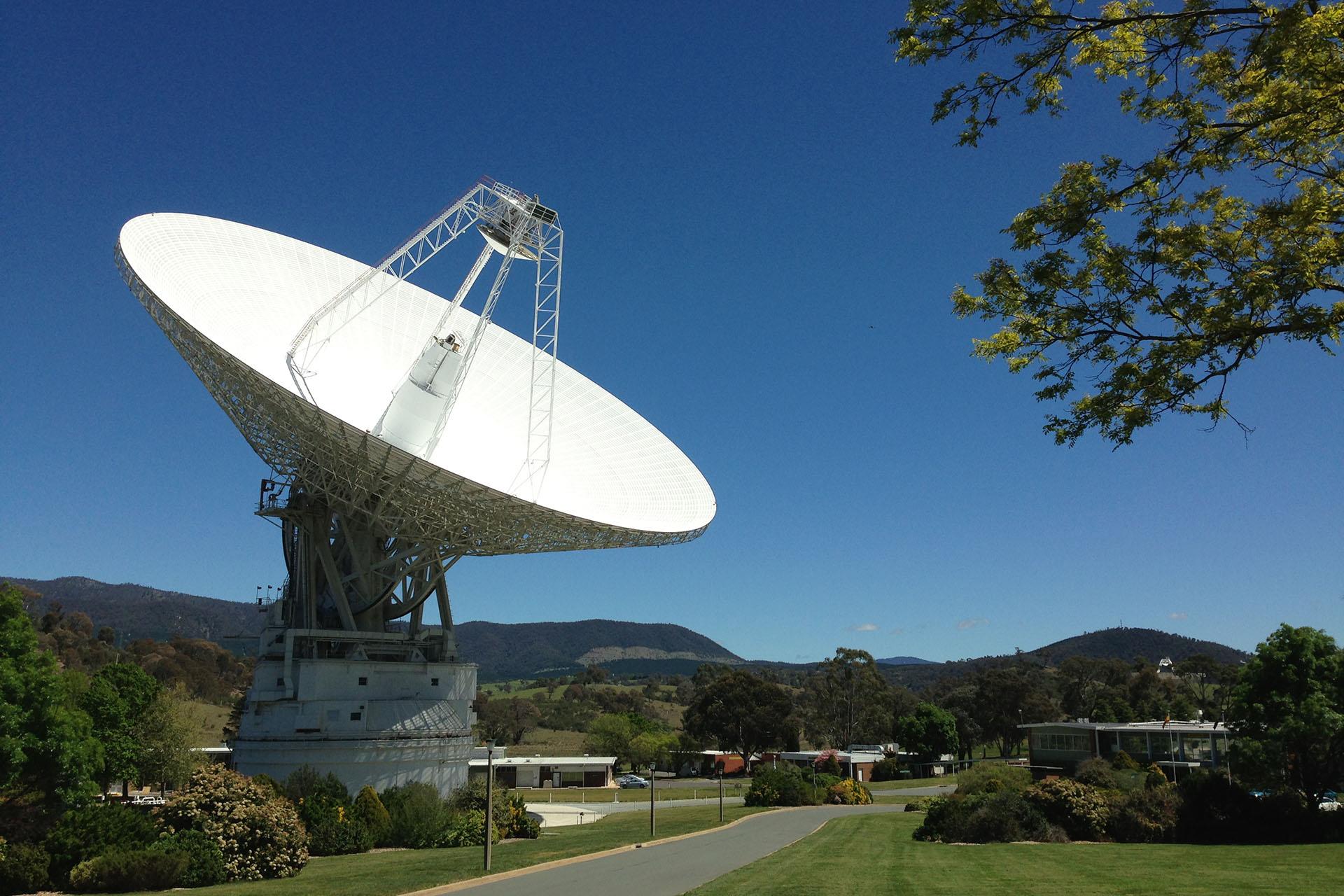
Deep Space Station 43 (DSS-43), a significant 230-foot-wide radio antenna situated at NASA’s Deep Space Network facility in Canberra, Australia, has played a crucial role in interstellar communication since its inception. This antenna has proven to be over six times more sensitive than its predecessor at the same location, facilitating communication with spacecraft sent far beyond Earth’s orbit. Notably, DSS-43 is the only facility capable of sending commands to and receiving data from Voyager 2, which is journeying through interstellar space at nearly 13 billion miles (around 21 billion kilometers) from home. Although Voyager 1 is positioned even farther, at over 15 billion miles (approximately 24 billion kilometers), it can only send data to the Madrid and Goldstone complexes; communication commands to this spacecraft also depend on the Canberra facility.
As the Canberra station prepares to celebrate its 60th anniversary on March 19, 2025, it marks this milestone with the beginning of work on a new cutting-edge radio antenna, Deep Space Station 33. This new addition will measure 112 feet (34 meters) in width and utilize a multifrequency beam-waveguide technology that will notably enhance its communication capabilities. A unique feature of this antenna is its design, which involves strategic burial mostly below ground to mitigate the effects of environmental factors. A robust concrete pedestal will support advanced electronics and receivers, housed in a climate-controlled environment, while a rotating reflector dish will operate on a steel platform known as an alidade.
Deep Space Station 33 is anticipated to be operational by 2029, marking the completion of a significant expansion within NASA’s Deep Space Network. This construction is part of the Aperture Enhancement Program, a strategic initiative aimed at bolstering communication support for both current missions and future explorations. The initiative highlights the increased data volume expected from modern and upcoming spacecraft.
In addition to Canberra’s advancements, the program has seen activity at NASA’s other facilities. The Madrid complex commissioned a new dish in 2022, and the Goldstone facility in California is currently finishing up its own new antenna. These improvements signify a committed effort by NASA to maintain the integrity and effectiveness of interplanetary communication systems, ensuring that data from human-made spacecraft reaches Earth efficiently as they venture further into the solar system and beyond. The enhancement of these communication networks will not only support existing missions but will also pave the way for new exploratory endeavors, emphasizing NASA’s dedication to advancing deep space exploration.
The content above is a summary. For more details, see the source article.