Key Takeaways
- China is applying lunar mission technology, specifically basalt fibers, to combat desertification in Xinjiang.
- The initiative aims to protect agricultural lands against erosion, salinization, and advancing sand from the Taklamakan Desert.
- Eco-friendly materials, including fly ash, will enhance project efficiency and reduce costs in land remediation efforts.
Innovative Approaches to Environmental Challenges
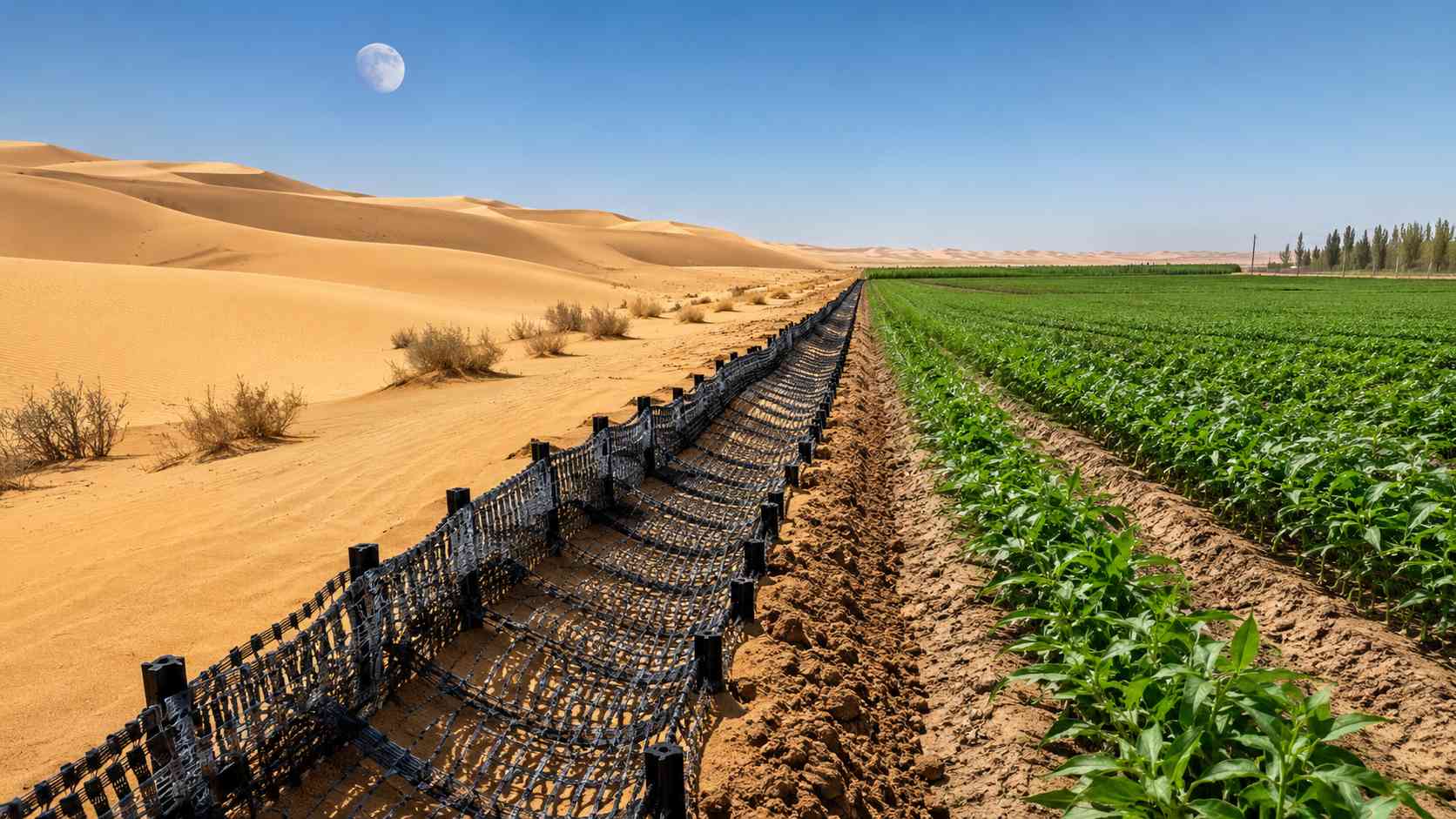
China is leveraging technology developed during lunar missions to address severe environmental issues in Xinjiang, particularly desertification and soil degradation. The Xinjiang Institute of Ecology and Geography, affiliated with the Chinese Academy of Sciences, initiated projects using basalt fibers, which are derived from melted volcanic rock, to protect agricultural lands.
This initiative is part of a broader strategy known as the “Great Green Wall,” aimed at preventing the transformation of fertile lands into arid terrain. Climate change and human activities pose significant threats to the region, thereby necessitating effective ecological interventions. The campaigns specifically target the Taklamakan Desert, one of the largest quicksand deserts globally, by employing a combination of drought-resistant vegetation and artificial barriers.
Basalt fibers have proven effective in previous applications, including the Chang’e 6 lunar mission, where they were used to create the Chinese flag. Researchers from Wuhan Textile University have emphasized the material’s capability to withstand extreme temperature variations and ultraviolet radiation, making it an ideal solution for stabilizing sand and combating the encroachment of dunes.
In addition to basalt fibers, the projects in Xinjiang incorporate fly ash, a byproduct from coal-fired power plants, repurposed for use in construction materials. The integration of these innovative materials aims to enhance project efficiency by as much as 50% while simultaneously cutting costs by about 30%. Research efforts led by experts like Xiao Huijie focus on understanding the impact of wind, salinity, and agricultural productivity in this arid region.
By implementing these technologies, authorities in Xinjiang seek to convert desert and saline soils into productive agricultural areas, ultimately reinforcing the ecological barrier necessary for sustainable land use. The initiative exemplifies a proactive approach to environmental restoration, blending scientific innovation with practical solutions to combat the ongoing threats posed by desertification in one of China’s most vulnerable regions.
The content above is a summary. For more details, see the source article.