


Key Takeaways
- The Dodge Michigan, a rebadged version of the Reliant, attempted to enter the Japanese market in the 1980s but faced tough competition.
- It featured minimal changes for the Japanese market, including a floor shifter and amber turn signals.
- Despite high pricing and a lack of appeal compared to local rivals, the Michigan only lasted for two model years (1986-1987) with uncertain survivor numbers.
Dodge Michigan’s Entry into Japan
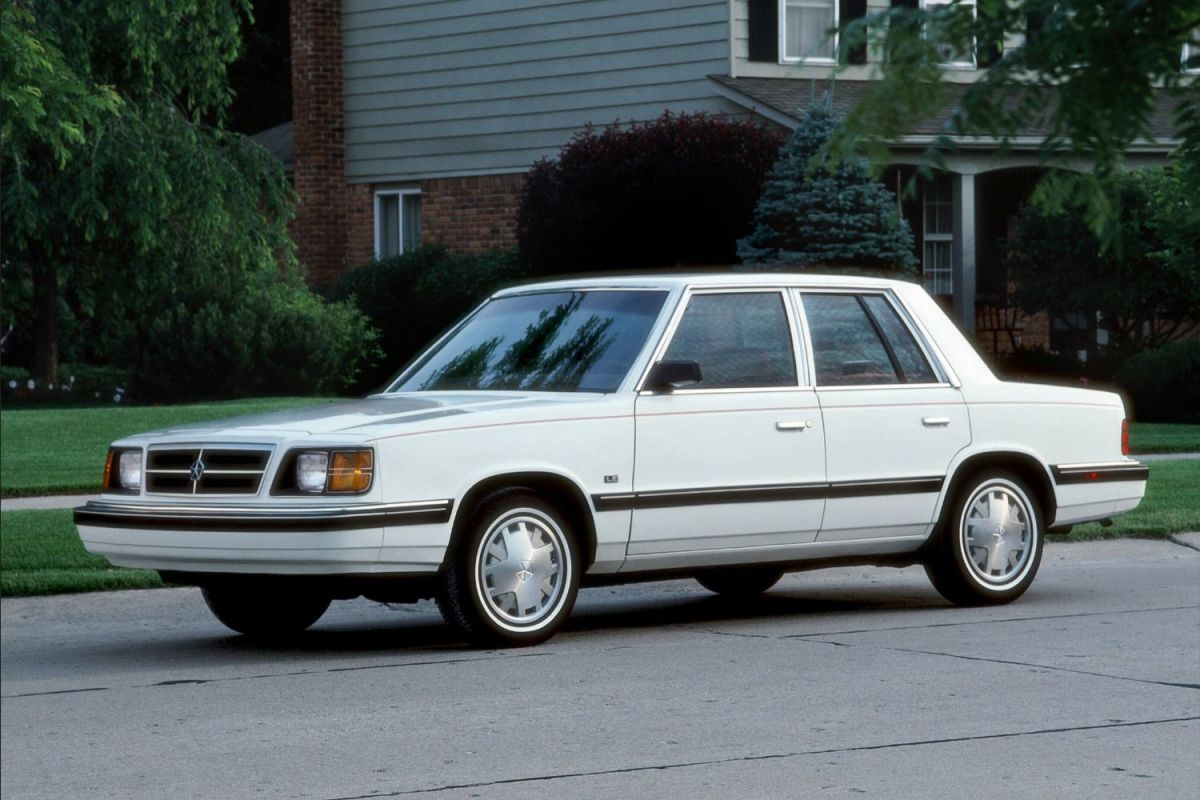
In the booming economy of 1980s Japan, the automobile market was thriving, leading to the introduction of many iconic Japanese domestic market (JDM) cars. Chrysler sought to capitalize on this opportunity with the Dodge Michigan, a local iteration of the K-Car, distinct from the popular Kei cars. Launched in 1986, the Michigan was essentially a facelifted version of the 1985 Reliant.
The name change was accompanied by few modifications; the most notable included a floor shifter and amber taillights. Despite these adjustments, it retained a left-hand-drive configuration, which was somewhat of a status symbol in Japan.
The Dodge Michigan was marketed with an enthusiastic tagline—“Forged on the vast lands of America”—and boasted a “friendly design.” A brochure highlighted features like a three-speed automatic transmission, which was described as “easy and safe for female drivers,” alongside a 2.2-liter EFI engine known for its fuel efficiency. However, this engine size was considered large in Japan, where many competitors, such as the Honda Accord and Toyota Camry, offered attractive alternatives with smaller displacements.
Market Performance and Appeal
The Michigan was available in two trims—two-door and four-door—each costing ¥2,950,000 and ¥2,980,000, respectively. Prices ranged from $15,000 to $17,000, not accounting for taxes and fees. Comparatively, the Reliant started significantly cheaper at around $7,600, while a Honda Accord cost between ¥1,300,000 and ¥2,000,000 in Japan.
Given its premium pricing and limitations, the Michigan struggled against locally manufactured options that provided better value and features. Japanese consumers in the mid-1980s had a wealth of choices, often opting for vehicles like the Toyota Mark II rather than the K-Car entry.
The inviting body style and added features failed to draw in buyers, leading to the Michigan’s swift decline. After only two model years, from 1986 to 1987, it was discontinued, and little is known about existing models today. The last confirmed sale was noted in 2003.
In retrospective analysis, it seems the Dodge Michigan struggled to navigate a competitive landscape dominated by robust Japanese manufacturers. Its high price and lack of appeal likely resulted in its limited sales and ultimately its failure in the Japanese market.
The content above is a summary. For more details, see the source article.









