Key Takeaways
- Nasa satellites detected wildland fires in Australia’s Northern Territory, prominently observed during May and June.
- Land managers utilize a blend of Indigenous practices and modern technology for prescribed burning to mitigate severe wildfires.
- Recent analysis indicates that prescribed burns have successfully shifted fire activity to earlier in the dry season, reducing the intensity of later fires.
Wildland Fire Management in Australia
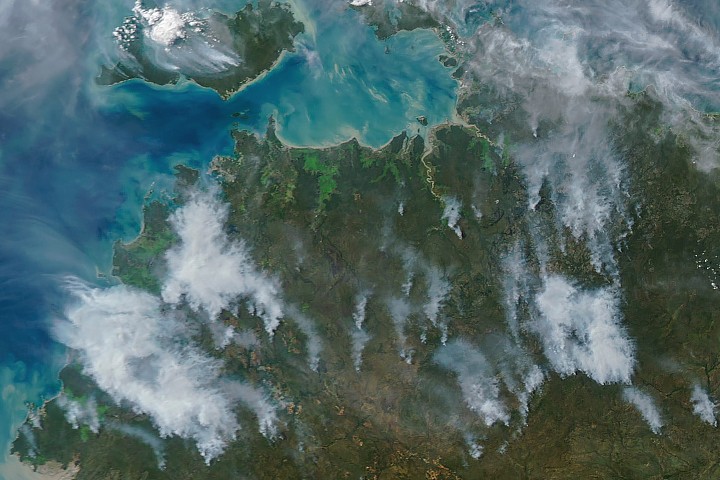
In Australia’s Northern Territory, particularly in the Top End and Arnhem Land regions, NASA satellites observe a significant uptick in wildland fires during May and June. One notable observation occurred on May 28, 2026, when the Aqua satellite captured images of extensive smoke plumes indicative of substantial fire activity. However, just days before and after that date, satellite data revealed thermal anomalies without visible smoke, signaling a complex pattern of fire management in the area.
These wildfires often serve a strategic purpose: they are part of prescribed burning practices aimed at land management. Typically, fires are ignited in the mornings, gradually building smoke throughout the day. Conditions such as updrafts and moderate winds can then disperse this smoke, resulting in the large plumes observed on certain days.
Land managers in the region combine traditional Indigenous practices with modern technological approaches to create expansive landscape management programs, including the West Arnhem Land Fire Abatement project. These initiatives aim to intentionally reduce vegetation through early season burns, which in turn create firebreaks and lower fuel loads. This proactive approach is designed to minimize the risk of more damaging and emissions-heavy fires as the dry season progresses.
Australia’s Bureau of Meteorology defines the dry season as lasting from May to September, a time when fire risks increase significantly. The ongoing research indicates that these prescribed burning strategies are yielding positive results. Satellite analysis suggests that fire activities have transitioned from late in the dry season to earlier periods. This shift correlates with a notable decrease in high-intensity fires and associated emissions, demonstrating the effectiveness of contemporary fire management techniques.
In summary, the integration of deep-rooted Indigenous knowledge with advanced monitoring technologies has illuminated a path toward more sustainable fire management in Australia’s Northern Territory, presenting a model for balancing ecological health with community safety.
The content above is a summary. For more details, see the source article.