

Key Takeaways
- Comet 2024 G3 (ATLAS) became one of the brightest comets in 18 years during its mid-January display, reaching peak visibility after its closest approach to the sun.
- Visible to the naked eye in daylight, the comet captivated skywatchers, particularly in the Southern Hemisphere, before fading rapidly in brightness.
- As it approached the sun, the comet underwent significant changes, leading to suggestions of disintegration, resulting in it becoming a “headless wonder.”
Spectacular Display of Comet 2024 G3 (ATLAS)
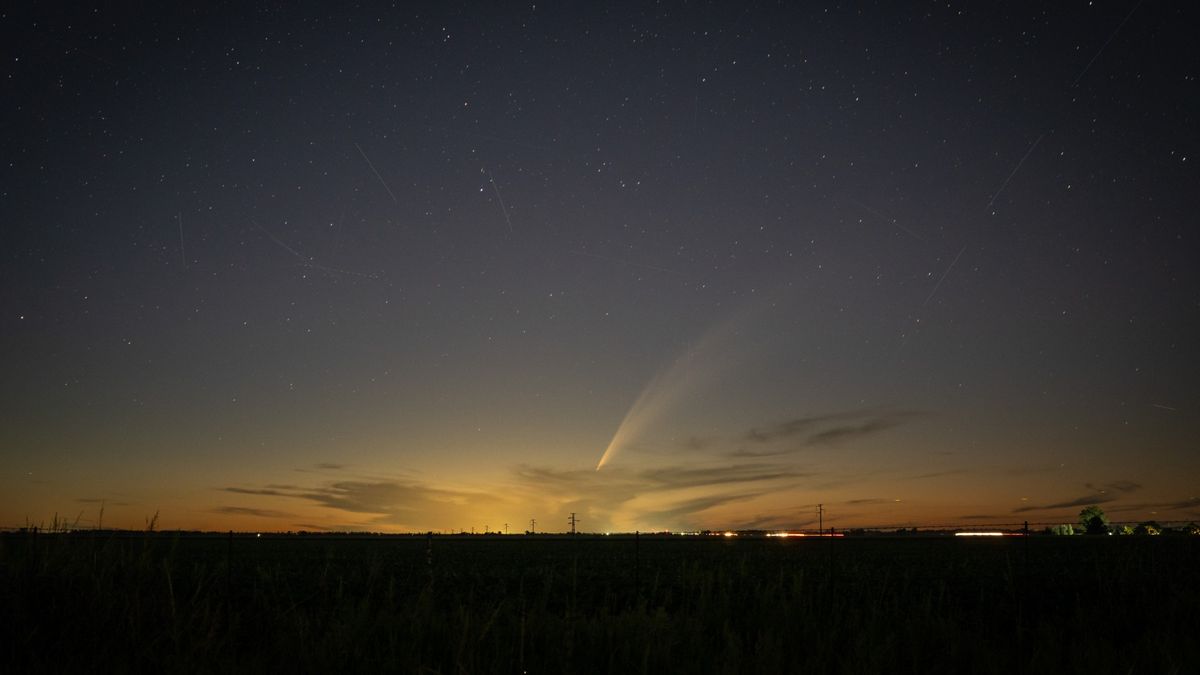
Amateur and professional astronomers were excited by the vibrant display of Comet 2024 G3 (ATLAS) in mid-January. Discovered by the Asteroid Terrestrial Impact Last Alert System (ATLAS) using a telescope in Chile, it gained brightness after its perihelion, or closest pass to the sun, on January 13. The comet became the brightest since 2006 and was visible across many Northern Hemisphere locations in clear skies for about a week.
As 2024 began, the comet’s brightness increased dramatically. Initially at a third magnitude, it brightened significantly after January 1, reaching second magnitude the following day and then first magnitude by January 7, with a tail extending half a degree long. Unfortunately, the proximity of the comet to the sun made visibility difficult as it approached the horizon with each passing morning.
Astronauts aboard the International Space Station captured images of the comet, showcasing a prominent tail and a coma bright as Mercury. The comet reached perihelion on January 13 at a distance of 8.7 million miles from the sun and was only 87 million miles from Earth that day. Observations from the Solar and Heliospheric Observatory revealed the comet’s brightness surged dramatically during this time, making it a remarkable sight.
The comet’s dramatic brightness tempted many observers to look for it during daylight, although this posed risks due to the sun’s position. Some in drier regions successfully spotted the comet against the blue sky, employing techniques to block solar glare, while others unfortunately reported unsuccessful attempts.
After perihelion, Comet 2024 G3 became easily visible in the evening sky, leading to a surge in interest. Observers reported bright displays with well-defined tails, visible from various locations. The comet was described as spectacularly bright, with one notable feature being the intricate structure of its tails resulting from gas and dust.
However, reports began to arise of the comet’s head becoming diffuse around January 18, indicating potential disintegration as it was subjected to intense solar radiation. Historical records show that such transformations are not uncommon for comets, with Comet 2024 G3 now being labeled a “headless wonder.”
Currently, Comet 2024 G3 is not observable from the Northern Hemisphere and is rapidly fading in brightness. Its visibility is expected to decline further, making it difficult to locate without optical aids as it moves lower in the southwest sky after sunset.
Initially predicted to have an orbit of approximately 160,000 years, alterations in its trajectory suggest it may take significantly longer—around 600,000 years—before it returns to perihelion. Despite its impending disappearance, the comet will be remembered for its spectacular display and unique characteristics during this eventful period.
The content above is a summary. For more details, see the source article.