


Key Takeaways
- Cummings Aerospace has completed successful flight tests of its turbojet-powered loitering munition, Hellhound.
- Hellhound met the U.S. Army’s LASSO program requirements, demonstrating high speed and range capabilities.
- The company aims to submit Hellhound for the Army’s upcoming loitering munition competition, anticipated in mid-2024.
Overview of Hellhound’s Capabilities
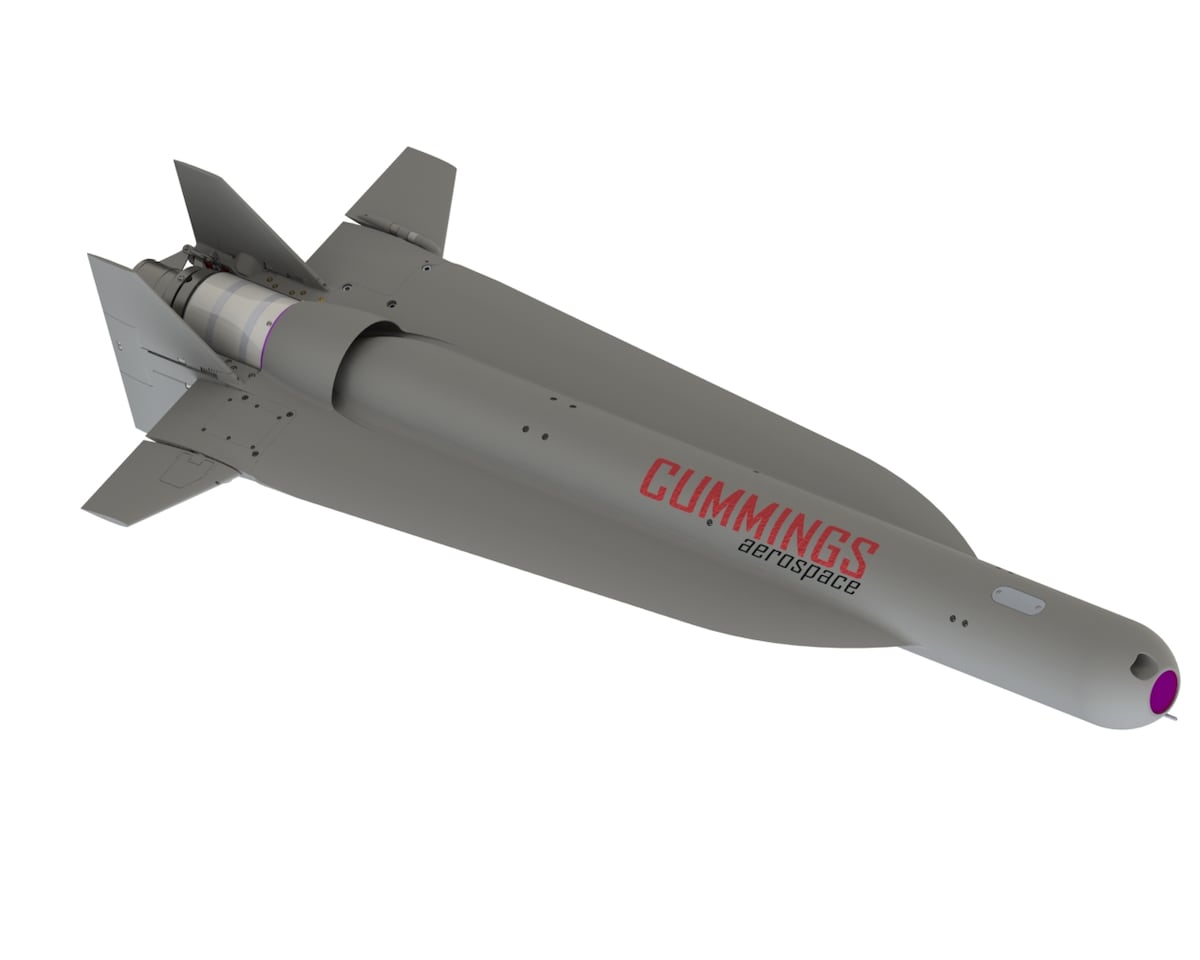
Cummings Aerospace, based in Huntsville, Alabama, is gearing up for the U.S. Army’s upcoming loitering munition competition with its Hellhound drone, featuring advanced turbojet propulsion. Recently, the company conducted flight tests of the S3 version of this 3D-printed kamikaze drone at the Pendleton Unmanned Aircraft Systems test range in Oregon. These tests were designed to verify the system’s performance against the Army’s preliminary Low Altitude Stalking and Striking Ordnance (LASSO) program requirements. CEO Sheila Cummings confirmed successful demonstrations of range, speed, and subsystem functionalities.
Hellhound distinguishes itself from other loitering munitions through its turbojet propulsion, which enhances speed and operational flexibility. Cummings noted that the drone, which weighs under 25 pounds, exceeded speeds of 350 miles per hour at half throttle and effectively covered distances of 20 kilometers while consuming only 50% of its fuel, even in challenging conditions like wind, snow, and extreme cold.
Established in 2009 and recognized as a Native American woman-owned business, Cummings Aerospace specializes in the design, development, and production of aerospace capabilities, including missiles and radars. The emergence of loitering munitions has been prominent in recent conflicts, such as the ongoing war in Ukraine, which has underscored the need for these advanced weapons in modern warfare. The U.S. Army is seeking to enhance its inventory of loitering munitions to equip Infantry Brigade Combat Teams with comparable lethality to Armored Brigade Combat Teams.
In early January, the Army released a notice on Sam.gov that included unclassified information detailing the objectives of the LASSO program. While specifics remain confidential, the notice called attention to the necessity for industry submissions to adhere to modular and open systems architecture standards. Cummings emphasized that compliance with these standards has been vital for rapid design iterations throughout Hellhound’s development, enabling swift production through 3D printing technology.
Cummings Aerospace intends to submit its application for the Army’s loitering munition competition, with a formal request for proposals expected in May or June. Although details on the Army’s selection process and the number of vendors to be evaluated have not been disclosed, it is anticipated that competitors may include established manufacturers like Aerovironment, known for its Switchblade drone, and Anduril, which is contracted to supply its Bolt loitering munition to the Marine Corps.
Looking forward, Cummings Aerospace is also exploring integration opportunities for Hellhound within other Army programs, particularly the short-range Launched Effects program. The company is developing concepts for launch systems that could be mounted on ground vehicles or air platforms.
In summary, Cummings Aerospace’s Hellhound is positioned as a formidable contender in the loitering munition market, backed by innovative technology and a commitment to meeting the evolving demands of military operations.
The content above is a summary. For more details, see the source article.









