


Key Takeaways
- The Delhi government plans to enhance EV infrastructure by urging manufacturers to set up charging stations.
- A target of adding 7,000 new EV charging stations in the city is set, aiming for a revised EV policy by March.
- Incentives will be offered for scrapping old vehicles to promote electric vehicle purchases.
Delhi’s EV Infrastructure Expansion
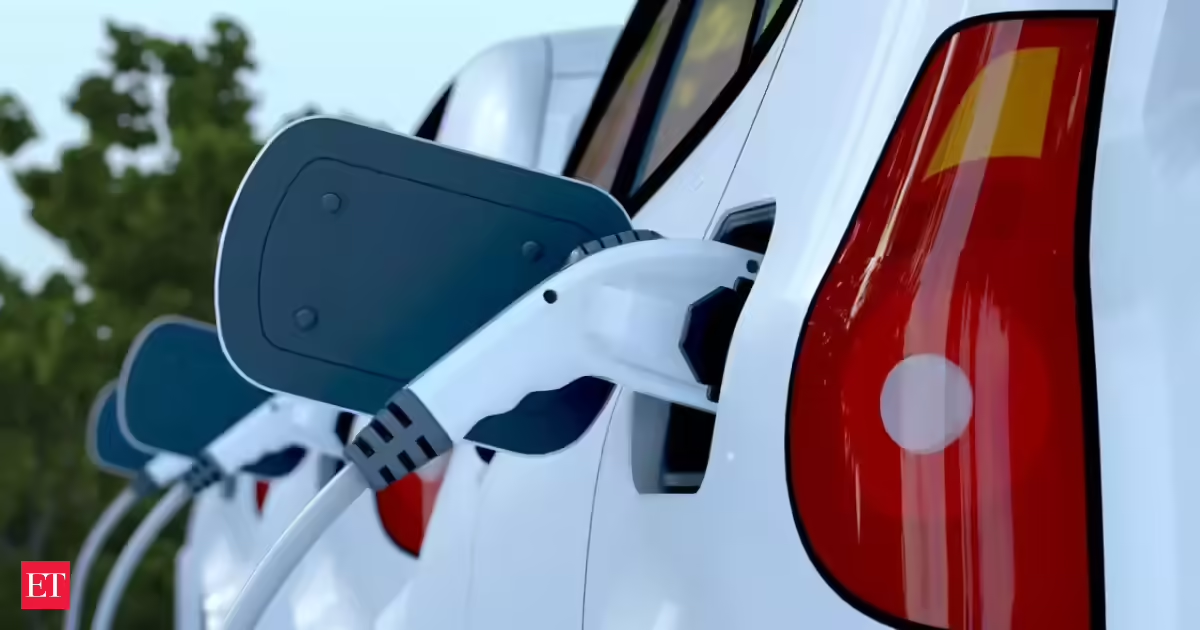
New Delhi is taking steps to enhance its electric vehicle (EV) infrastructure through an updated EV policy expected to be finalized before March. A senior government official announced that the Delhi government is reaching out to around 400 vehicle manufacturers and vendors to encourage them to set up EV charging stations throughout the city.
Current data indicates that there are approximately 8,800 EV charging stations in Delhi, primarily located at Namo Bharat and Delhi Metro stations, and operated by power distribution companies. The revised policy aims to significantly expand this network, introducing 7,000 additional charging stations to accommodate the increasing demand for electric vehicles and reduce pollution levels.
The Delhi Transco Limited will serve as the main agency responsible for the planning, coordination, and implementation of public charging and battery swapping infrastructure across the National Capital Territory (NCT) of Delhi. In a complementary move, the government is also working to integrate public charging facilities at Delhi Transport Corporation (DTC) bus depots as part of its plan to electrify the entire DTC bus fleet.
Transport Minister Pankaj Singh indicated that the government is also considering the approval of 1,100 medium-sized electric trucks for commercial use. This proposal stems from requests by traders wanting to transition to EV trucks, which need supporting infrastructure to be effective.
Rajendra Kapoor, chief of the All India Motor Goods Transport Association, mentioned that while mini EV three-wheelers are currently in operation for shorter commercial distances in Delhi, many mini trucks still run on CNG. He emphasized that the introduction of EV trucks must be accompanied by adequate infrastructure to support their use.
Moreover, under the new EV policy, the government plans to provide incentives of up to Rs 1 lakh for the scrapping of Delhi-registered vehicles classified as BS-IV or older, which would encourage residents to transition to new electric cars. This initiative aims to make electric vehicles a more viable and attractive option for residents, thus supporting the overall goal of reducing emissions and promoting sustainable transportation in the city.
The content above is a summary. For more details, see the source article.









