Key Takeaways
- President Trump has announced the “Golden Dome,” a $542 billion missile defense initiative aimed at protecting the U.S. from global threats.
- The system will utilize space-based technology for early detection and interception of missiles, differing from Israel’s Iron Dome.
- The project faces skepticism over its high costs and ambitious scope, with a proposed operational target by 2029.
Overview of the Golden Dome Initiative
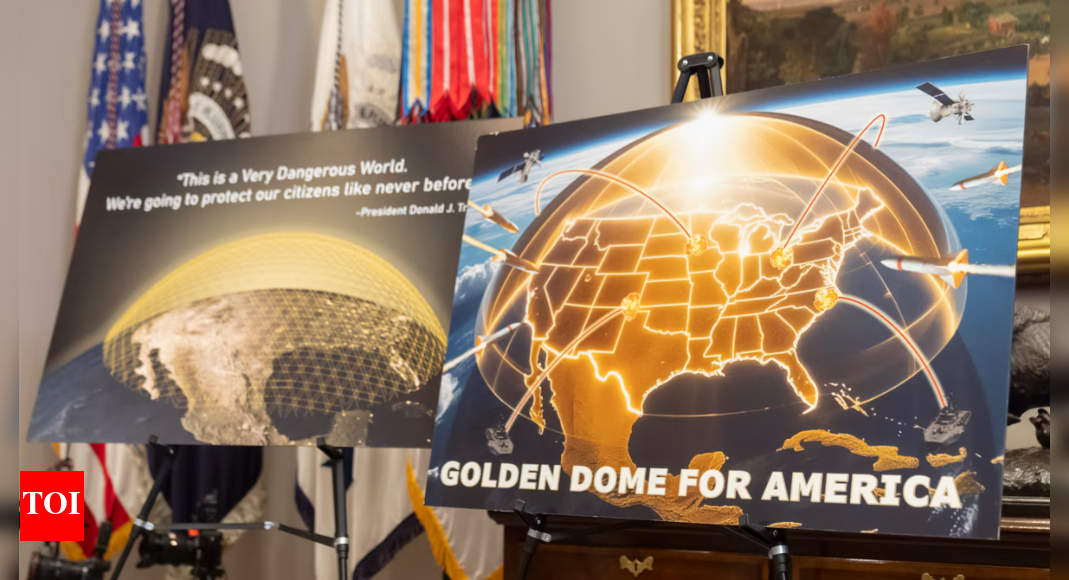
President Donald Trump has introduced the “Golden Dome,” a comprehensive missile defense program intended to secure the United States from various missile threats. The initiative, which could cost as much as $542 billion over 20 years, was announced in the Oval Office and aims to enhance national security in response to global missile developments.
The Golden Dome employs space-based technology to provide a shield against ballistic, hypersonic, and cruise missiles. Unlike traditional ground-based systems, this initiative will rely on a network of satellites to detect and neutralize threats early in their flight trajectory. This approach allows for the interception of missiles launched from other continents and even space, addressing evolving threats from nations like China, Russia, North Korea, and Iran.
While the name “Golden Dome” evokes Israel’s Iron Dome, the two systems serve vastly different purposes. The Iron Dome is effective against short-range threats, suitable for Israel’s smaller geography. In contrast, the Golden Dome must contend with fast-moving intercontinental ballistic missiles across a larger territory, necessitating innovative technological solutions.
One of the standout features of the Golden Dome is its plan to use space-based interceptors to detect and destroy missiles during their launch phase. This ambitious strategy would require a fleet of approximately 16,000 satellites working collaboratively, which is both technically challenging and costly.
In terms of finances, the Congressional Budget Office projects that costs for deploying and operating the interceptors could reach between $161 billion and $542 billion over two decades. While President Trump has allocated an initial $25 billion, critics worry that without a detailed financial plan, the budget could expand unchecked.
General Michael Guetlein, the vice chief of operations for the U.S. Space Force, has been appointed to oversee the initiative, which underscores the Space Force’s crucial role in coordinating satellite deployment and integrating the system with existing defense infrastructures. Experts, however, express skepticism regarding the timeline; while Trump aims to have the system operational by 2029, achieving full functionality may require longer due to technological and logistical challenges.
Strategically, the Golden Dome aims to bolster U.S. dominance in missile defense and space deterrence amid rising tensions globally. However, its high costs and lack of clarity have sparked debates among lawmakers and raised concerns about potential arms races in space.
Developing a reliable missile defense system in space is a complex challenge, involving not just satellite networks but also advanced interceptor technologies capable of countering fast-moving threats. The endeavor marks a bold and potentially transformative move in the realm of national defense, with opinions divided on its feasibility and implications for the future of military strategy.
The content above is a summary. For more details, see the source article.