


Key Takeaways
- Donut Lab will provide independent verification of its solid-state battery technology next week.
- Claims include a battery with 400 Wh/kg energy density, rapid charging under 10 minutes, and 100,000 charging cycles.
- Skepticism from industry experts has led Donut Lab to publicly share data to counter the doubts about its technology.
Donut Lab Announces Independent Testing Results for Solid-State Battery
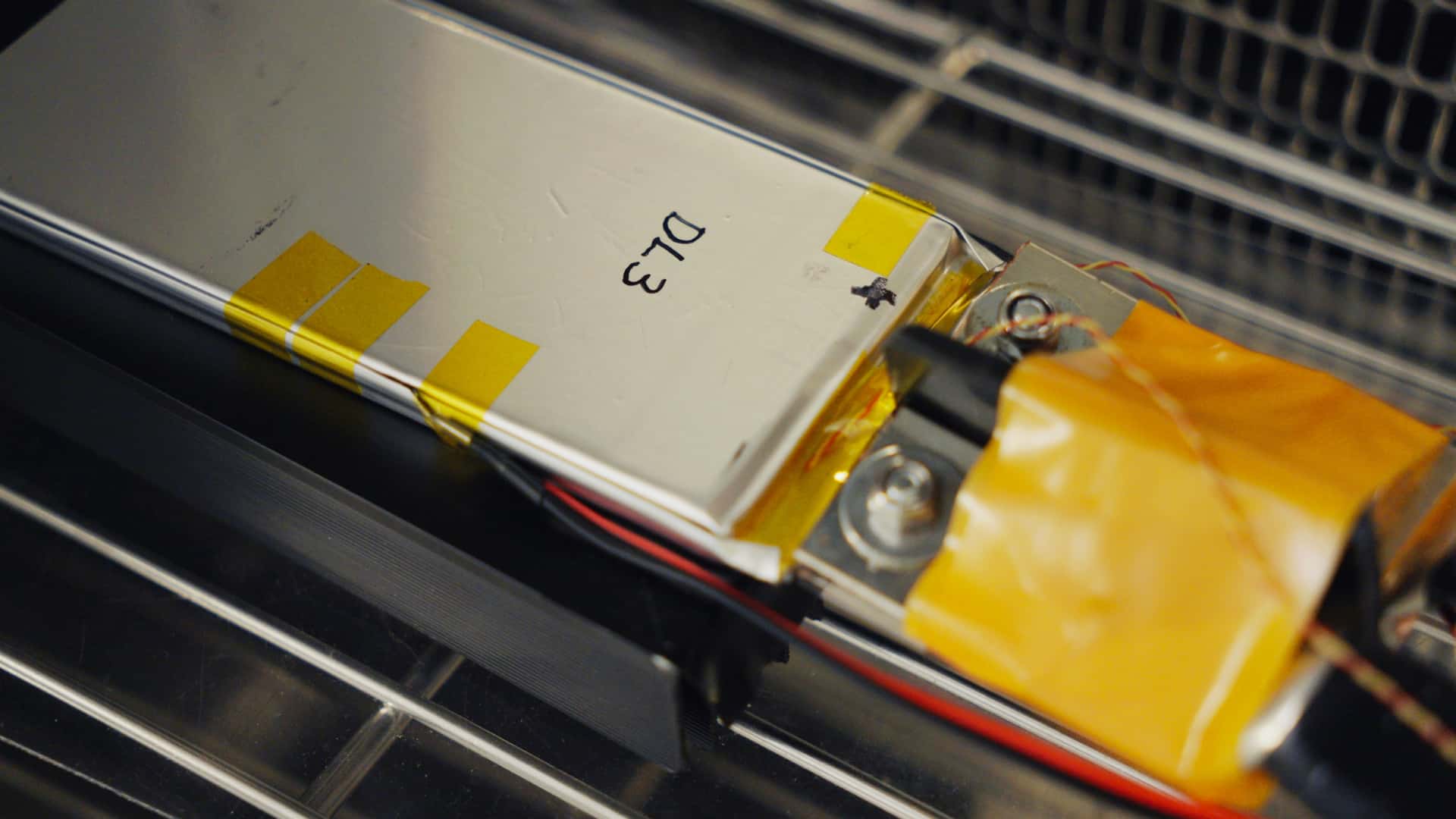
Finnish startup Donut Lab is set to release independent evidence demonstrating the validity of its all-solid-state battery technology. Following critical industry scrutiny, the company announced that the VTT Technical Research Centre of Finland has conducted independent tests. The findings will be shared in a video series starting February 23 and on a newly established website, idonutbelieve.com.
“We are making this series to put measurable evidence in public view so people can separate what’s asserted from what’s verified,” stated CEO Marko Lehtimaki in a YouTube video. The startup claims its battery, a potential game-changer in the electric vehicle market, has been tested and offers superior performance.
Solid-state batteries are viewed as the future of battery technology, promising higher energy densities, faster charging times, improved temperature resilience, and safety from thermal runaway. Donut Lab claims its battery has an energy density of 400 watt-hours per kilogram, which significantly exceeds the 200-300 Wh/kg of current lithium-ion batteries. It can reportedly charge in under 10 minutes and last for 100,000 cycles compared to the typical 1,500-3,000 cycles of conventional batteries.
Despite the exciting possibilities, skepticism within the industry has persisted. At the Consumer Electronics Show (CES), Donut Lab faced criticism for lacking solid evidence, live demonstrations, or academic backing to support its claims. Experts have raised doubts about the feasibility of the technology being ready for commercial use, as many established manufacturers have struggled to develop solid-state solutions.
Lehtimaki acknowledged the impact of skepticism on fundraising efforts. He indicated that the doubts from industry giants, who labeled Donut Lab’s battery a scam, could hinder the company’s growth. He pointed out that established manufacturers may resist the potential disruption threatened by new technologies from smaller companies. “Is that somehow surprising? If years of work haven’t produced the winning technology, denying a breakthrough is easier,” he argued.
For its part, Verge Motorcycles confirmed plans to incorporate Donut Lab’s battery in its upcoming production vehicle scheduled for release in the first quarter of this year, although new orders may face delays due to limited initial production capacity.
Lehtimaki concluded with confidence, asserting, “No, it’s not a scam. And yes, it will change the industry.” As the release of independent test data approaches, the stakes are high for both Donut Lab and the broader battery technology landscape.
The content above is a summary. For more details, see the source article.









