


Key Takeaways
- Donut Lab claims its all-solid-state battery has a high energy density, long lifespan, and quick charge time, but questions remain about its technology.
- Recent tests indicate the battery behaves like a traditional battery rather than a supercapacitor, retaining 98% of its charge after 240 hours.
- Experts urge caution, noting that current lab results are insufficient to validate Donut’s bold claims of a technological breakthrough.
Recent Developments in Energy Storage
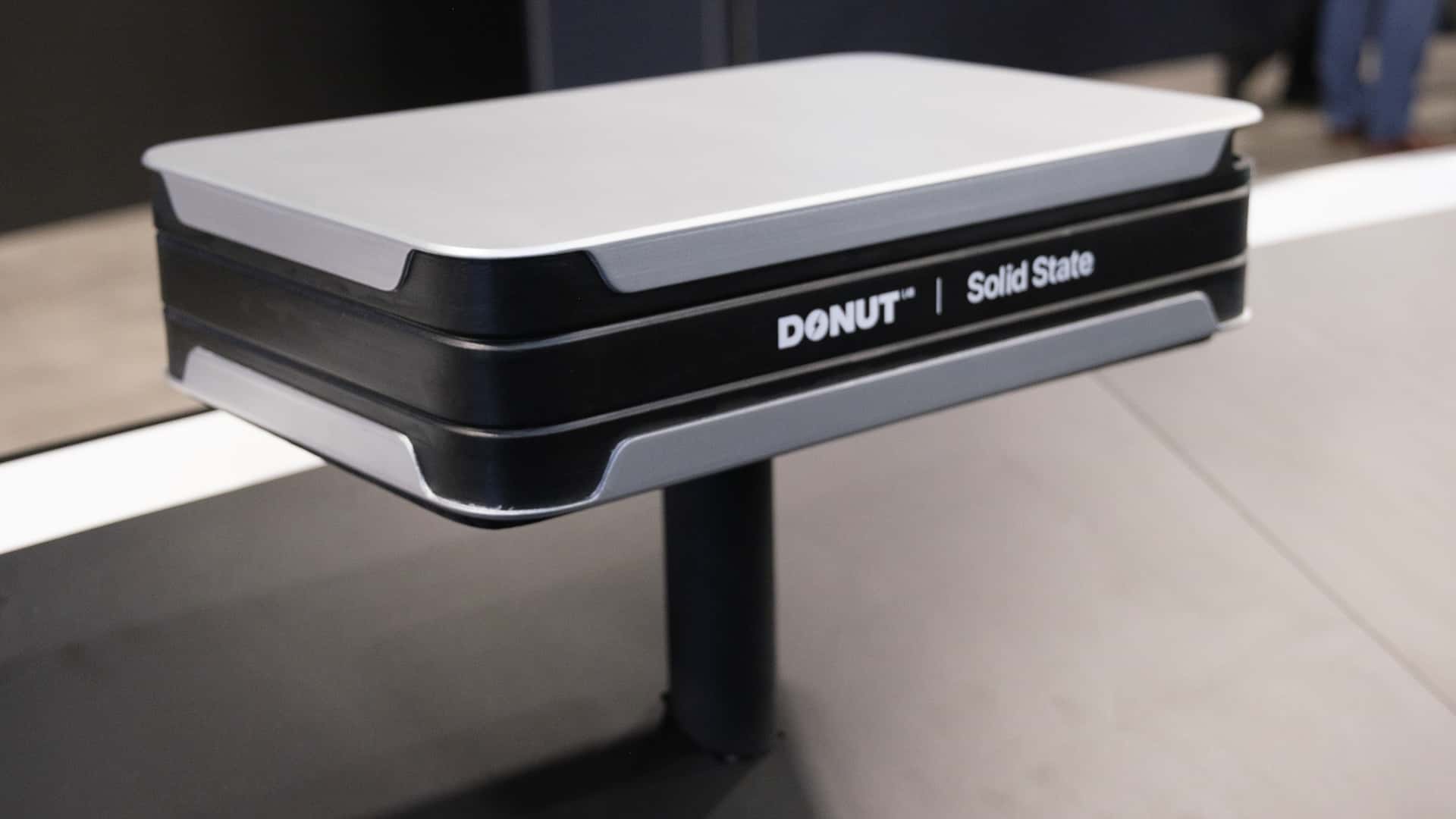
Finnish startup Donut Lab has released its third independent test results concerning its claimed breakthrough in battery technology. This test addresses concerns that its all-solid-state battery may function more like a supercapacitor. The results come in the wake of the company’s striking presentation at the Consumer Electronics Show, where it claimed a remarkable energy density of 400 watt-hours per kilogram, a lifespan of 100,000 cycles, and a charge time of roughly five minutes.
The skepticism surrounding Donut Lab intensified after revelations about its association with Nordic Nano, a renewables company that had previously developed a supercapacitor with the same energy density figures. As a result, Donut Lab felt pressured to clarify the differences between a battery and a supercapacitor. While both technologies store energy, they operate through different mechanisms: batteries rely on chemical reactions to store energy, while supercapacitors store energy in an electrical field, resulting in quick charge and discharge but swift energy loss when idle.
To demonstrate its battery’s capabilities, Donut conducted a “self-discharge performance test” in which the battery was charged to 50% and left idle for 240 hours. The results showed that it maintained nearly 98% of its charge, suggesting that it acts more like a battery than a supercapacitor. Donald R. Sadoway, a Professor Emeritus at MIT, corroborated these findings, emphasizing that true supercapacitors provide power bursts for limited durations, while the Donut battery appears to act differently.
However, Sadoway advised caution regarding the broader claims made by Donut Lab, noting that the reports are quite generic and lack comprehensive details necessary to substantiate claims of an exceptional breakthrough. While the startup has progressively shared test results over the past few weeks, the lab tests have yet to confirm that the battery is indeed solid-state.
The first two tests reportedly demonstrated that the battery could charge in under ten minutes and withstand temperatures up to 100 degrees Celsius (212 degrees Fahrenheit). So far, results have been obtained in controlled settings and for only a limited number of cycles. Observers argue that these lab-scale tests are not enough to guarantee performance in real-world applications, which would require reliable operation at the pack level over thousands of cycles.
Despite the positive laboratory results, experts stress that the assertions made by Donut Lab will necessitate more rigorous evidence to validate their transformative potential in the battery technology landscape. Sadoway’s perspective encapsulates the general sentiment: “Remarkable claims demand remarkable proof.” The ongoing developments in battery technology raise important questions about the balance between innovation and the need for substantiated claims in a rapidly evolving industry.
The content above is a summary. For more details, see the source article.









