


Key Takeaways
- DzTrust is a decentralized zero-trust framework designed for airborne wireless sensor networks (AWSNs) to secure node authentication and data transmission.
- The framework integrates dynamic trust assessment with a blockchain system to ensure data integrity and account for node behavior.
- Dynamic identity authentication is implemented to detect compromised nodes rapidly, enhancing overall network security.
The DzTrust framework, a novel decentralized zero-trust scheme, has been developed to enhance security in airborne wireless sensor networks (AWSNs). This approach addresses the challenges posed by numerous nodes in an AWSN environment, including monitoring, authentication, and rapid detection of compromised nodes.
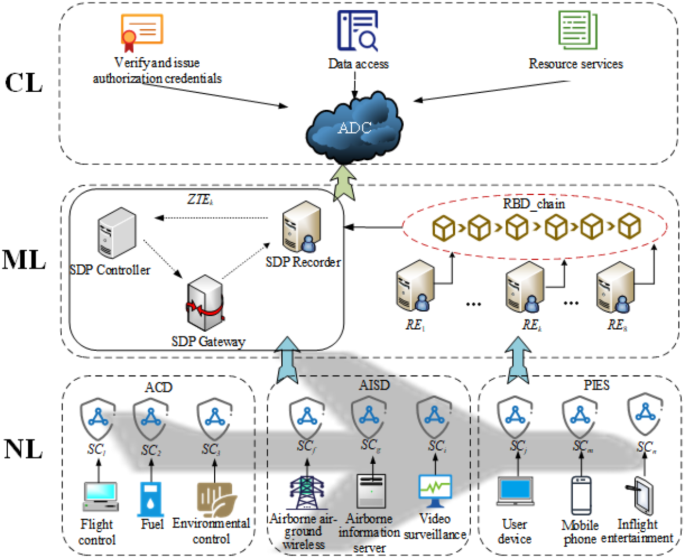
At the core of this framework is the deployment of zero-trust engines across different network domains, specifically tailored for the unique security needs of the aircraft control, airline information services, and passenger entertainment domains. This decentralized strategy reduces the heavy processing load typically associated with centralized systems and uses lightweight certificateless signcryption techniques to secure information flow.
A robust blockchain system, referred to as RBD_chain, is employed to store the behavioral data of AWSN nodes. This blockchain aids in ensuring accountability, secure data storage, and mitigates risks of data tampering. The protocol centers on a dynamic trust evaluation system that calculates trust based on real-time behavioral data, allowing for continuous monitoring and rapid response to potential threats.
Critical to the framework is the two-way signcryption model, which ensures the integrity and confidentiality of information as it travels between components of the AWSN, such as the Key Generation Center, SDP client, and the Airborne Data Center. Each of these entities plays a specific role in facilitating secure communications, authentication, and data aggregation within the network.
Additionally, the system is designed to manage the risks posed by attackers controlling compromised nodes. A detailed evaluation algorithm assigns trust values based on historical behavioral data, enabling dynamic adaptation to new threats and assurance that nodes are consistently monitored and authenticated throughout their operational lifespan.
Pre-launch and online authentication processes help maintain a high-security standard by implementing continuous identity verification protocols. When trust levels fall below a specified threshold, re-authentication processes are triggered to identify and isolate compromised nodes, ensuring enhanced security throughout the AWSN.
In conclusion, the DzTrust framework offers a multi-faceted approach to safeguarding airborne wireless networks, focusing on decentralized architecture, robust data integrity measures, and dynamic authentication protocols. This innovative system aims to provide a secure, adaptable solution to the ever-evolving threats faced within airborne communications environments.
The content above is a summary. For more details, see the source article.









