Key Takeaways
- The Einstein Probe satellite has discovered a rare X-ray emitting binary system in the Small Magellanic Cloud.
- This unique pair consists of a massive Be star and a compact white dwarf, highlighting new insights into stellar evolution.
- The findings demonstrate the advanced capabilities of the Einstein Probe mission in studying elusive celestial phenomena.
Rare X-ray Discovery in Space
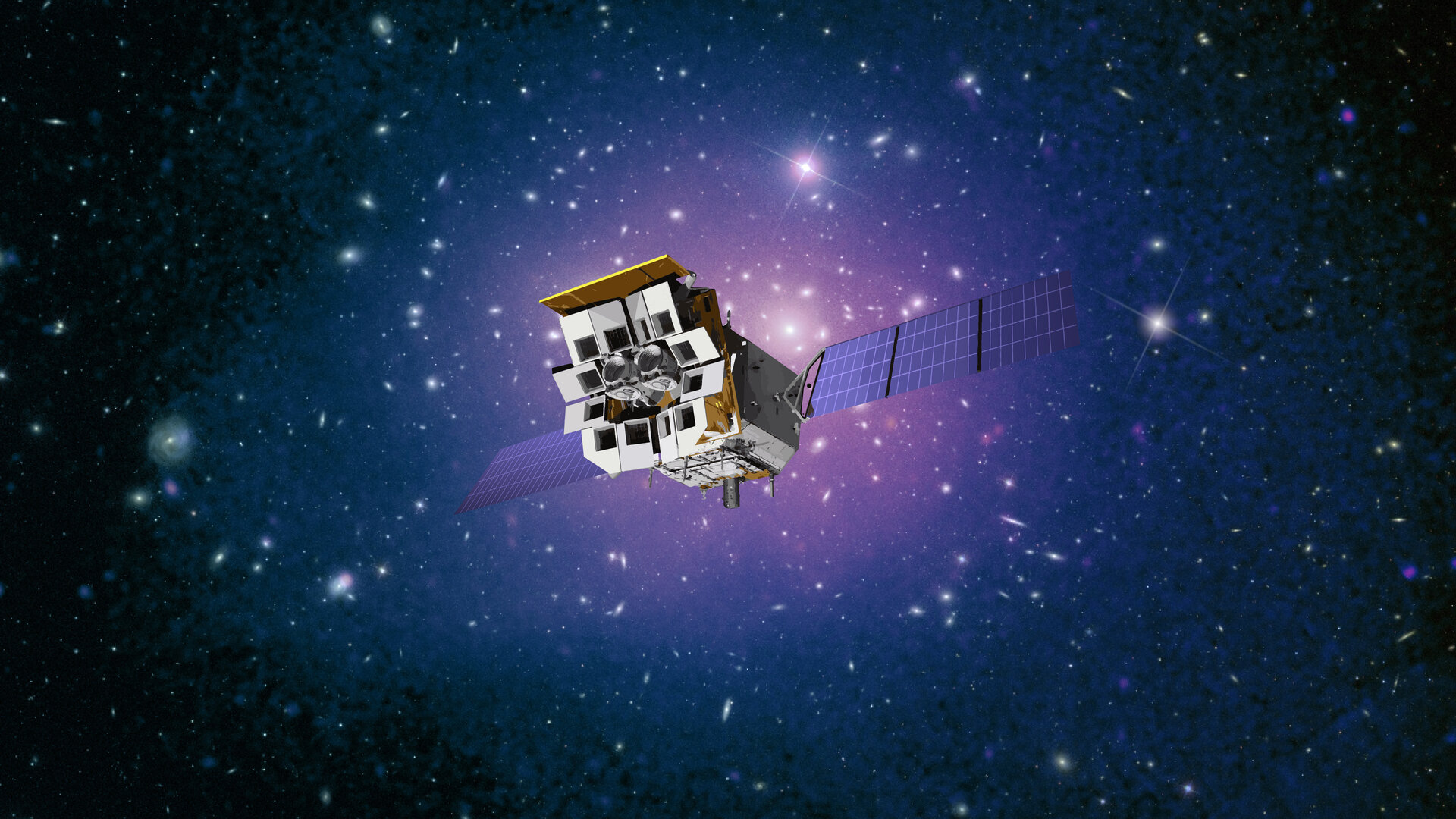
The Einstein Probe satellite has made a significant astronomical discovery by capturing the initial X-ray flash from a rare binary system identified as EP J0052, located in the Small Magellanic Cloud (SMC). This pair consists of a massive Be star, over 10 times the mass of our Sun, and a white dwarf with a mass similar to that of the Sun. This discovery offers new perspectives on how massive stars evolve and interact, showcasing the mission’s ability to detect fleeting X-ray sources.
On May 27, 2024, the Wide-field X-ray Telescope (WXT) on the Einstein Probe detected these X-ray emissions. To investigate further, scientists mobilized additional telescopes, including NASA’s Swift and NICER, to monitor the new event initiated by WXT. The immediate follow-up suggests that the detection of EP J0052 was unique, as WXT is the only telescope sensitive enough to capture low-energy X-rays from such sources. Alessio Marino, a postdoctoral researcher involved in the study, emphasized the importance of the timing, stating the mission enabled the tracking of the X-ray light from the initial flare-up through its decay.
Initially thought to resemble traditional binary systems—where a neutron star consumes material from a massive star—observations revealed something different. Scientists were led to understand that they were observing an extremely rare case of a Be star and a white dwarf closely interacting. The analysis of light captured from different instruments allowed researchers to identify elements, including nitrogen, oxygen, and neon, present in the X-ray emissions.
The pair’s suspected evolutionary path begins with them as a matching binary system of two massive stars, which led to the current configuration where the Be star has reached a mass of 12 solar masses while the white dwarf remains just over one solar mass. This discovery poses questions regarding the lengths of their lifespans; typically, massive Be stars undergo rapid lifecycle changes, lasting only about 20 million years. In contrast, the white dwarf, perceived as a remnant, could have existed for billions of years on its own.
Researchers propose that the Be star initially lost mass to its companion through a process of nuclear fuel exhaustion and expansion. This massive star formed an envelope around the two, effectively leading to the current system where material continuously flows from the massive star to the white dwarf, eventually resulting in nuclear explosions that manifest as X-ray bursts.
Follow-up observations by ESA’s XMM-Newton mission revealed that this X-ray signal was transient, suggesting the flare was brief. Analyzing the components of the light pointed towards the white dwarf being near the Chandrasekhar limit, signifying it was heavy enough to potentially undergo further collapse or even a supernova explosion.
The unique capabilities of the Einstein Probe present exciting new possibilities for the field of astrophysics. Erik Kuulkers, ESA Project Scientist for the mission, highlighted that such interactions among massive stars had been challenging to study, notably because low-energy X-rays typically conceal these events. This unique capability is expected to enhance understanding of stellar dynamics and evolution, making the findings from EP J0052 a notable contribution to the field.
The study titled “Einstein Probe discovery of EP J005245.1−722843: a rare BeWD binary in the Small Magellanic Cloud?” was published in the Astrophysical Journal Letters. The Einstein Probe mission, a collaboration involving several scientific organizations, was launched on January 9, 2024, and continues to explore unexpected celestial phenomena with its advanced instrumentation.
The content above is a summary. For more details, see the source article.