


Key Takeaways
- Advancements in smart home technology enhance independence and safety for individuals with disabilities and the elderly.
- Assistive devices now feature automation, real-time learning, and adaptive design to meet diverse needs.
- Engineers are pivotal in creating inclusive solutions that prioritize user experience and accessibility.
Transforming Accessibility with Smart Home Technologies
Recent innovations in smart home technology are significantly improving the lives of individuals with disabilities and the elderly by fostering independence, safety, and dignity. Traditional home accessibility solutions, such as stair lifts, were often isolated mechanical aids. In contrast, new assistive technologies now integrate seamlessly, adapting to users’ needs on a daily basis.
These advancements shift the focus from mechanical aids to smart systems that respond to environment changes. For example, voice-activated hubs allow users with physical limitations to control lighting and appliances, while gesture-activated systems offer non-verbal alternatives for those with speech difficulties. Nevertheless, designing with inclusivity requires careful consideration of diverse user needs, recognizing that different individuals may benefit from varied functionalities.
The Royal National Institute of Blind People (RNIB) highlights essential design principles for accessible technology, such as clear and multi-format instructions, strong visual contrast, tactile features, and immediate auditory feedback. Engineers play a critical role in implementing these principles, using real-world feedback to develop technologies that truly enhance usability.
A noteworthy example is the Smart House initiative by Sunderland City Council, which provides a controlled environment for users to test and interact with smart technologies. This approach aims to inform designers about practical functionalities that support user independence.
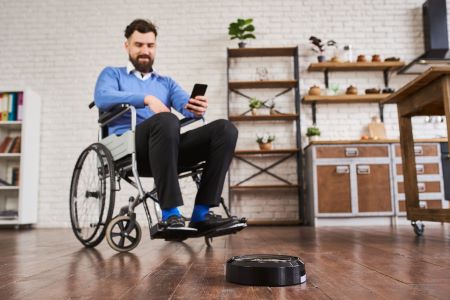
As smart home technology evolves, automation simplifies daily tasks, such as using biometric locks or automated ovens. Enhanced systems, including smarter vacuum cleaners and future robotics, can automate complex household tasks while adapting to user habits.
Ultimately, the opportunities for engineers lie in developing AI-supported systems tailored explicitly for inclusivity. By leveraging advancements in sensing technologies and real-time data analysis, smart home solutions can be crafted to significantly improve the lives of those who need them the most.
The content above is a summary. For more details, see the source article.









