


Key Takeaways
- Digid has unveiled nanoscale force and temperature sensors at CES 2026, enabling advanced medical applications.
- The sensors are incredibly small, facilitating integration into devices like scalpels and medical instruments.
- These sensors are immune to electromagnetic interference, enhancing their reliability in critical environments.
Innovations in Nanoscale Sensor Technology
The recent unveiling of Digid’s nanoscale force and temperature sensors at CES 2026 marks a significant advancement in sensing technology. Digid’s sensors are tailored for various applications, notably in the medical field, where understanding both temperature and force at a microscale is critical.
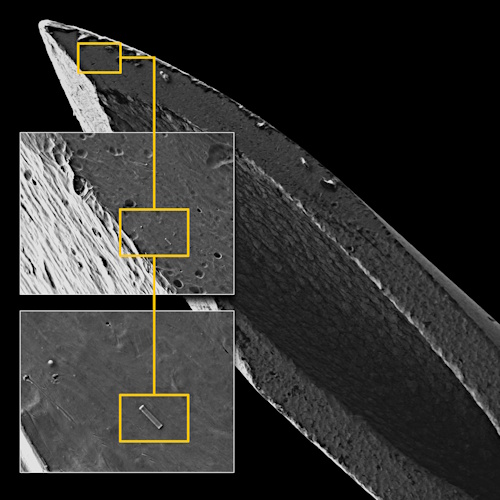
The company’s CTO, Dr. Konstantin Kloppstech, and Head of Technologies, Dr. Malte Köhler, shared insightful details during the event. The sensors are comparable in size to hypodermic needles, reaching dimensions of 1 micron in length and 100 nanometers in width. They can be printed on diverse substrates, making them versatile for different applications.
Initial development focused on creating sensors that accurately measure one phenomenon without interference from another. However, market feedback revealed a demand for sensors that could measure both force and temperature. This led Digid to innovate in ways that allow these sensors to function in real-time applications, crucial for surgical procedures.
In surgical contexts, the ability to monitor temperature precisely is vital. For instance, during shoulder surgeries, maintaining the temperature of the fluid in the joint is critical to avoid tissue damage. Digid’s sensors can be embedded in surgical instruments, providing accurate data to ensure safe operating conditions. The ability to control these physics in real-time enhances patient safety.
Additionally, Digid’s force sensors, when integrated into surgical tools like scalpels, are designed to be undetectable to the user, ensuring they do not hinder surgical processes. Data collected from numerous surgeries could potentially be utilized to train AI systems for robotic surgery in the future, representing a leap forward in surgical precision and training.
One remarkable aspect of Digid’s sensors is their resilience against electromagnetic interference, a common challenge in many electronic devices. This characteristic results from their minuscule size, which prevents them from acting as antennas for electrical noise. For instance, their sensors remained unaffected in environments with considerable electrical interference, a significant advantage during complex surgical operations.
The implications of such technology extend beyond the medical field, suggesting future applications across various domains, including structural health monitoring, robotics, and even consumer electronics. As materials evolve to incorporate these sensors, they can enable a greater understanding of real-time conditions and responses.
In conclusion, Digid’s nanoscale sensors herald a new era where sensing is seamlessly integrated into tools and materials, fostering a reality where machines and environments can respond to changes dynamically. With their ongoing innovations, the company is poised to transform how sensing technology operates, making it an integral, nearly invisible part of our everyday tools and systems.
The content above is a summary. For more details, see the source article.









