Key Takeaways
- The ExoMars Rosalind Franklin rover will be launched in 2028 with a new 35-meter parachute designed for landing on Mars.
- The parachute undergoes a rigorous sterilization process to avoid contaminating Mars with Earth microbes.
- Testing in a high-precision cleanroom ensures the parachute meets international planetary protection standards.
Innovative Preparation for ExoMars Rover Mission
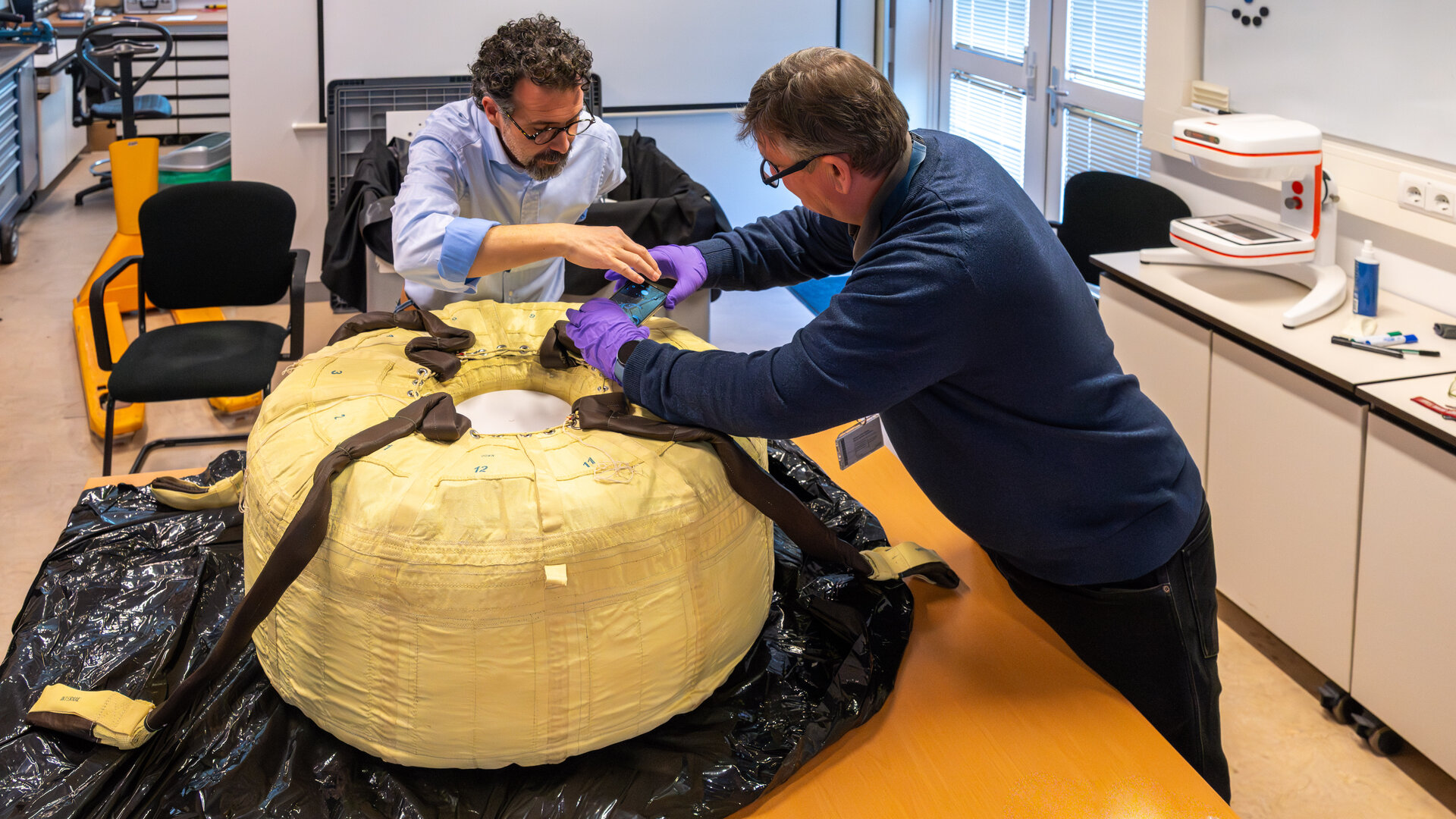
Inside a specialized donut-shaped bag is a 35-meter diameter parachute, weighing 74 kg and crafted from nylon and Kevlar. This parachute is set to be baked in a specialized dry heater sterilizer oven, preparing it for a critical six-minute descent into Mars’ thin atmosphere to ensure a safe landing for the ExoMars Rosalind Franklin rover. It is poised to become the largest parachute ever deployed on Mars or any other planet in the Solar System aside from Earth.
Scheduled for launch in 2028, the ExoMars mission aims to search for signs of life beneath the Martian surface. Given the significance of this exploration, the parachute must be sterilized to prevent “forward contamination,” which could occur if any terrestrial microbes managed to survive the journey through space. Protecting Mars from contamination is vital in accordance with international planetary protection agreements.
To thoroughly cleanse the parachute, it is subjected to rigorous heating in a specialized oven housed within the European Space Agency’s Life Support and Physical Sciences Laboratory at ESTEC, located in the Netherlands. Experts utilized replicas of the parachute to determine the optimal sterilization parameters. Testing revealed that heating the parachute at 125°C for 36 hours, preceded by a 50-hour preheating phase, effectively eliminates any potential microbial presence.
While this sterilization process may echo the baking of a cake, the conditions are far more stringent. The ESA’s dry heater sterilizer operates in an ‘ISO Class 1’ cleanroom, one of Europe’s most sterile environments. The room’s air is constantly filtered through a two-stage system, and personnel must adhere to rigorous gowning procedures before entering. This includes passing through an air shower designed to remove contaminants.
After completing the sterilization process, the parachute is allowed to cool for several hours. Subsequently, lab technicians don protective suits to carefully package the parachute within the cleanroom environment. Once sealed, it is sent back to Thales Alenia Space in Turin, Italy, where it awaits integration with the spacecraft.
As part of the preparatory efforts, a replica of the parachute was successfully tested during a high-altitude balloon drop, demonstrating its capability to decelerate a mock-up landing platform for a safe descent to Earth. The careful planning and meticulous execution of the sterilization and testing processes highlight the commitment to ensuring the ExoMars mission’s success.
For further insights, ESA’s Mars chief engineer, Albert Haldemann, explains the sterilization process and its critical role in the ExoMars Rosalind Franklin rover mission.
The content above is a summary. For more details, see the source article.