


Key Takeaways
- India’s ethanol industry faces a supply glut with over 20 billion litres of installed capacity against a demand of only 11 billion litres.
- Current government policies hinder the expansion of blending, creating uncertainty in the market for distilleries and farmers.
- The potential for ethanol-blended diesel remains unclear, with significant challenges related to engine compatibility and consumer acceptance.
Supply Issues in India’s Ethanol Industry
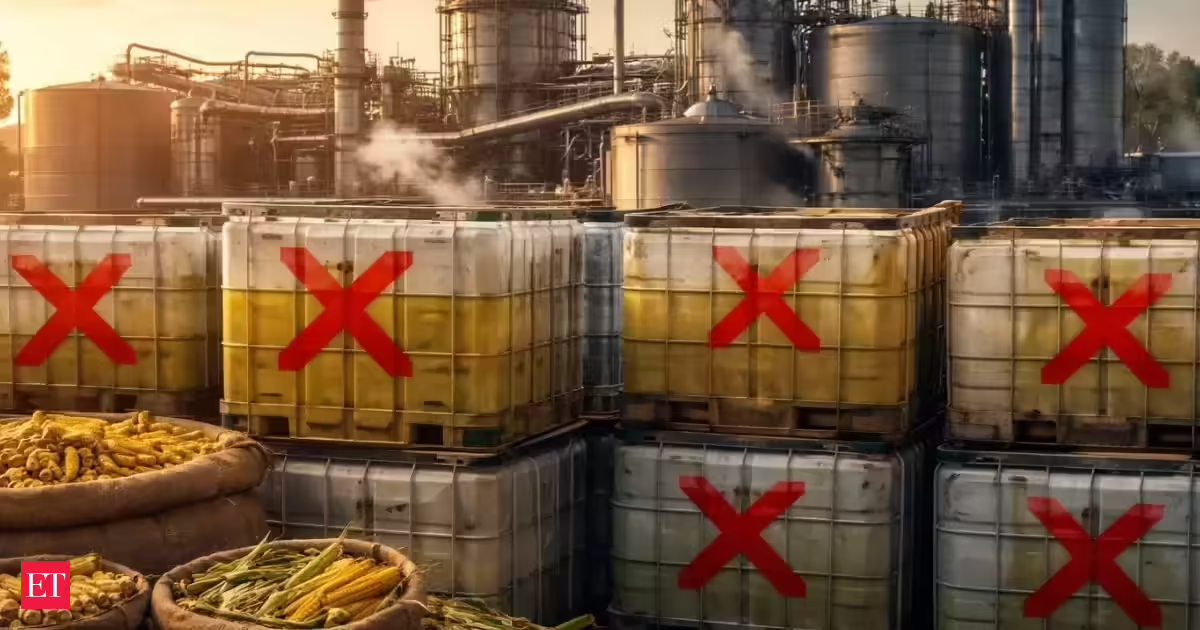
India’s ethanol industry is grappling with an overwhelming supply surplus, which threatens both livelihoods and significant investments. Currently, the industry boasts an installed capacity of nearly 20 billion litres of ethanol, with an additional 4 billion litres expected to come online soon. However, the mandatory requirement for ethanol blending with petrol (E20) is estimated at only 11 billion litres for the current ethanol year, beginning last November. This disparity signals that more than 50% of ethanol production capacity remains unutilized, highlighting a disconnect between government policies and demand.
Ethanol, recognized as a cleaner fuel alternative produced from sugar or food grains, has transformed into a sizable industry valued at around Rs 50,000 crore. The All India Distillers’ Association (AIDA) indicates that many distilleries were established with the optimistic expectation of rising ethanol consumption. However, current levels of blending and regulatory uncertainties have led to reduced operational capacity and surplus inventories.
Regulatory Challenges
Government discussions aimed at raising the blending threshold from 20% have stalled, primarily due to concerns over its impact on vehicles not designed for high ethanol blends. Following public backlash on social media, there has been no significant movement towards raising the blending ceiling, leaving many industry stakeholders expressing frustration over stalled approvals for new distilleries.
Despite plans for new distilleries, demand growth has not materialized in tandem with the additional capacity. The industry is now awaiting further government directives on raising blending percentages beyond the current 20% to sustain investment viability and ensure optimal utilization of facilities.
The Future of Ethanol-Blended Diesel
While petrol blending seems to have plateaued, diesel presents a tantalizing but complex opportunity for growth. However, challenges abound, as ethanol does not naturally blend with diesel, creating a need for specialized additives. Both Indian Oil Corporation and Bharat Petroleum are reportedly advancing their evaluations of ethanol-diesel blends. The implications of a failed rollout could have adverse effects on farmers, transporters, and fleet operators, which adds to the risk associated with this initiative.
Automakers have yet to introduce flex-fuel vehicles (FFVs) to the market, citing a lack of clarity from the government regarding policy support for higher ethanol blends like E85 or E100. The industry is calling for reduced Goods and Services Tax (GST) on FFVs to incentivize consumer adoption and help meet tightening fuel efficiency regulations.
Major vehicle manufacturers like Maruti Suzuki and Tata Motors are exploring flex-fuel prototypes, but concerns over sufficient infrastructure and ethanol supply persist. Fiscal incentives could play a crucial role in accelerating the development of flex-fuel vehicles, enabling companies to adapt and meet both environmental and economic goals.
A Crossroads for Growth
India’s ethanol narrative is at a crucial juncture. While production capacity has surged, the demand remains constrained by cautious government policies and regulatory uncertainty. Oil companies are exploring testing opportunities, and automakers are developing prototypes. However, substantial investments in distilleries face the risk of becoming stranded if the market dynamics do not align, underscoring the need for a coherent policy direction.
The content above is a summary. For more details, see the source article.









