Key Takeaways
- John McFall, a British surgeon and Paralympian, has been cleared for a mission to the International Space Station, becoming the first astronaut with a physical disability.
- The European Space Agency (ESA) is assessing future hardware needs for McFall, focusing on how prosthetics can aid him in space.
- McFall emphasized the importance of this milestone as a cultural shift towards inclusion in space exploration.
Historic Astronaut Clearance
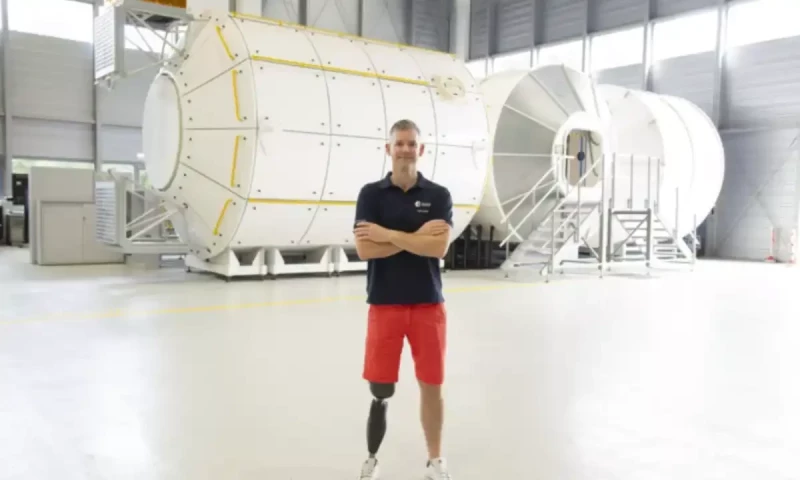
John McFall, a 43-year-old British surgeon and former Paralympian, has received medical clearance to join a long-duration mission aboard the International Space Station (ISS), marking a significant milestone in space exploration. McFall, who lost a leg in a motorbike accident at 19, was first announced as a member of the European Space Agency’s (ESA) astronaut reserve in 2022. Since then, the ESA conducted assessments to evaluate the feasibility of including an astronaut with a prosthesis in space missions.
The ESA officially announced McFall’s clearance, stating that he is now waiting for a mission assignment. In an online press conference, McFall expressed his pride in achieving this milestone, emphasizing that it goes beyond his personal journey and represents a broader cultural shift in the perception of disability within the space sector. “This is way bigger than me — this is a cultural shift,” he remarked.
ESA’s director of human and robotic exploration, Daniel Neuenschwander, confirmed that McFall is now considered an astronaut alongside his peers. He also highlighted that all partners in the ISS collaboration, including the United States, had approved McFall’s medical clearance. This announcement comes amidst a challenging climate for diversity, equity, and inclusion (DEI) initiatives, especially following the new U.S. administration under Donald Trump. Neuenschwander affirmed that the ESA would continue to uphold European values despite the evolving landscape of DEI initiatives in space agencies.
The next phase of the ESA’s study will examine the technical requirements for McFall’s journey, including the necessary adaptations to prosthetic technologies that could assist him in space. McFall noted that advancements developed for his mission could benefit a broader community of prosthetic users, thus enhancing accessibility and innovation in medical technologies. This endeavor not only paves the way for inclusive astronaut training but also serves as a beacon of progress in the ongoing discourse about representation in all fields, including space exploration.
The content above is a summary. For more details, see the source article.