

Key Takeaways
- A strong geomagnetic storm triggered by a solar eruption is expected to enhance northern lights visibility across the northern U.S. this weekend.
- The National Oceanic and Atmospheric Administration has issued a G3-class storm watch for Sunday, March 23.
- Optimal viewing conditions for auroras require dark skies, away from light pollution; several apps can assist with notifications and updates on visibility.
Sun’s Eruption Sparks Aurora Excitement
A significant solar eruption occurred on Friday, March 21, when a coronal mass ejection (CME) propelled solar plasma toward Earth. This event is expected to trigger a strong geomagnetic storm over the weekend, potentially boosting aurora sightings across the northern United States.
In conjunction with the CME, a “coronal hole” opened on the sun, releasing a high-speed stream of solar particles that adds to the solar activity affecting Earth. These two solar phenomena are anticipated to combine on the night of Saturday, March 22, resulting in increased solar wind speeds. The UK’s Meteorological Office noted that the arrival of this solar material is likely to produce enhanced to strong solar wind conditions.
The National Oceanic and Atmospheric Administration (NOAA) has issued an alert for a G3-class geomagnetic storm set to occur on Sunday. This storm level could enable auroras to be visible as far south as Oregon and across the lower Midwest, a rare occurrence for such southern regions. Officials from NOAA emphasized that, while G3 warnings are not common, they do happen periodically.
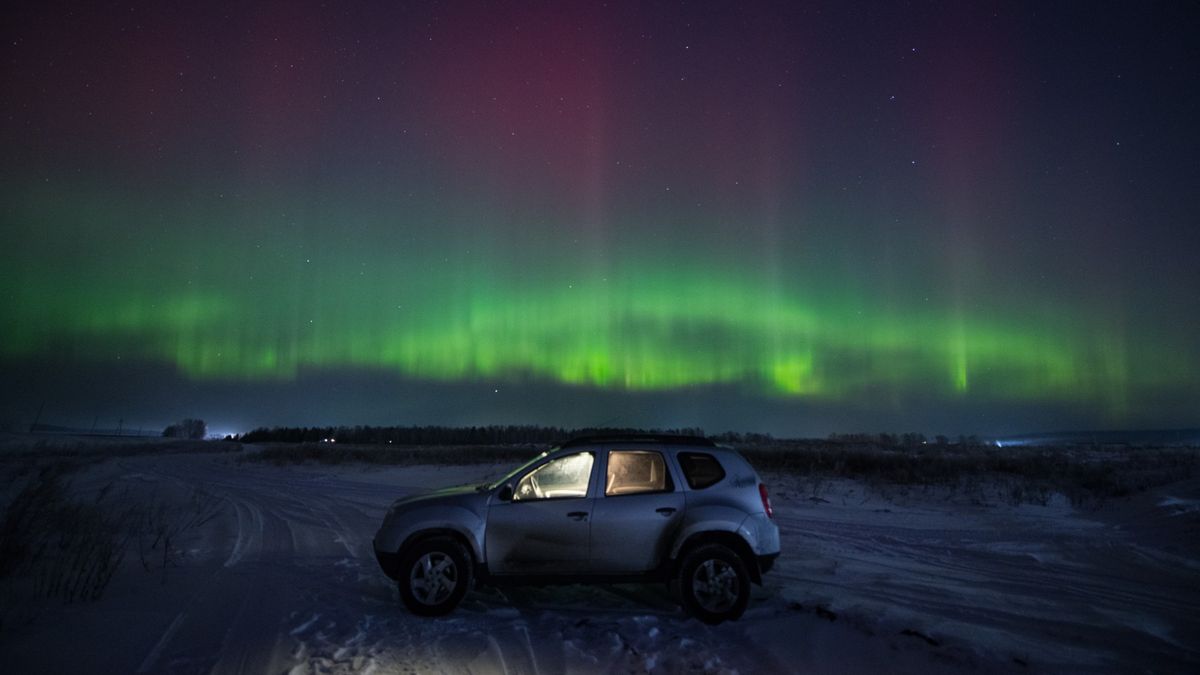
Auroras appear when charged particles from the sun’s solar wind collide with Earth’s magnetic field, primarily over polar regions. This interaction creates a luminous display, typically green in color, though heightened solar activity can lead to displays featuring more diverse hues, such as reds and purples.
For those in the potential viewing areas this weekend, finding dark skies free of light pollution is essential for the best auroral viewing experience. Urban lighting conditions can greatly diminish visibility, similar to what happens during meteor showers.
To enhance the chances of seeing the auroras, individuals are encouraged to use designated apps that provide personalized updates based on their location during storm watches. Recommended apps include “My Aurora Forecast & Alerts” and “Space Weather Live,” both available for iOS and Android devices.
Observers who manage to capture photos or videos of the northern lights are invited to share their experiences with Space.com, contributing to the online community’s excitement surrounding this spectacular display.
The content above is a summary. For more details, see the source article.