


Key Takeaways
- VisIC Technologies secures $26 million in second closing of Series B funding, led by a global semiconductor firm.
- Funding will enhance GaN power semiconductors for electric vehicles, focusing on efficiency and scalability.
- Hyundai Motor and Kia participate to integrate advanced GaN technology into their EV platforms for improved performance.
Funding Announcement
VisIC Technologies, a company specializing in gallium nitride (GaN) power semiconductors for electric vehicles (EVs), has successfully completed the second closing of its Series B funding, raising $26 million. This funding round was spearheaded by an undisclosed global semiconductor company, with notable contributions from automakers Hyundai Motor and Kia.
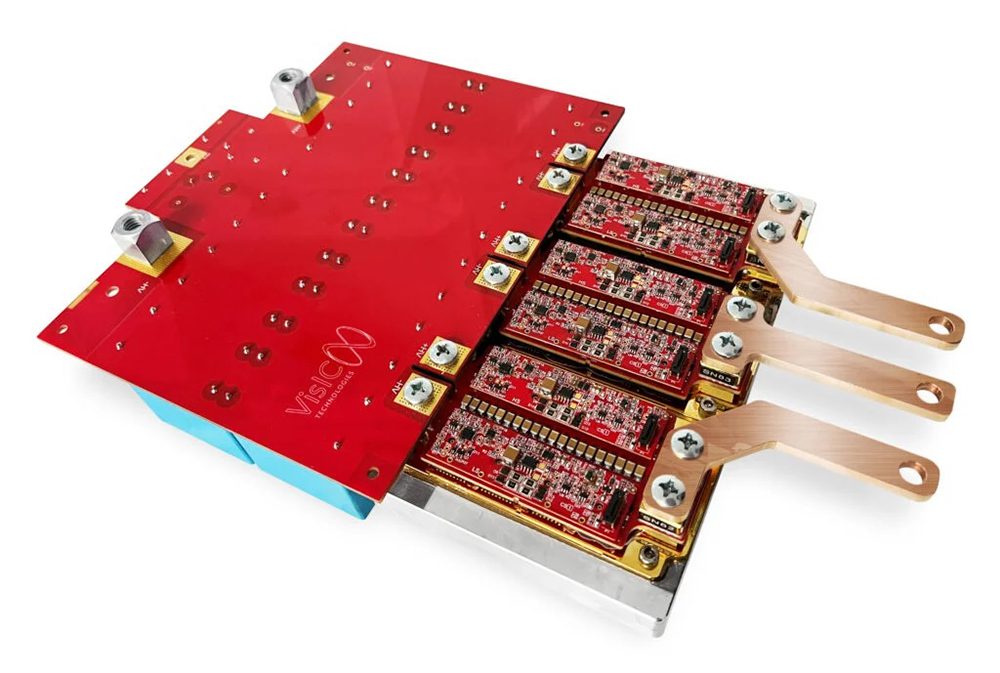
The lead investor aims to enhance critical semiconductor technologies, aligning well with VisIC’s D³GaN platform. This platform is engineered to provide efficiency, scalability, and reliability for automotive drivetrains, addressing current challenges in the sector. HKMC’s investment underscores its commitment to incorporating GaN technology into its EV initiatives.
VisIC’s advanced GaN technology is poised to overcome the limitations associated with traditional silicon semiconductors. It ensures the delivery of the necessary efficiency and power density required for next-generation EVs, particularly those operating at higher voltages. The technology facilitates the creation of smaller, lighter, and more efficient inverters suitable for 400 V and 800 V configurations.
The newly acquired funds will be utilized for the optimization, qualification, and release of the next-generation Gen3 750 V GaN dies and power modules. VisIC is also set to develop Gen4 1,350 V GaN technology, expanding its capabilities to meet the power demands of 800 V data centers while leveraging its proven platform.
Hyundai Motor Company and Kia express their dedication to promoting sustainable mobility through this partnership. They highlight that collaborating with VisIC will enable the integration of sophisticated GaN power technologies into their EV platforms, ultimately enhancing efficiency, reliability, and overall performance. This strategic alliance is seen as a pivotal step in shaping the future of electric transportation.
The content above is a summary. For more details, see the source article.









