Key Takeaways
- ISRO and Roscosmos are finalizing a contract for semi-cryogenic engines, enhancing India’s launch capabilities.
- The semi-cryogenic engine promises higher performance for heavy-lift vehicles and deep space missions.
- ISRO’s collaborations include a partnership for the Venus Orbiter Mission, focusing on atmospheric studies of Venus.
ISRO’s Technical Discussions in Moscow
The Indian Space Research Organisation (ISRO) has engaged in technical discussions with Russia’s space agency, Roscosmos, regarding the delivery of semi-cryogenic engines. This initiative is highlighted in ISRO’s Annual Report for 2025-26, indicating that ISRO officials are currently reviewing a draft contract for these engines.
Semi-cryogenic technology is key to ISRO’s future heavy-lift launch vehicles. By using refined kerosene and liquid oxygen, these engines offer improved efficiency and thrust compared to existing systems. The adoption of semi-cryogenic engines is expected to enhance India’s capability to handle heavier payloads and undertake deep space missions.
The partnership with Roscosmos extends ISRO’s international cooperation in space technology. Though India has been developing its own semi-cryogenic engine program, collaboration with Russia may expedite development timelines and fill critical technology gaps. No specific timelines for the contract finalization or engine delivery have been disclosed, but the approval process suggests significant progress.
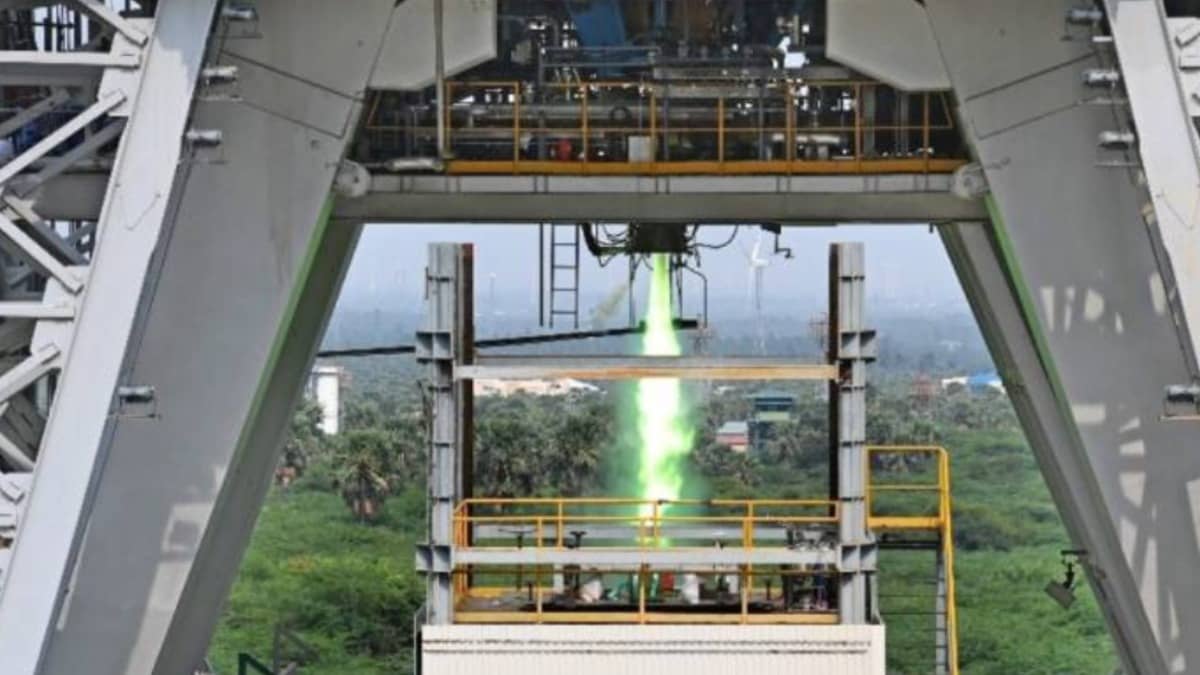
Earlier, ISRO reported advancements in its semi-cryogenic engine development, marked by a successful hot test conducted in March 2025 at the ISRO Propulsion Complex in Tamil Nadu. The semi-cryogenic engine, designated SE2000, will replace the existing core liquid stage of the LVM3 launch vehicle, thus enhancing performance.
The SE2000 engine features non-toxic liquid oxygen and kerosene propellants, improving payload capacity from 4 to 5 tonnes in geostationary transfer orbit (GTO). The engine operates with a complex oxidizer-rich staged combustion cycle at a high chamber pressure of 180 bar, accompanied by a propellant feed system capable of reaching 600 bar.
In addition to engine development, ISRO’s collaboration with Russia extends to planetary missions. Notably, Roscosmos has been selected as a partner payload provider for India’s upcoming Venus Orbiter Mission (VOM). This mission aims to investigate Venus’s atmosphere, surface, and its interaction with the Sun. Formal international collaborations have already begun, including agreements related to key payloads.
As part of the Venus mission, ISRO secured approvals to initiate a memorandum of understanding (MoU) with Roscosmos for the Venus InfraRed Atmospheric gases Linker (VIRAL) payload. Additional collaborations include an MoU with the Swedish Institute of Space Physics for the VNA payload. Further updates will follow upon the formal approval of the semi-cryogenic engines contract.
The content above is a summary. For more details, see the source article.