


Key Takeaways
- India’s circular economy could reach over USD 2 trillion in market value and create nearly 10 million jobs by 2050.
- The government aims to host the World Circular Economy Forum in 2026, building on existing waste management initiatives.
- New platforms and partnerships are being developed to enhance waste management and promote circular economy practices in urban areas.
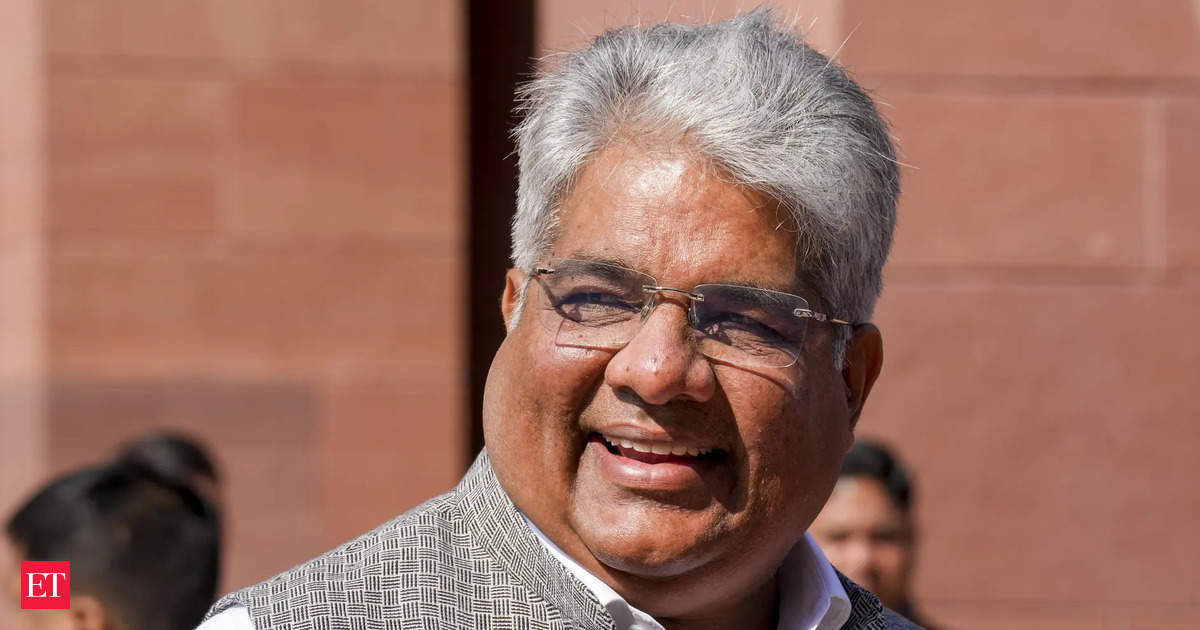
Union Minister Bhupender Yadav announced that India’s transition to a circular economy could generate more than USD 2 trillion in market value and create around 10 million jobs by 2050. Speaking at the 12th Regional 3R and Circular Economy Forum in Asia and the Pacific, Yadav emphasized that this shift represents one of the most significant transformations in business since the Industrial Revolution. He noted that by radically moving away from traditional production and consumption models characterized by ‘take, make, waste,’ the circular economy has the potential to add USD 4.5 trillion to the global economy by 2030.
During the forum, Yadav also mentioned India’s candidacy to host the World Circular Economy Forum in 2026, following the next event scheduled for 2025 in Sao Paulo, Brazil. He highlighted India’s commitment to tackling the challenges posed by plastic waste, referencing the effectiveness of the Plastic Waste Management Rules (2016), which addressed waste in municipal, industrial, residential, and commercial sectors. In 2022, India enacted a ban on specific categories of single-use plastics, aligning with the ‘LiFE’ (Lifestyle for Environment) initiative.
Efforts to promote sustainable practices include the introduction of Eco-Mark Rules, which aim to boost the demand for eco-friendly products while encouraging energy efficiency and circular economy principles. The Minister stated that India has also developed Circular Economy Action Plans for ten waste categories, with a regulatory framework in progress. Various waste management and extended producer responsibility rules have already been implemented across sectors such as plastics and electronic waste.
A significant session co-chaired by Srinivas Kathikala, Secretary of the Ministry of Housing and Urban Affairs, and Sudhansh Pant, Chief Secretary of the Government of Rajasthan, led to the launch of several pivotal reports, best practices, and agreements designed to reinforce India’s waste management ecosystem. Notably, the session unveiled the SBM Waste to Wealth PMS Portal, an innovative online platform developed under the Swachh Bharat Mission (SBM) aimed at improving project monitoring, data management, and resource sharing, thereby contributing to waste transformation into valuable resources.
The release of the IFC Document Reference Guide also marked a significant step, offering comprehensive insights into viable business models for municipal solid waste (MSW) processing. This guide will assist municipalities and private entities in effectively implementing economically sustainable waste management projects, such as waste-to-electricity and biomethanation systems.
Further enhancing scientific collaboration in waste management, a Memorandum of Understanding (MoU) was signed between the Council of Scientific and Industrial Research (CSIR) and the Ministry of Housing and Urban Affairs (MoHUA) to facilitate research and technology advancements in urban waste management practices throughout India.
Additionally, the event showcased ‘India’s Circular Sutra: A Compendium of Best Practices in 3R & Circular Economy,’ which documents successful case studies in the reduce, reuse, and recycle framework, offering valuable insights for urban local bodies and stakeholders. A report by the Council on Energy, Environment, and Water (CEEW) provided a detailed analysis of solid waste management practices in cities with populations exceeding one million, emphasizing sustainable strategies and circular economy principles tailored to India’s rapidly urbanizing regions.
The content above is a summary. For more details, see the source article.









