Key Takeaways
- NASA is developing in-situ resource technologies for construction on the Moon and Mars to support sustainable human presence.
- The MMPACT project utilizes large-scale robotic 3D printing to create infrastructure from local materials.
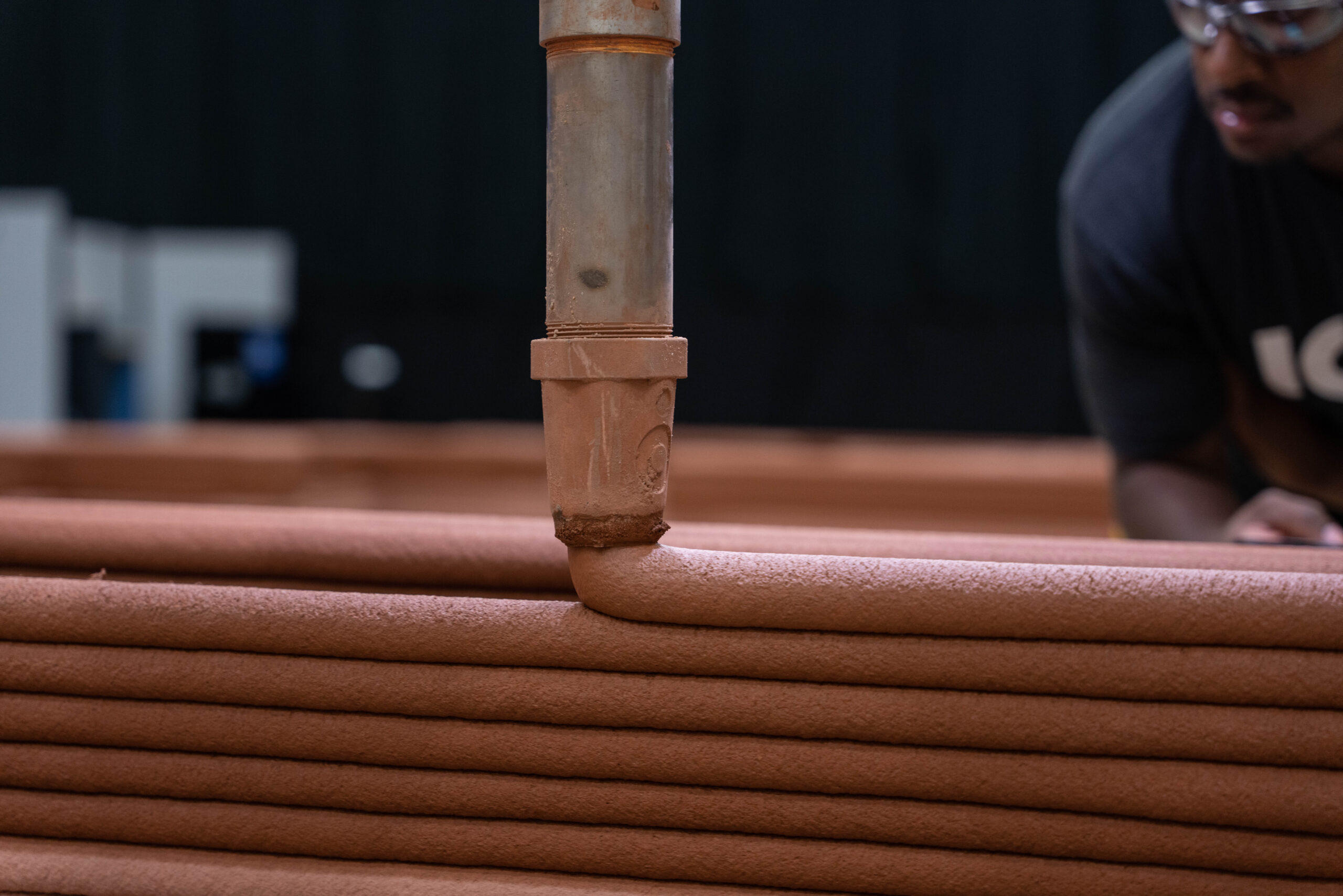
- ICON is building a simulated Martian habitat for NASA, enhancing 3D printing techniques for Earth and extraterrestrial applications.
Leveraging Local Resources for Space Construction
NASA is advancing technologies for in-situ resource utilization, crucial for establishing a sustainable human presence on the Moon and Mars. The Space Technology Mission Directorate is exploring how to use local materials for building infrastructure, including habitats, radiation shielding, and landing pads.
One standout initiative is the Moon to Mars Planetary Autonomous Construction Technology (MMPACT) project, housed at NASA’s Marshall Space Flight Center in Huntsville, Alabama. Funded by the Game Changing Development program, MMPACT is pioneering large-scale robotic 3D printing applications to construct buildings on extraterrestrial surfaces. Tests utilizing simulated lunar and Martian regolith demonstrate promising potential for this technology.
MMPACT collaborates with academic institutions and industry partners to refine processing technologies for lunar and Martian construction materials. Local resources, like water and regolith, will serve as binders and aggregate for new concrete mixtures, thus reducing the need for heavy launches from Earth. Dr. Behrokh Khoshnevis, a pioneer in large-scale 3D printing, has been instrumental in this effort, developing processes under NASA’s Innovative Advanced Concepts (NIAC) program. One such technique is Contour Crafting, employing molten regolith mixed with binding agents to fabricate structures layer by layer autonomously.
In addition to these large-scale applications, Khoshnevis has also developed selective separation sintering, an energy-efficient printing method. This technique uses heat and pressure to create small-scale machinery from layers of powdered materials, adaptable for use in both extraterrestrial and microgravity environments. His company, Contour Crafting Corporation, aims to apply these advanced techniques for infrastructure on Earth, showcasing the dual benefits of space technology.
Another partner, ICON, based in Austin, Texas, has also made strides in 3D printing for both space and Earth construction. The company recently completed a 1,700-square-foot habitat, serving as a Mars simulation at NASA’s Johnson Space Center in Houston. This habitat will support four crew members for a year-long mission as part of the Crew Health and Performance Analog (CHAPEA) studies, with operations set to begin in summer 2023.
ICON’s innovations were fueled by participation in NASA’s 3D-Printed Habitat Challenge, aimed at improving housing technology for extraterrestrial environments. Their Martian habitat model, Mars Dune Alpha, demonstrates the feasibility of using advanced 3D printing techniques for creating living spaces with essential facilities.
Additionally, ICON is developing an Olympus construction system to work with local materials on Mars and the Moon. Their proprietary Laser Vitreous Multi-material Transformation technique allows high-powered lasers to melt regolith, forming durable, ceramic-like structures. These materials can withstand various environmental challenges, such as lunar dust and extreme temperatures.
One notable experiment addressing the characteristics of regolith is Duneflow, which recently flew aboard a Blue Origin reusable rocket. This experiment simulated lunar gravity for two minutes, providing crucial data to compare the behavior of lunar simulants against actual samples collected during the Apollo missions.
Through these collaborative efforts, NASA and its partners are not only paving the way for future explorations but also translating space technology into practical applications on Earth, embodying the spirit of innovation in aerospace engineering.
For further details, visit NASA’s Space Technology Mission Directorate.
The content above is a summary. For more details, see the source article.