


Key Takeaways
- Ukraine’s President Zelenskyy is showcasing the country’s advanced anti-drone technology to secure continued Western support amid the shift of focus to the Iran conflict.
- Ukraine has dispatched experts to Middle Eastern nations and signed a partnership with Romania for drone production, while seeking to enhance defense ties with European leaders.
- Zelenskyy emphasizes the cost-effectiveness and scalability of Ukraine’s drone-killing technologies compared to conventional options like US Patriot missile systems.
Ukraine Leverages Drone Technology to Secure Western Support
As the conflict in Iran draws attention away from Ukraine’s ongoing battle against Russian forces, President Volodymyr Zelenskyy is strategizing to maintain international support. With some Western allies less inclined to assist, notably during the Trump administration, Ukraine is capitalizing on its developed anti-drone technology to attract foreign investments and resources.
Since the beginning of the Russian invasion on February 24, 2022, Ukraine has faced over 57,000 Iranian-made Shahed drones, prompting it to adapt and innovate in drone defense. The ongoing conflict has made this technology particularly appealing to countries like Saudi Arabia, Qatar, and the UAE, which have already received Ukrainian experts to bolster their defenses against similar threats.
Zelenskyy recently signed a letter of intent with Romanian President Nicusor Dan to initiate drone production in Romania, highlighting Ukraine’s willingness to enter into joint ventures with allies. As Zelenskyy visits Paris to meet with French President Emmanuel Macron, discussions will focus on defense collaboration and the impact of the Iran conflict on global oil prices.
The ongoing US-Iran conflict has inadvertently benefited Russia, allowing it to continue funding its invasion of Ukraine through illicit oil revenues, especially as global energy prices rise. Despite these challenges, Zelenskyy remains hopeful for a significant drone production agreement with the White House, which Kyiv proposed last year to develop interconnected air defense systems capable of countering extensive drone attacks.
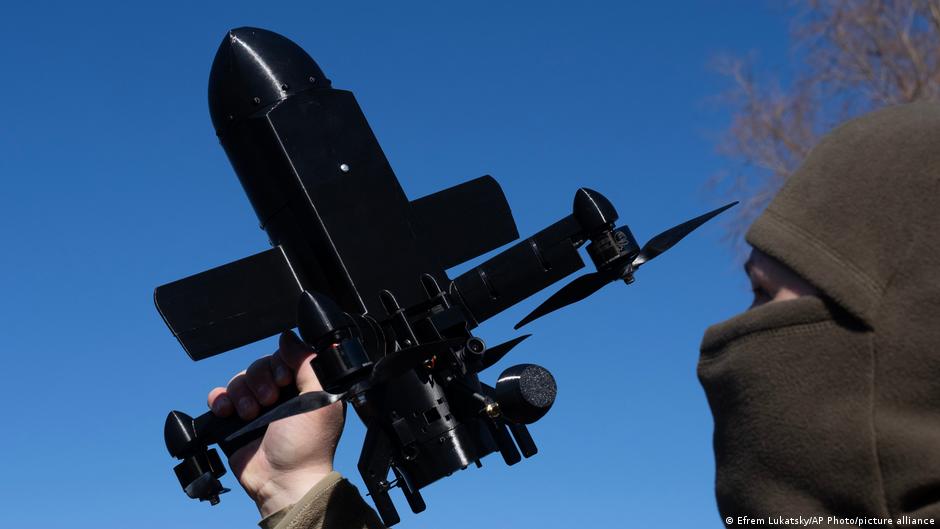
Zelenskyy’s strategy underscores the effectiveness of Ukraine’s innovative, cost-effective defense technologies. Unlike sophisticated but expensive Patriot missile systems, Ukraine has developed affordable interceptors, costing only a few thousand dollars compared to approximately $3 million to $4 million per US missile. This financial advantage positions Ukraine as a valuable partner in global defense ecosystems.
In achieving this turnaround, Zelenskyy has shifted perceptions from his previous portrayal as lacking leverage against Russia to being in a position to dictate terms based on Ukraine’s newfound capabilities. These developments open avenues for Ukraine to not only defend its sovereignty but also play a crucial role in regional security dynamics involving other nations threatened by drone warfare. As the situation evolves, the potential for Ukraine to lead in innovative defense solutions seems more urgent than ever.
The content above is a summary. For more details, see the source article.









