


Key Takeaways
- The White House Task Force, led by President Trump, aims to coordinate security for the 2028 Summer Olympics in Los Angeles.
- Concerns arise about the politicization of the event, especially given past security issues at major games.
- Los Angeles officials express hope for a cooperative relationship with the federal government in preparing for the Olympics.
Security Plans for the 2028 Summer Olympics
Zev Yaroslavsky, who served on the Los Angeles City Council during the 1984 Summer Olympics, spoke to the significance of security for the upcoming 2028 Games, especially in light of past tragedies like the 1972 Munich massacre. Security is a primary concern for LA officials, now more than ever, as federal plans unfold.
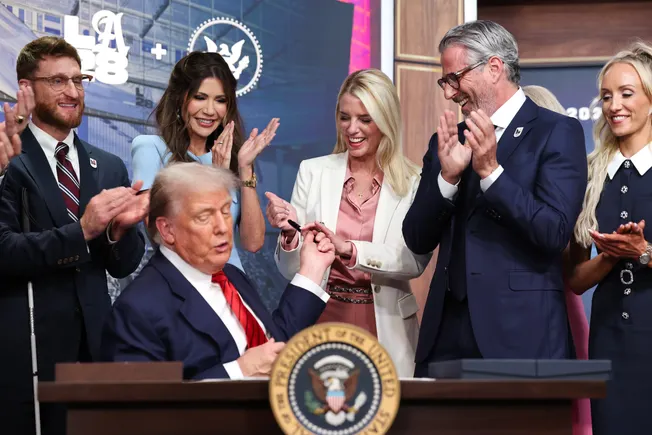
On August 5, President Trump signed an executive order establishing a White House Task Force dedicated to the 2028 Olympics, comprising top officials, including Vice President JD Vance and Attorney General Pam Bondi. This task force is responsible for coordinating federal security, transportation, and emergency response for the Games. Casey Wasserman, chair of LA28, expressed confidence that federal support will enhance the events, echoed by Trump’s statement on mobilizing government efforts to ensure success.
However, Yaroslavsky raised concerns regarding the intent behind Trump’s involvement, questioning whether the focus is on genuine partnership or a “press event.” The politicization of Olympic preparations has raised eyebrows among local leaders and experts like Jules Boykoff, who noted that securing the 2028 Games under a National Special Security Event designation grants the federal government significant control, reminiscent of the highly coordinated, yet chaotic, security measures seen during the 1996 Atlanta Games.
Boykoff pointed out that the involvement of military forces at the Olympics is not unusual, but Trump’s direct assertion to involve the military is unprecedented. He suggested that Trump’s potential use of high-profile events for political leverage in California adds further complexity to the situation.
Previous games have had notable security challenges; for example, the 1996 Atlanta bombing exposed major gaps in inter-agency communication. To counter this, the Salt Lake City games in 2002 established a public safety command to unify local and federal forces. The Trump task force, tied to the Department of Homeland Security, hopes to adopt a similar approach but faces challenges with local authorities, particularly following tensions from Trump’s order to send National Guard soldiers to LA earlier this year.
LA Deputy Mayor Zach Seidl affirmed a commitment to cultivating a strong partnership with the federal government in preparation for the Olympics. Yaroslavsky reiterated the importance of this cooperation, emphasizing the Games as a chance for Los Angeles to showcase its strengths to a global audience but stressing that a genuine partnership is crucial for success.
The content above is a summary. For more details, see the source article.









