Key Takeaways
- LOTUSat-1, Vietnam’s first radar Earth observation satellite, is ready for launch, enhancing disaster response and climate change management.
- The 600 kg satellite can capture high-resolution images in all weather conditions, a crucial asset for Vietnam’s often cloudy climate.
- A cooperation agreement between Vietnam and Japan aims to optimize the satellite’s use and improve space technology collaboration until 2028.
Vietnam’s Ambitious Leap into Space Technology
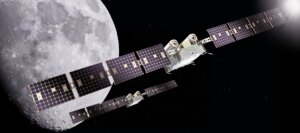
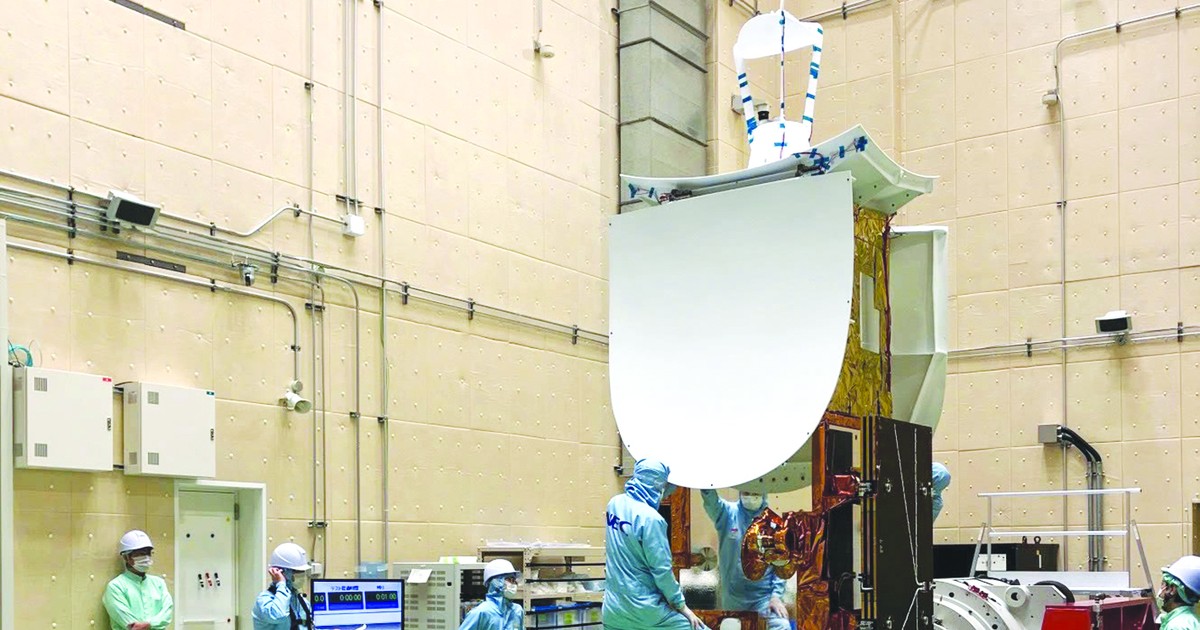
The LOTUSat-1 satellite, marking Vietnam’s inaugural foray into radar Earth observation technology, has been successfully completed. Set to be launched into orbit, the satellite’s ground system at Hoa Lac is fully prepared to receive its data.
LOTUSat-1 is part of a significant project titled “Disaster Prevention and Climate Change Response Using Earth Observation Satellites,” initiated in September 2012 at the Hoa Lac Hi-Tech Park in Hanoi. Funded by Japan’s official development assistance (ODA) and Vietnam’s own contributions, the Vietnam National Space Center (VNSC) oversees the project.
Weighing in at 600 kg, LOTUSat-1 boasts advanced radar technology that can detect objects as small as 1 meter, functioning efficiently both day and night. Its distinct advantage over optical satellites lies in its ability to capture images in adverse weather conditions, such as clouds and fog—capabilities that are particularly beneficial to Vietnam, where such weather is common. The satellite will play a vital role in providing essential data for disaster response, climate change mitigation, and environmental monitoring.
The satellite was manufactured in Japan with substantial involvement from Vietnamese engineers, who participated in the design, assembly, and testing phases. This experience is crucial, as it allows Vietnam to gradually acquire expertise in large-scale satellite production and contributes to the nation’s overall advancement in space technology.
The completion of LOTUSat-1 is a critical milestone for Vietnam’s strategy in developing and applying space science and technology through 2030. To maximize the capabilities of this satellite, an implementation agreement was signed in November 2023 between Professor-Academician Chau Van Minh, President of the Vietnam Academy of Science and Technology, and Professor Yamakawa Hiroshi, President of the Japan Aerospace Exploration Agency (JAXA). This accord aims to facilitate cooperation in space technology, focusing on how to effectively operate LOTUSat-1 and share satellite image data.
Vietnam and Japan’s partnership in space technology began in 2006, leading to the successful launch of three microsatellites developed by Vietnamese engineers: PicoDragon in 2013, MicroDragon in 2019, and NanoDragon in 2021. With LOTUSat-1, Vietnam is solidifying its commitment to advancing its capabilities in space and fostering innovation.
The content above is a summary. For more details, see the source article.