


Key Takeaways
- Machine learning transforms the detection and analysis of organic pollutants, addressing traditional analytical challenges.
- Advances in machine learning facilitate automated identification and quantification of environmental contaminants without the need for reference standards.
- Integration of molecular features and experimental data is crucial for enhancing model transferability and interpretability in pollutants analysis.
Revolutionizing Environmental Pollutant Analysis
A recent review in *Artificial Intelligence & Environment* explores how machine learning (ML) is enhancing the identification and quantification of environmental organic pollutants. These pollutants, which include pharmaceuticals, pesticides, and various industrial byproducts, often present challenges for traditional analytical methods due to a lack of reference standards.
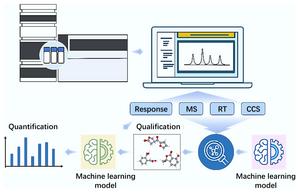
The review discusses advances in non-targeted analysis using liquid chromatography coupled with high-resolution mass spectrometry (HRMS). This approach can detect thousands of chemical signals in environmental samples, yet traditional methods can confidently identify only a small fraction. As noted, “Less than a few percent of environmentally relevant compounds can currently be confidently identified using traditional workflows.” This limitation highlights the need for more advanced techniques.
Machine learning offers promising solutions. By utilizing data-driven models, ML can predict tandem mass spectra from known molecular structures, thereby enhancing spectral libraries. This process supports more accurate identification of complex relationships inherent in high-dimensional spectral data, moving analysis from expert-driven methods to automated, scalable solutions.
The review also emphasizes the role of generative models that can propose plausible chemical structures based on spectral information, even for compounds lacking formal documentation. This feature is particularly vital for identifying emerging contaminants.
In addition, techniques such as predicting retention time and collision cross-section significantly bolster identification confidence. Modern neural network models demonstrate high accuracy in these predictions across various analytical platforms, reducing the number of false positives during structure confirmation.
Quantification remains a challenge, especially in the absence of authentic standards for converting signal intensity into reliable concentration estimates. However, recent ML approaches have begun to bridge this gap by predicting ionization efficiency and response factors based on molecular structures and experimental conditions, enabling semi-quantitative analysis without the need for reference standards.
The authors stress that robust quantification is essential for exposure assessments and risk evaluations, and ML-based predictions for ionization behavior can facilitate standard-free quantification in large-scale screenings.
Despite these advances, key challenges persist, such as ensuring model transferability across instruments and enhancing the representation of environmental pollutants in training datasets. The authors advocate for multimodal learning strategies that integrate molecular data with experimental parameters, alongside improved databases that reflect the diversity of environmental chemicals.
Looking forward, the researchers envision fully automated ML-driven screening platforms that consolidate identification, property prediction, and quantification into a cohesive system. They assert, “Future systems will be more accurate, transferable, and interpretable,” paving the way for improved monitoring of organic pollutants and enhanced public health safety.
The content above is a summary. For more details, see the source article.









