Key Takeaways
- NASA and researchers at the University of Alabama have created a “laundry gun” utilizing cold plasma to clean astronauts’ clothes in space.
- The device effectively eliminates odor-causing microbes without damaging fabrics, making long-term space missions more comfortable.
- Future advancements include a plasma washing machine and dual plasma jet-vacuum cleaner designed for cleaning various surfaces in habitats on the moon and Mars.
Innovative Laundry Solution for Space Missions
Astronauts aboard the International Space Station (ISS) face unique challenges regarding hygiene and clothing care, particularly during extended missions. Currently, they often wear clothes for days and then send them back to Earth, where they incinerate upon re-entry. This method suffices for shorter missions, but it is impractical for long-duration stays on the moon or Mars, where resupply options are limited.
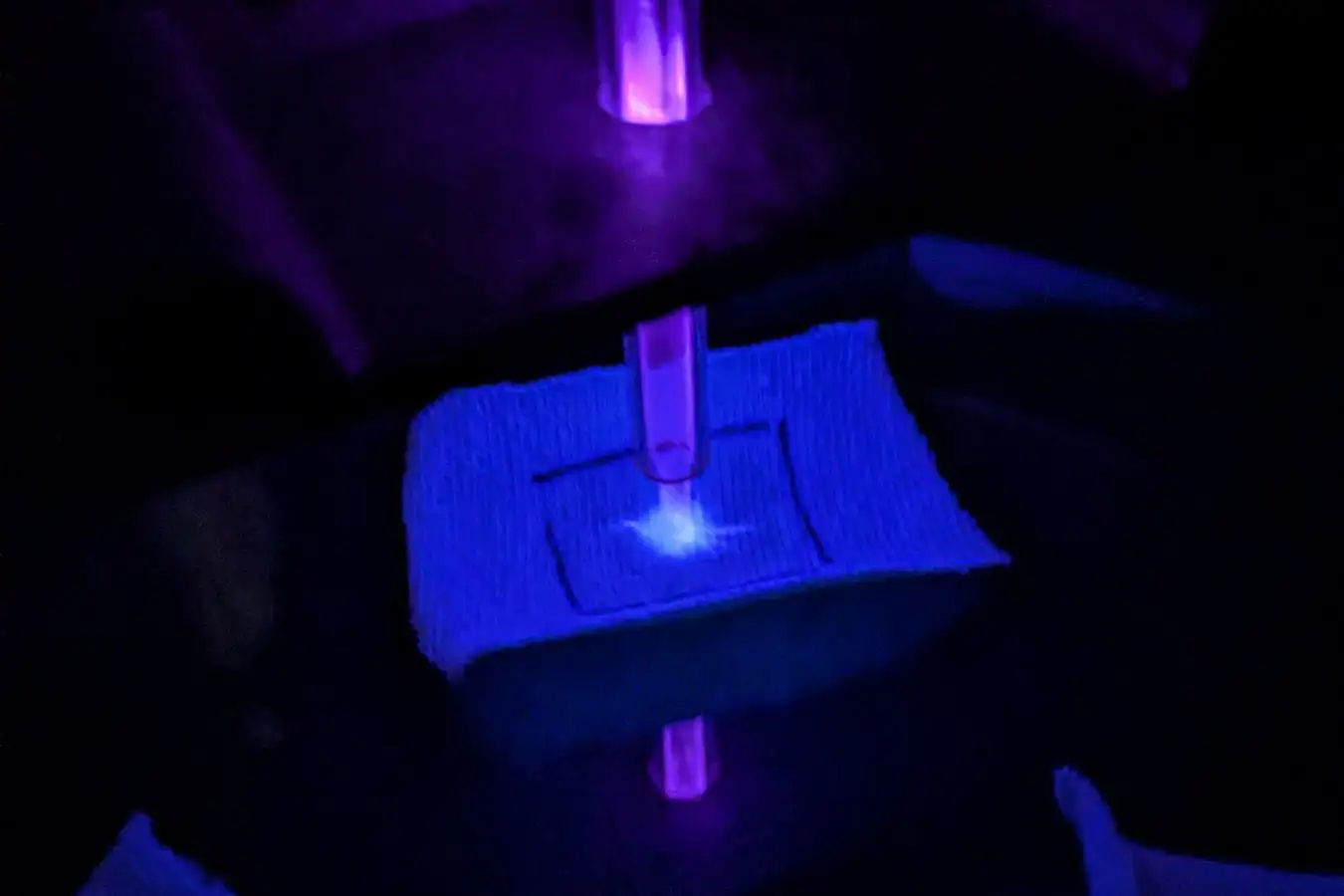
To tackle this issue, Gabe Xu from the University of Alabama in Huntsville and Chelsi Cassilly from NASA’s Marshall Space Flight Center have developed an innovative cleaning technology. This “laundry gun” uses cold plasma to sanitize fabrics, effectively eliminating odor-causing microbes. Xu presented their findings at the Astrobiology Science Conference in Wisconsin on May 21.
The cleaning process involves blasting fabrics with a mixture of helium, air, and water vapor, energized by high-voltage bursts of electricity. This produces ionized oxygen that penetrates the fabric, targeting and destroying microbes through oxidative stress. Xu notes, “There are microbes that are UV resistant, but as far as we can tell from our experiments, there is nothing that is oxidative stress resistant.” Testing has demonstrated that the plasma reduces the number of spore colonies on cotton from 250,000 to approximately 60,000 per milliliter.
A key advantage of this method is that it does not damage the fabric. Xu compared the cold plasma jets to lightning bolts, clarifying, “This jet you can put your hand in, you could use it at home.” While it is not yet practical for home use due to its limited sanitizing area, Xu and Cassilly are focused on developing more efficient devices. Future iterations include a “plasma washing machine” that would integrate plasma directly into a chamber with the fabrics and a dual plasma jet-vacuum cleaner for cleaning surfaces.
Considerations for long-term habitats on the moon or Mars include the need for clean surroundings and comfortable furnishings. As Xu points out, “astronauts will probably want a couch to sit on,” which presents a cleaning challenge. By harnessing the power of plasma jets, this groundbreaking technology could facilitate feature-rich habitats in space, making far-off locations feel more like home for astronauts.
As research progresses, this promising cleaning solution could not only enhance the living conditions for astronauts but also revolutionize hygiene protocols for future explorations beyond Earth.
The content above is a summary. For more details, see the source article.