Key Takeaways
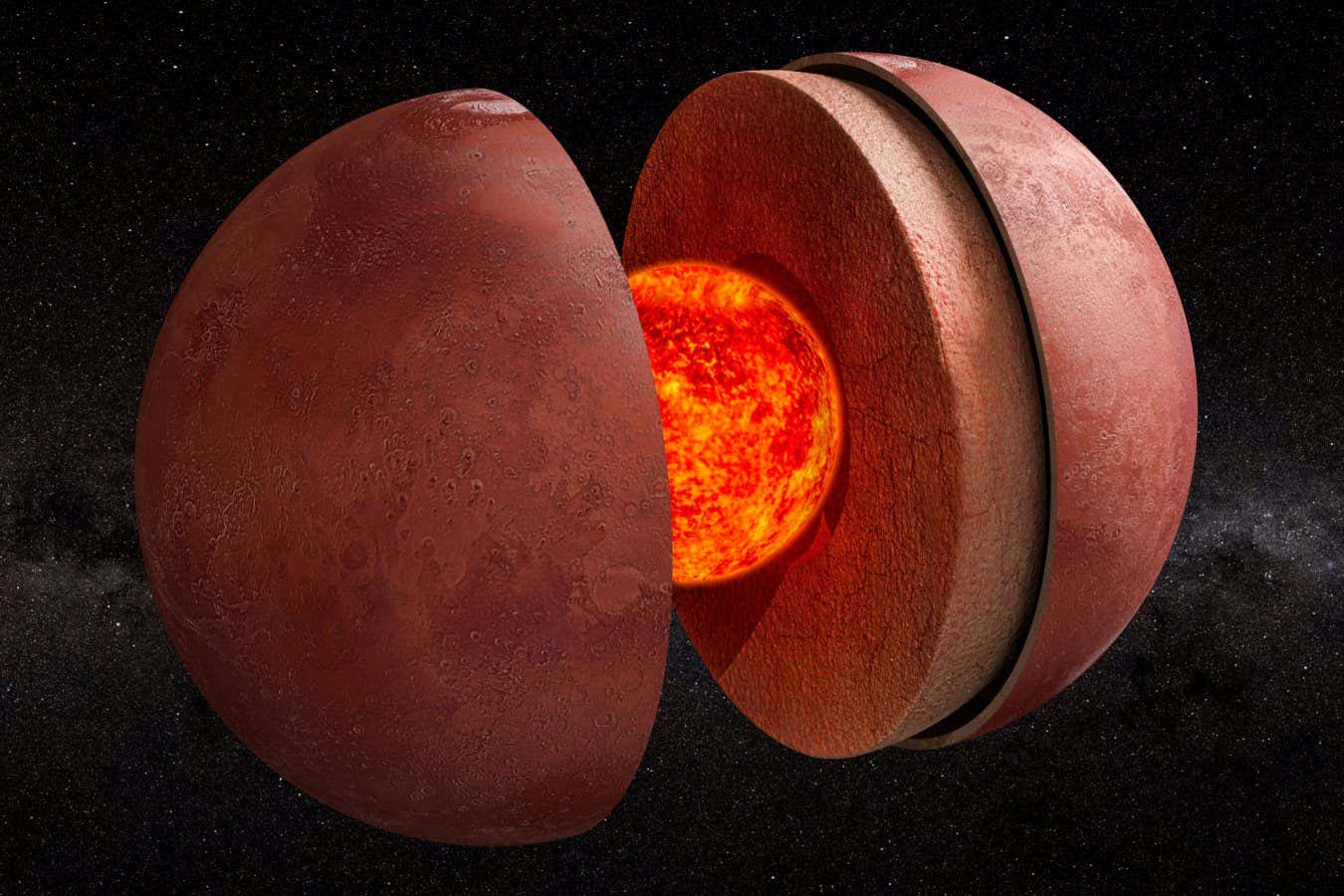
- Research suggests Mars may possess a solid inner core surrounded by a liquid outer core.
- This discovery could clarify various geological mysteries on the Martian surface.
- Critics express skepticism about the seismological evidence supporting this theory.
New Insights into Mars’s Core Structure
Recent research indicates that Mars may have a solid inner core encased in a liquid outer core, a finding derived from seismic activity analysis on the planet. This groundbreaking theory could provide clarity on many geological anomalies observed on Mars, but it faces skepticism among certain experts in the field. Simon Stähler from ETH Zurich remarked, “It’s big if true,” acknowledging the potential significance of the discovery while cautioning that the seismological evidence remains limited.
The analysis comes from data collected by NASA’s InSight lander, which has been measuring Martian seismic activity since its arrival on the planet in 2018. This lander’s instrumentation has recorded numerous quakes on Mars, providing crucial information about the planet’s internal structure. While similar seismic studies on Earth have helped scientists understand our planet’s core, Mars’s unique geological characteristics add complexity to the interpretation of data.
The proposed model of the Martian core builds upon previous studies suggesting that the planet’s inner workings are significantly different from those of Earth. These differences are pivotal in studying planetary evolution across the solar system. Understanding Mars’s core composition could also shed light on its magnetic field history, which has been a source of ongoing research and debate. Currently, Mars boasts a weak magnetic field, and knowing the structure of its core may help scientists comprehend why this is the case.
Despite the scientific excitement surrounding the theory, there remains a level of caution within the community. Some researchers believe the evidence supporting a solid inner core is inadequate, calling for more substantial data to reinforce the claims. Critics argue that the current seismological measurements may not be sufficient to make definitive assertions about the core’s structure. They emphasize the importance of further exploration and data collection to validate the findings.
In light of these differing views, more missions to Mars, such as the Mars Sample Return mission, could provide additional insights into the planet’s geology and core structure. Advancements in technology may facilitate more precise measurements of seismic activity and possibly uncover new information about the Martian core’s composition and behavior.
Continued research and discussion within the scientific community remain essential to understanding the implications of these findings fully. Whether or not Mars has a solid inner core may not only redefine our view of the Red Planet but also expand knowledge of planetary formation and evolution across our solar system.
The content above is a summary. For more details, see the source article.