


Key Takeaways
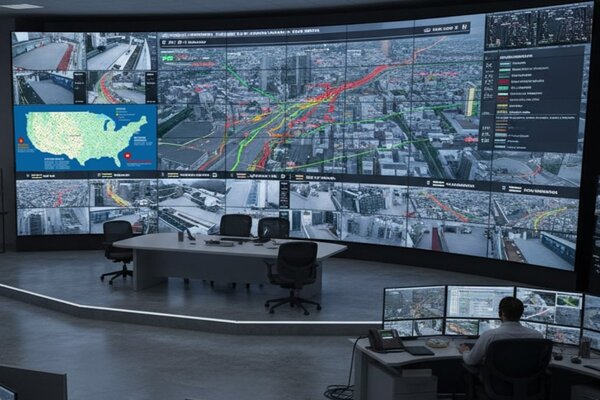
- Terbine’s Mission Control integrates the Strata platform with immersive displays and individual consoles.
- The system aims to manage complex autonomous operations in smart cities effectively.
- It emphasizes the importance of human oversight in the deployment of advanced technologies.
Innovative Management for Autonomous Systems
Terbine has unveiled its Mission Control system, a cutting-edge solution that combines the Terbine Strata platform with large immersive displays and individualized operator consoles. Designed to facilitate the management of complex autonomous systems, this innovative platform seeks to maintain human oversight in the functioning of smart cities.
In the rapidly evolving landscape of urban technology, the demand for efficient management tools has surged. Autonomous systems, such as self-driving vehicles and drone deliveries, are increasingly becoming integral components of modern urban ecosystems. However, their complexity poses significant challenges for safe and effective operation. This is where Terbine’s Mission Control steps in, providing a comprehensive suite of functionalities to manage these complexities seamlessly.
The key feature of the Mission Control system lies in its ability to provide a centralized interface that allows operators to monitor and control various autonomous systems in real-time. By integrating the Terbine Strata platform, Mission Control gives users access to vast amounts of data, enabling informed decision-making. The immersive large-screen displays enhance situational awareness, allowing operators to visualize operations and respond swiftly to any anomalies or challenges that arise.
Moreover, Terbine emphasizes the critical role of human involvement in overseeing technological systems. While automation offers numerous advantages, such as increased efficiency and reduced human error, the necessity for human judgment remains paramount. The Mission Control system supports this need by keeping operators actively engaged, ensuring that they can intervene when necessary to maintain safety and efficacy.
As smart cities continue to evolve, the importance of sophisticated management solutions that empower human operators cannot be overstated. Systems like Terbine’s Mission Control are at the forefront of this trend, integrating advanced technology with essential human experience. By doing so, they create a balanced approach that fosters innovation while prioritizing public safety and effective governance in urban development.
In summary, Terbine’s Mission Control system exemplifies the future of managing autonomous technology in urban environments. Its design not only focuses on efficiency and control but also highlights the indispensable role of human operators in the oversight of complex systems. As cities become increasingly interconnected, tools like these will be crucial for navigating the challenges and opportunities that arise in smart city innovation.
The content above is a summary. For more details, see the source article.









