


Key Takeaways
- Ghudani Kalan won the model solar village competition, boosting solar energy uptake in Ludhiana.
- Post-competition, there was a significant rise in rooftop solar installations across participating villages.
- The initiative aligns with national efforts to promote renewable energy and reduce household electricity costs.
Increased Solar Adoption in Ludhiana
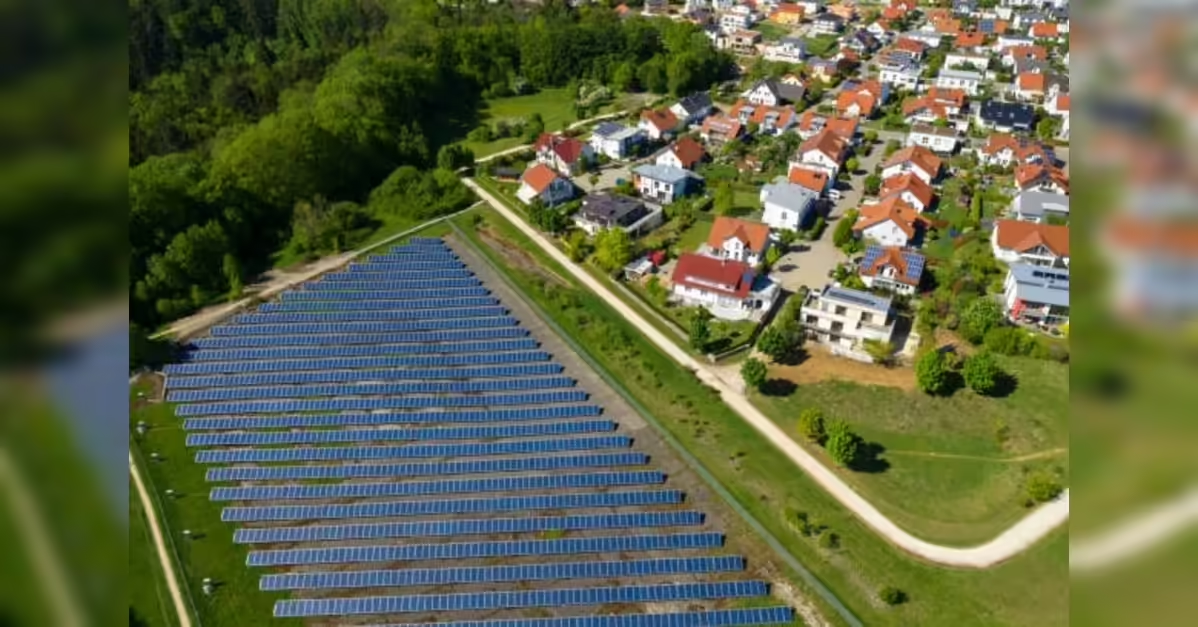
Ghudani Kalan has emerged as the top performer in a model solar village competition, significantly enhancing solar energy use in Ludhiana. Following the announcement of the village’s victory, reports indicate a marked increase in the installation of rooftop solar panels across the participating villages, a trend driven by the competitive spirit and ongoing awareness efforts.
The competition involved 11 villages, with Ghudani Kalan generating approximately 216 kilowatts (kW) of solar power, which was successfully integrated into the local electricity grid. Officials emphasize that the primary benefit of the competition lies in its potential to motivate both residential and commercial entities to adopt solar technology for energy generation.
This initiative is part of a broader governmental strategy to promote renewable energy in rural areas, enhancing self-sufficiency in electricity generation. It aligns with the PM Surya Ghar: Muft Bijli Yojana, which aims to assist households in lowering electricity bills through subsidized rooftop solar installations.
Gurinder Singh, district manager of the Punjab Energy Development Agency (PEDA), noted that the competition successfully raised awareness about both the economic and environmental benefits of solar power. He highlighted that during the competition, 34 domestic and commercial units adopted rooftop solar systems. Residents began to show interest as they observed tangible reductions in their electricity bills and understood the available subsidies.
The village’s sarpanch, Gurinder Singh, explained that Ghudani Kalan focused on installing systems in high-consumption areas, leading to increased willingness among residents to invest in solar energy. The realization that solar installations could reduce power costs while enabling the sale of surplus electricity back to the grid further spurred interest.
The enthusiasm for solar energy has persisted beyond the competition, which concluded in September last year. Villagers report that the heightened awareness has continued to drive the adoption of rooftop solar systems in the community. Officials believe this model highlights the effectiveness of grassroots engagement in encouraging renewable energy practices.
The sustained interest in solar technology indicates a shift towards greater acceptance and willingness among residents to transition to renewable energy sources. This initiative not only exemplifies community collaboration in energy innovation but also reinforces a commitment to sustainable practices at the local level. As the trend of adopting solar energy grows, it aligns with national goals aimed at promoting a cleaner, more sustainable energy future.
The content above is a summary. For more details, see the source article.









