Key Takeaways
- NASA’s second spacewalk of 2025 will occur on Jan. 30, involving astronauts Suni Williams and Butch Wilmore.
- The astronauts will remove a radio frequency group assembly and collect microbial samples from the International Space Station (ISS) over a 6.5-hour period.
- Williams and Wilmore, aboard the ISS since last June, are part of Crew-9, with plans to return to Earth likely in early April due to delays in Crew-10’s launch.
NASA’s Upcoming Spacewalk Details
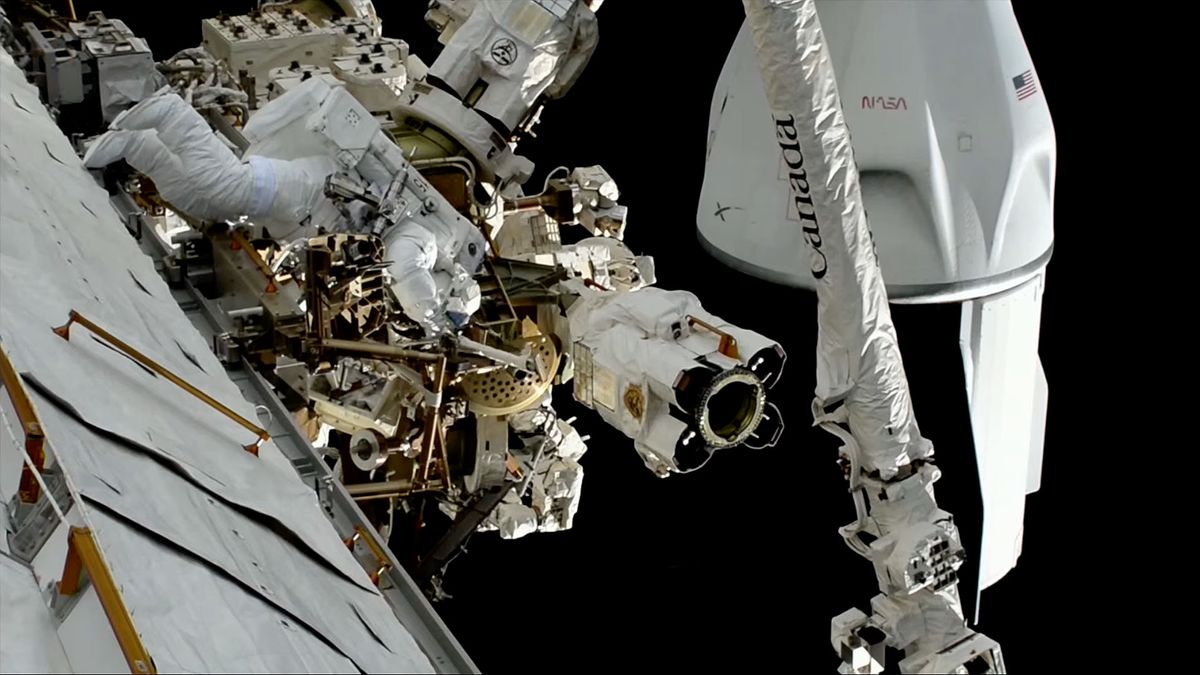
NASA is preparing for its second spacewalk of 2025, scheduled for January 30 at approximately 8:00 a.m. EST (1300 GMT). This event will feature astronauts Suni Williams and Butch Wilmore as they conduct extravehicular activity (EVA) outside the International Space Station (ISS). A livestream will be available starting at 6:30 a.m. EST (1130 GMT) for viewers interested in the operations.
This EVA marks Williams’ tenth outing and Wilmore’s fifth. The astronauts will engage in a series of tasks over an anticipated 6.5 hours outside the ISS, which will include disconnecting communications equipment and gathering microbial samples from the station’s exterior.
Key objectives for the EVA include the removal of a radio frequency group (RFG) assembly, which is an S-band antenna set to be returned to Earth for refurbishment. Previous attempts during U.S. EVA 86 to detach this component were unsuccessful. For this mission, Williams and Wilmore will utilize a new wrench tool aimed at releasing the compressive force on the RFG’s wedge clamps, a hopeful solution to facilitate its removal.
Williams, designated as EV-1, will inspect the RFG once it is detached, while Wilmore, as EV-2, will secure his spacesuit to the station’s robotic arm to aid in the removal process. Following the disconnection, Wilmore will stow the RFG in the Quest airlock chamber.
Subsequently, the astronauts will divide their tasks; Williams will focus on collecting surface samples, while Wilmore will adjust a spare component for the ISS’s robotic arm. Williams plans to travel along the station’s handrails to group several sample swabs from two vents on the Destiny lab module and other external sites surrounding the airlock, all to test for microbial presence. Meanwhile, Wilmore will make minor adjustments to an elbow joint on an external storage platform to ensure its accessibility for future missions.
Having arrived at the ISS last June on Boeing’s Starliner’s first crewed test flight, Williams and Wilmore were initially expected to return after a 10-day mission. However, technical issues during docking delayed their schedule, leading NASA to send Starliner back uncrewed. In light of these developments, both astronauts were added to the ISS Expedition 72 manifest, becoming members of Crew-9, which launched fewer astronauts than planned.
As part of their ongoing mission, Williams has been appointed station commander, while Wilmore serves as flight engineer. Crew-9 is likely to return to Earth after the arrival of Crew-10, which will lift off on a new Crew Dragon spacecraft that has faced delays, pushing its launch back to late March. As a result, Crew-9’s return is expected in early April, well past their original timeline.
The content above is a summary. For more details, see the source article.