Key Takeaways
- NASA aims to establish a large crewed lunar base near the moon’s south pole by the early 2030s, focusing on scientific exploration.
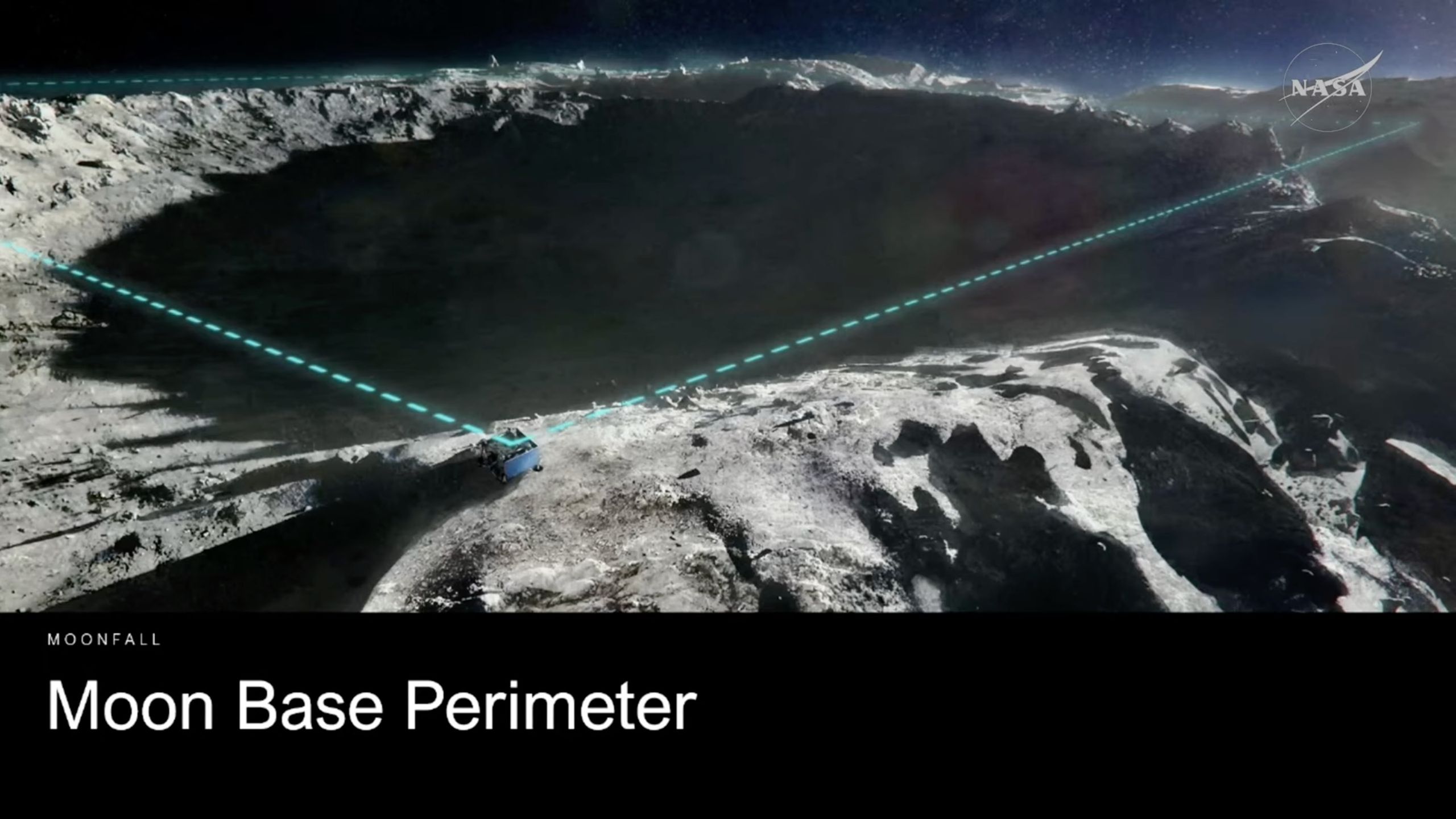
- The initial phase includes deploying MoonFall drones in 2028 to map the terrain and define base parameters.
- NASA has awarded contracts worth $438 million for lunar terrain vehicles to support Artemis missions and facilitate surface exploration.
NASA’s Ambitious Lunar Base Plans
NASA is set to undertake an ambitious project to construct a crewed lunar base as part of its Artemis program over the next decade. The initiative will encompass hundreds of square miles near the moon’s south pole, a region believed to contain significant water ice deposits essential for sustaining human presence.
Carlos García-Galán, manager of NASA’s Moon Base program, highlighted this expansive vision during a recent press conference, emphasizing the need for diverse assets to support a permanent human settlement. Nujoud Merancy, chief architect of the program, pointed out the necessity to consider various factors, such as terrain and sunlight for solar power, when planning the layout of habitats and power systems.
The lunar south pole is still largely uncharted, prompting NASA to adopt a broad approach to exploration. García-Galán stressed the importance of exploring multiple sites to maximize scientific objectives. To assist in this endeavor, NASA plans to deploy MoonFall drones starting in 2028. These small robots will explore the lunar surface, mark potential base locations, and help delineate borders for areas of scientific interest.
In a competitive international landscape, where China also aims to establish a moon base, U.S. officials are keen on asserting their presence. NASA Administrator Jared Isaacman reiterated the importance of being the first to set a precedent for responsible lunar exploration, noting the implications of the Outer Space Treaty, which governs activities in outer space.
Additionally, NASA has recently announced contracts to support the infrastructure needed for the moon base. Firefly Aerospace received a $75 million contract for a lander designed to transport the first batch of MoonFall drones. Moreover, Astrolab and Lunar Outpost were awarded $219 million and $220 million, respectively, for the production of lunar terrain vehicles (LTVs). These LTVs are equipped for autonomous operations and will be used by Artemis astronauts to explore the lunar landscape. They aim to be operational before the Artemis 4 mission in late 2028.
The construction of the lunar base will be tackled in three phases. The first phase, lasting until 2029, will focus on data gathering and securing access to the lunar surface. The second phase will establish the initial operating capability by 2032, while the final phase aims for a semi-permanent human presence beyond that.
Isaacman emphasized the historic significance of the moon base, stating it will be humanity’s first outpost on another celestial body. Each mission—both crewed and uncrewed—serves as a crucial learning opportunity as NASA navigates the complexities of living and working on the moon.
Thus far, NASA has launched two Artemis missions: Artemis 1, which successfully completed an uncrewed moon orbit in late 2022, and Artemis 2, which carried four astronauts around the moon last month, further paving the way for future exploration and lunar habitation.
The content above is a summary. For more details, see the source article.