Key Takeaways
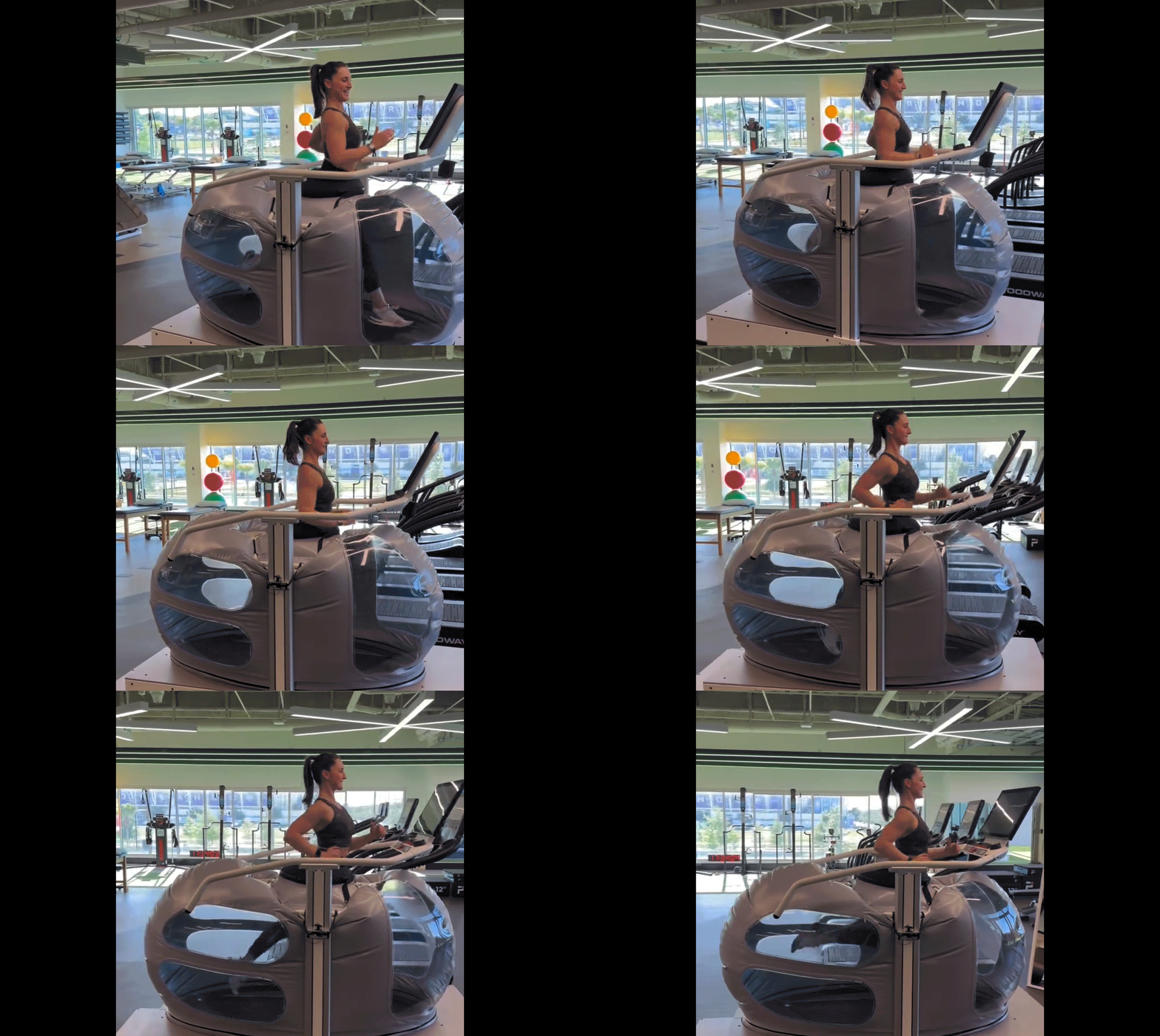
- The antigravity treadmill, originally developed at NASA, uses air pressure to reduce user weight during exercise.
- Boost Treadmills has made this technology more accessible by significantly lowering its cost for home users.
- The Boost 2 model, launched in 2022, features improved performance and has seen a surge in sales among individual users.
Evolution of Antigravity Technology
The antigravity treadmill, known for its applications in both space and rehabilitation, was developed by Robert Whalen during his tenure at NASA’s Ames Research Center in the 1980s and 1990s. Whalen created a device that helped astronauts simulate gravity while exercising in space, initially by applying pressure to their upper bodies. This concept evolved when Whalen devised a prototype in his garage that utilized a pressurized bubble to create lift from the waist down, which he believed could aid in patient rehabilitation.
Years later, Whalen’s son revived the idea, leading to the creation of the AlterG treadmill that employs air pressure to alleviate the user’s weight. This innovation gained traction in professional sports teams and rehabilitation centers, prompting Whalen and his partners to establish Boost Treadmills in 2017. Their mission was to make this advanced treadmill technology affordable for home use.
Based in Palo Alto, California, Boost has successfully reduced the price of the antigravity treadmill by nearly two-thirds. In 2022, the company launched the Boost 2 model, which is noted for being quieter and more energy-efficient than its predecessor, as well as incorporating various performance enhancements. This new model has resulted in a substantial increase in sales to individual users, advancing Boost’s goal of making this technology commonplace in homes.
The ability to offload weight during exercise presents clear advantages for patients whose injuries prevent them from walking or running normally. However, Boost underscores that the antigravity treadmill also offers significant benefits for individuals with long-term mobility issues, including those suffering from obesity or arthritis.
The antigravity treadmill exemplifies how technological advancements inspired by NASA can offer substantial benefits for everyday life on Earth. Its evolution highlights the ongoing intersection of space exploration and healthcare, aiming to enhance quality of life through innovative solutions.
The content above is a summary. For more details, see the source article.