Key Takeaways
- The NavCube3-mini has been delivered for integration into Intuitive Machines’ Altus-1 lunar relay satellite, enhancing lunar communications and navigation.
- This compact navigation receiver, weighing 3.5 pounds, operates on low power while delivering precise location data beyond Earth orbit.
- The development supports NASA’s plans for a sustained human presence on the Moon, aiding future lunar exploration missions, especially in challenging regions.
Advancements in Lunar Navigation
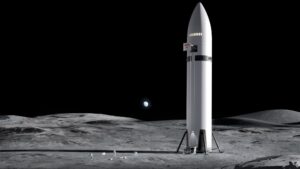
NASA has delivered the NavCube3-mini payload to Intuitive Machines on July 13, marking a significant advancement in lunar communications and navigation. This small yet powerful navigation receiver is set to be integrated into Altus-1, the company’s first lunar relay satellite, aimed at supporting astronauts and rovers through reliable communication and navigation services at NASA’s future Moon Base.
Measuring about half the size of a shoebox and weighing just 3.5 pounds, NavCube3-mini is designed to utilize signals from Earth-based GPS and Galileo Global Navigation Satellite Systems (GNSS) at lunar distances. Its low power requirement—under 20 watts, similar to a laptop—allows it to accurately determine a spacecraft’s position even well beyond Earth orbit. The technology developed at NASA’s Goddard Space Flight Center serves as the backbone for extending GPS navigation to unprecedented distances.
Altus-1, which will host the NavCube3-mini, is the first in a series of lunar relay satellites planned as part of the Near Space Network Services contract with NASA. These satellites will enhance communication and navigation in crucial lunar regions, including the South Pole, where successful direct communication with Earth has been historically challenging. By improving coverage and functionality, the network aligns with NASA’s vision for establishing a sustainable human presence on the Moon.
Before its delivery, the NavCube3-mini underwent rigorous environmental and performance testing at NASA Goddard. This included vibration tests to replicate launch conditions, thermal vacuum tests to simulate space environments, and electromagnetic compatibility checks to ensure smooth operation alongside other spacecraft systems. Throughout the testing process, performance was evaluated against high-fidelity simulations, confirming that the payload meets the necessary functionality and reliability standards required for spaceflight.
The NavCube3-mini’s role aboard Altus-1 is crucial as it demonstrates the viability of GNSS-based navigation in the lunar environment and provides critical performance data for future lunar navigation infrastructure. It is part of NASA’s broader strategy to create comprehensive communication and navigation services that integrate both commercial and NASA networks, targeting a diverse lunar ecosystem that includes orbiters, landers, rovers, and astronauts.
The successful delivery of NavCube3-mini signifies a pivotal step in developing the infrastructure essential for long-term lunar exploration. Collaborating with commercial entities like Intuitive Machines, NASA aims to build a more connected and capable lunar environment. As lunar activities intensify, these advancements will facilitate safer, more efficient, and autonomous operations for future missions to the Moon.
The content above is a summary. For more details, see the source article.