Key Takeaways
- NASA’s launch facilities at Kennedy Space Center and Wallops Flight Facility are nearing capacity amid increasing demand from both NASA’s Artemis missions and commercial partners.
- Upgrades needed to support the expanding launch schedule are estimated to cost over $1 billion, with only $250 million currently allocated.
- The report recommends prioritizing improvements to transportation networks and utility systems while exploring alternative funding sources for infrastructure upgrades.
Insufficient Infrastructure for Growing Launch Demand
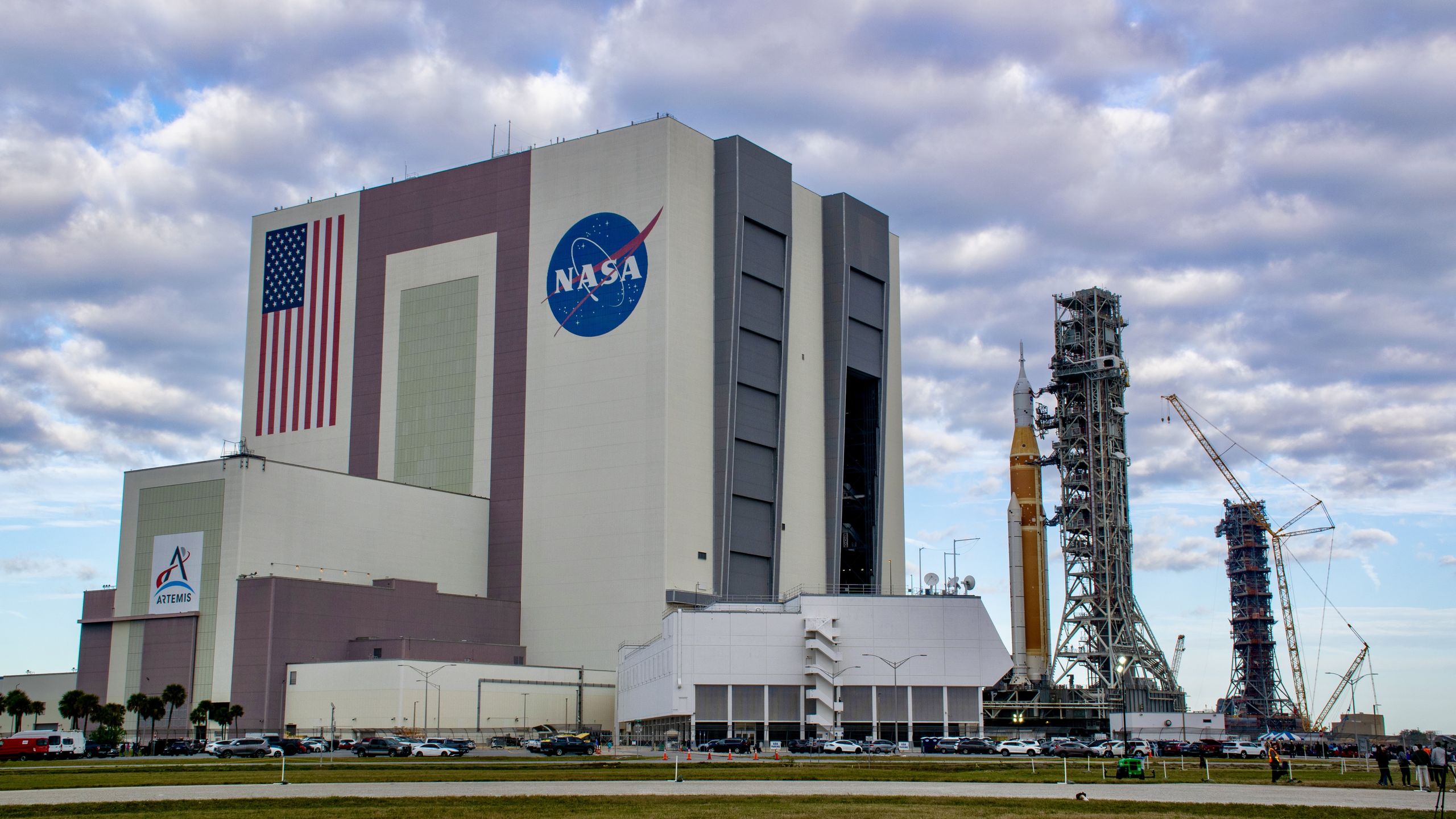
NASA is encountering challenges with its infrastructure as it plans to return astronauts to the moon and enhance a burgeoning commercial space industry. A new report from NASA’s Office of Inspector General highlights that launch facilities at the Kennedy Space Center (KSC) in Florida and Wallops Flight Facility in Virginia are on the brink of capacity due to increased launch demands.
The report, released on June 22, indicates that as both NASA and private companies like SpaceX and Blue Origin ramp up their launch activities, the existing support infrastructure—including roads, power, and fuel pipelines— is being significantly stretched. Current projections show that by 2028-2029, KSC and Wallops will begin to operate near their capacity limits. While NASA has initiated steps to address these concerns, fulfilling all required upgrades is estimated to cost over $1 billion, leaving a gap of $750 million based on last year’s funding provisions.
The evaluation includes launch facilities at KSC and Cape Canaveral Space Force Station (CCSFS), where NASA-supported launches rose dramatically from 31 in 2020 to an expected 109 in 2025. Conversely, Wallops, which typically sees fewer missions, experienced a staggering percentage increase from three launches in 2020 to 17 by 2025—a 467% rise. Projections indicate that traffic at both locations could increase by an additional 150% by 2030.
Despite identifying significant infrastructure challenges at both sites, recent enhancements at Wallops have alleviated some issues, allowing it to handle small and medium-lift vehicles. The major launch pads in question include LC-39A and LC-39B at KSC, used by SpaceX and NASA respectively, and CCSFS’s SLC-36, which is designated for Blue Origin’s New Glenn rocket.
SpaceX is increasing its launch frequency, with plans for a higher number of Starship launches once the vehicle becomes operational. This heightened activity necessitates a robust infrastructure support system to meet launch demands. Starship’s missions in conjunction with NASA’s Artemis program rely on significant logistical coordination and refueling capabilities.
The report further identifies that the existing infrastructure, much of which was established in the 1960s, cannot efficiently handle the current and projected loads. Shared facilities, like the electrical grid and road networks, face heightened strain as they were not designed for the weight and frequency of present-day heavy-lift operations. For example, a past mission had to navigate scheduling issues due to these shared resources being insufficient.
The upcoming Artemis missions will necessitate synchronized launches of SLS, New Glenn, and multiple Starships within condensed timeframes, raising concerns about the ability to support these back-to-back operations. The report warns that current systems may not adequately provide necessary resources, such as the gaseous nitrogen required to support simultaneous launches from KSC and CCSFS.
To mitigate these issues, the report recommends several actions for NASA, including assessing and creating strategies to address road degradation, prioritizing available funds for infrastructure maintenance, and investigating new funding mechanisms to support necessary upgrades.
With an ambitious goal to renew infrastructure on a 66-year cycle, NASA currently faces a timeline exceeding 260 years based on existing budgets, underscoring the urgency of addressing the identified challenges to ensure a successful future for U.S. space missions.
The content above is a summary. For more details, see the source article.