Key Takeaways
- The Artemis II mission successfully returned after surpassing the Apollo 13 distance record, reaching 406,771 kilometres from Earth.
- Astronauts observed diverse lunar surface colors and recorded valuable data for future missions.
- The upcoming Artemis III mission, planned for 2027, will focus on testing the Orion capsule’s docking capability without lunar landing.
Historic Mission Overview
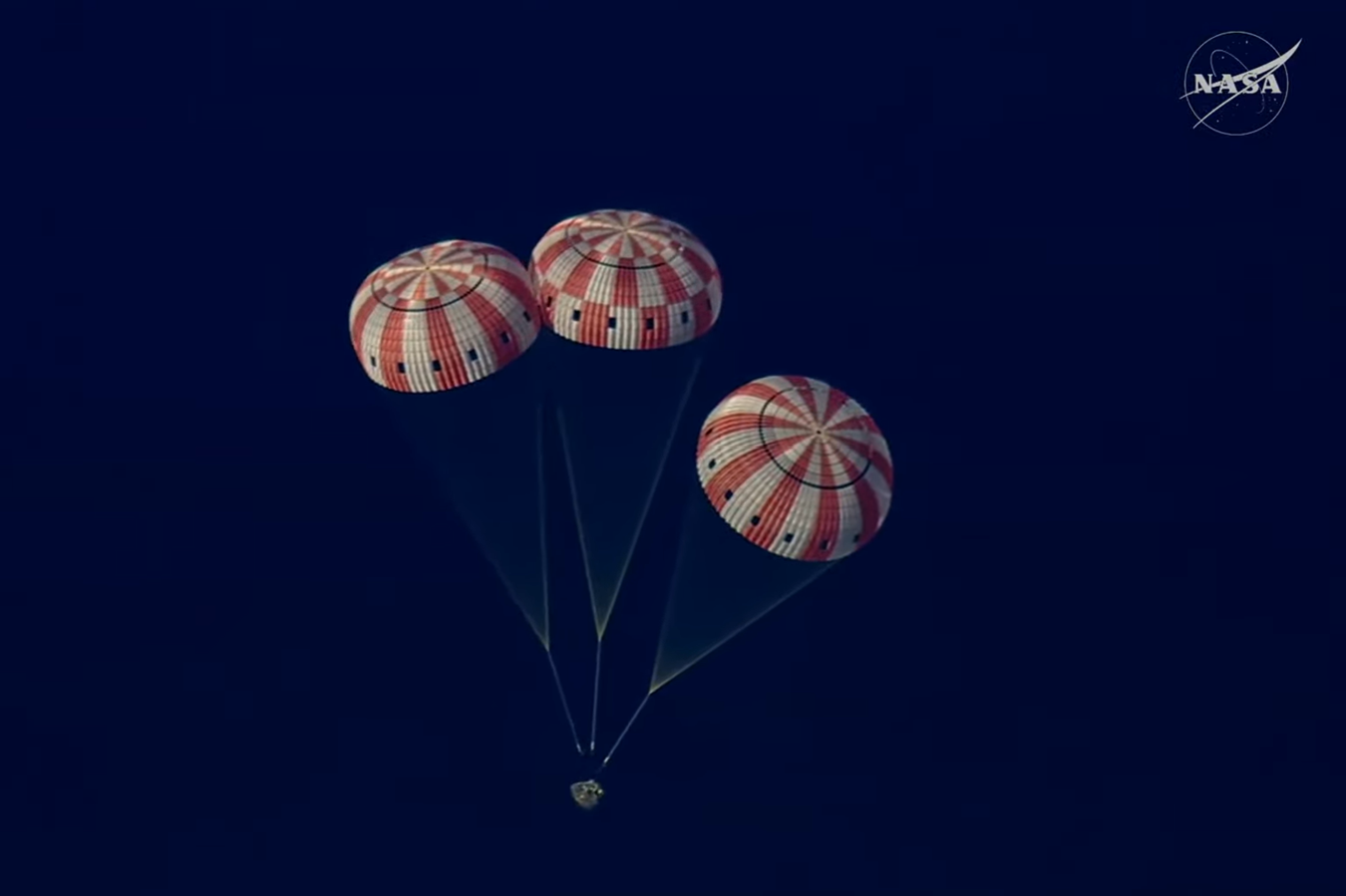
The Artemis II mission has successfully concluded, marking the first human visit to the moon since 1972. Launched from Cape Canaveral, Florida, on April 1, the mission culminated with a splashdown off California’s coast on April 10. Mission commander Reid Wiseman reported that the crew, which included NASA astronauts Victor Glover, Christina Koch, and Canadian astronaut Jeremy Hansen, felt in good spirits after their return.
Artemis II served primarily as a test flight for future lunar missions, achieving notable science goals along the way. The Orion capsule ventured farther from Earth than any previous astronaut mission, reaching a maximum distance of 406,771 kilometres—a new record, surpassing the Apollo 13 crew’s journey.
During the mission, astronauts conducted close-up observations of the moon, noting that despite its grey appearance from Earth, the lunar surface displayed various hues, including green, brown, and orange. These observations are critical for understanding the moon’s geological history, especially on its far side. When Earth and the moon were simultaneously visible, sunlight reflected off Earth in a phenomenon called earthshine, which obscured the color variations on the moon. Koch described the moon losing its vibrant colors, comparing it to a “sponge of light.”
In addition to visual documentation, the crew captured images and recorded terrain descriptions to assist future missions in maximizing scientific exploration. NASA’s Artemis science lead, Kelsey Young, emphasized the importance of these nuanced observations for understanding the solar system’s evolution and the moon’s role as a witness plate for geological history.
The astronauts also experienced a unique solar eclipse behind the moon, which visually contrasted the sizes of the sun and moon. Wiseman recalled the team’s emotional reaction as they gazed at the eclipse, followed by an immediate search for meteorite impact flashes—brief illuminations caused by meteorites hitting the lunar surface. This observation is of significance for assessing future mission safety.
Looking ahead, the next mission in the Artemis program, Artemis III, is set for 2027 and will focus on testing the Orion capsule’s docking capabilities without landing on the moon. The Artemis IV mission, slated for 2028, aims to return humans to the lunar surface. These missions are part of NASA’s vision to establish a sustained human presence on the moon, with future aspirations of making lunar travel as routine as trips to the International Space Station.
NASA’s recent strategic shift from a planned lunar orbit space station to a surface base aligns with similar goals from China’s space program. The ambition is to envision lunar travel becoming commonplace within a few decades, reminiscent of air travel today. The captivating images and data collected from Artemis II have rekindled public interest in lunar exploration, shaping perceptions of our celestial neighbor.
The content above is a summary. For more details, see the source article.