Key Takeaways
- The Deep Space Station 23 (DSS-23) reflector dish framework was installed on December 18, 2024.
- Once operational in 2026, DSS-23 will enhance NASA’s deep space communications capabilities significantly.
- Over 100 missions, including Artemis and ISS support, rely on the Deep Space Network for tracking and data transfer.
Enhancing Deep Space Communications
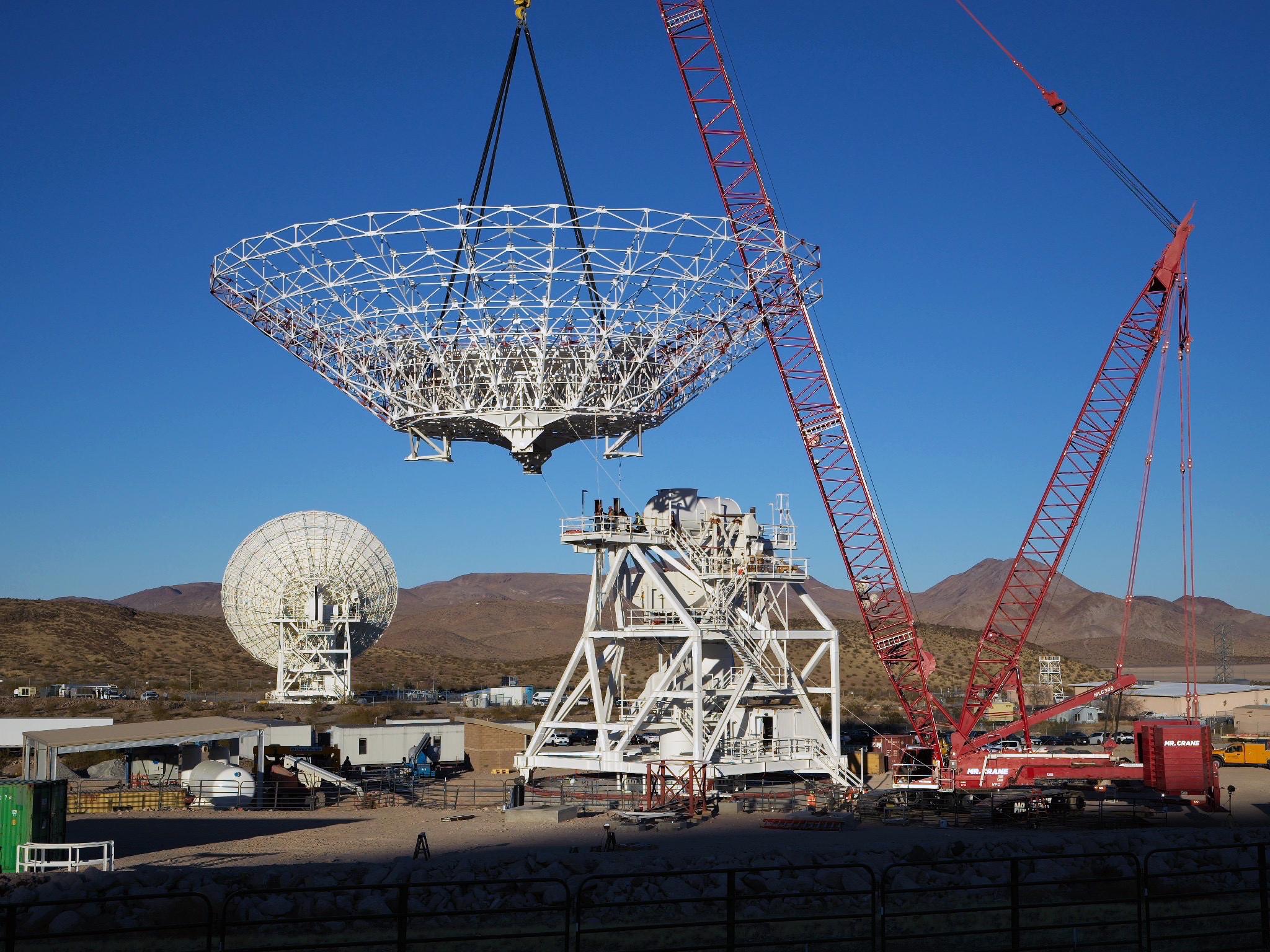
On December 18, 2024, construction at the Goldstone Space Communications Complex in California marked a significant milestone with the installation of the 112-foot-wide (34-meter) steel framework for the Deep Space Station 23 (DSS-23) reflector dish. This facility is part of NASA’s efforts to enhance its deep space communication capabilities. Once DSS-23 becomes operational in 2026, it will be one of six new beam waveguide antennas added to the Deep Space Network (DSN), which is crucial for the ongoing support of various space missions.
The DSN provides critical communication services that allow NASA and other space agencies to track missions, send commands to spacecraft, and receive invaluable scientific data from distant targets. This network supports a diverse range of missions, with more than 100 currently relying on its capabilities. These include not only the International Space Station astronauts but also upcoming Artemis missions that aim to further lunar exploration and scientific discovery throughout our solar system and beyond.
DSS-23’s deployment is expected to significantly boost the DSN’s capacity, thus ensuring better connectivity and support for deep space missions. This upgrade is essential as NASA continues to expand its exploration efforts, which have evolved from low-Earth orbit activities to ambitious ventures aiming for the Moon, Mars, and potentially beyond.
The construction of DSS-23 is part of a larger trend within NASA to enhance communication infrastructure. As missions become more complex and the distances traveled by spacecraft grow, the necessity for robust and reliable communication systems becomes paramount. The new reflector dishes are designed to handle the increasing volume of data being transferred from deep space missions, ensuring that scientists receive the information they need without interruption.
In addition to facilitating communication with existing missions, DSS-23 will play a pivotal role in future explorations. As the Artemis program plans to return humans to the Moon and eventually send astronauts to Mars, a dependable communication network is vital for mission success. The installation of DSS-23 is not just a technical upgrade; it is a commitment to supporting future generations of space exploration.
For those interested in the construction progress, a time-lapse video of the installation on December 18 is available, showcasing the intricate operations involved in deploying such a critical piece of equipment.
Overall, the completion of DSS-23 represents an exciting advancement in space communication infrastructure. By expanding the capabilities of the Deep Space Network, NASA reinforces its dedication to exploring the final frontier and maintaining a strong connection with its myriad of ongoing and future missions.
The content above is a summary. For more details, see the source article.