Key Takeaways
- NASA tests advanced rotor designs for future Mars helicopters, achieving speeds exceeding Mach 1.
- The testing enhances lift capabilities, allowing for heavier payloads and longer-range missions.
- The next-generation helicopters aim to carry out scientific missions beyond Ingenuity’s exploratory flights.
Advancements in Mars Helicopter Technology
NASA is pushing the boundaries of aerial exploration on Mars by developing a new generation of helicopters designed to operate in the planet’s thin atmosphere. Engineers at NASA’s Jet Propulsion Laboratory (JPL) in Southern California recently conducted tests on rotor designs that could set the stage for these innovative vehicles. A series of 137 tests were performed in a specialized chamber that simulates Mars’ low-density carbon dioxide atmosphere, allowing rotor blades to be spun at supersonic speeds.
The data collected from these tests suggests a potential 30% increase in lift capability, enabling future Mars helicopters to transport heavier scientific instruments and larger batteries over extended distances. This improvement is crucial for expanding the scope of Mars exploration missions.
The first-ever flight of a helicopter on Mars occurred on April 19, 2021, when NASA’s Ingenuity successfully demonstrated the feasibility of aerial flight in Martian conditions. Over nearly three years, Ingenuity completed an impressive 72 flights, significantly exceeding mission objectives. While Ingenuity was primarily a technology demonstrator, upcoming Mars helicopters are being specifically designed for scientific tasks.
Al Chen, the Mars Exploration Program manager at JPL, highlighted the aspirations for the next-generation aircraft, stating, “NASA had a great run with the Ingenuity Mars Helicopter, but we are asking these next-generation aircraft to do even more at the Red Planet.”
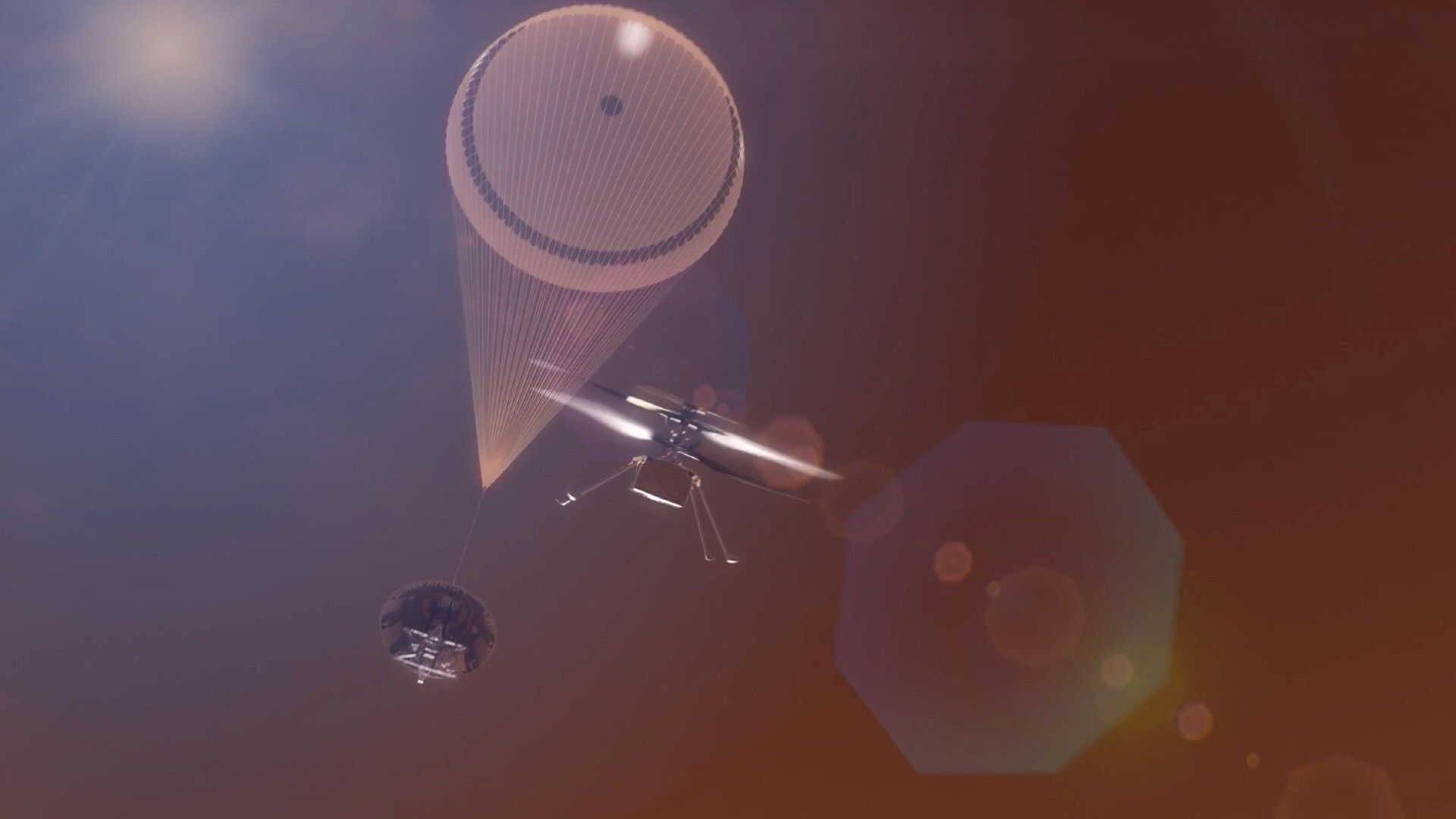
Engineers at JPL conducted tests using both three-bladed and two-bladed rotor designs. The three-bladed rotor was subjected to intense wind simulations and spun to speeds of Mach 1.08 without any damage, marking a significant milestone for the design. Meanwhile, the two-bladed rotor for a mission known as SkyFall, which aims to send three helicopters to Mars by December 2028, also achieved near-supersonic speeds while requiring fewer rotations per minute. This efficiency in design will be instrumental for payload capacity in future missions.
Shannah Withrow-Maser, an aerodynamicist at NASA’s Ames Research Center, stated, “The successful testing of these rotors was a major step toward proving the feasibility of flight in more demanding environments.” This progress points to a new class of Mars exploration vehicles that could navigate terrains challenging for rovers and stay closer to areas of interest than orbiters.
As testing continues and data is analyzed, it becomes clear that NASA is not only advancing helicopter technology but also redefining how scientific exploration could unfold on Mars. The objective is to enhance the capabilities of aerial vehicles to unlock new discoveries and deliver valuable insights into the Martian environment. With the successful development and testing of these next-generation helicopters, NASA is taking significant steps toward more ambitious missions on the Red Planet.
The content above is a summary. For more details, see the source article.