Key Takeaways
- NASA’s IM-2 mission launched on Feb. 26, aiming to enhance lunar exploration and astronaut presence.
- The mission includes technologies for resource extraction, precise measurements, and advanced communication systems.
- Lunar Trailblazer will map water distribution on the Moon, furthering understanding of its future exploration potential.
Navigating Lunar Frontiers
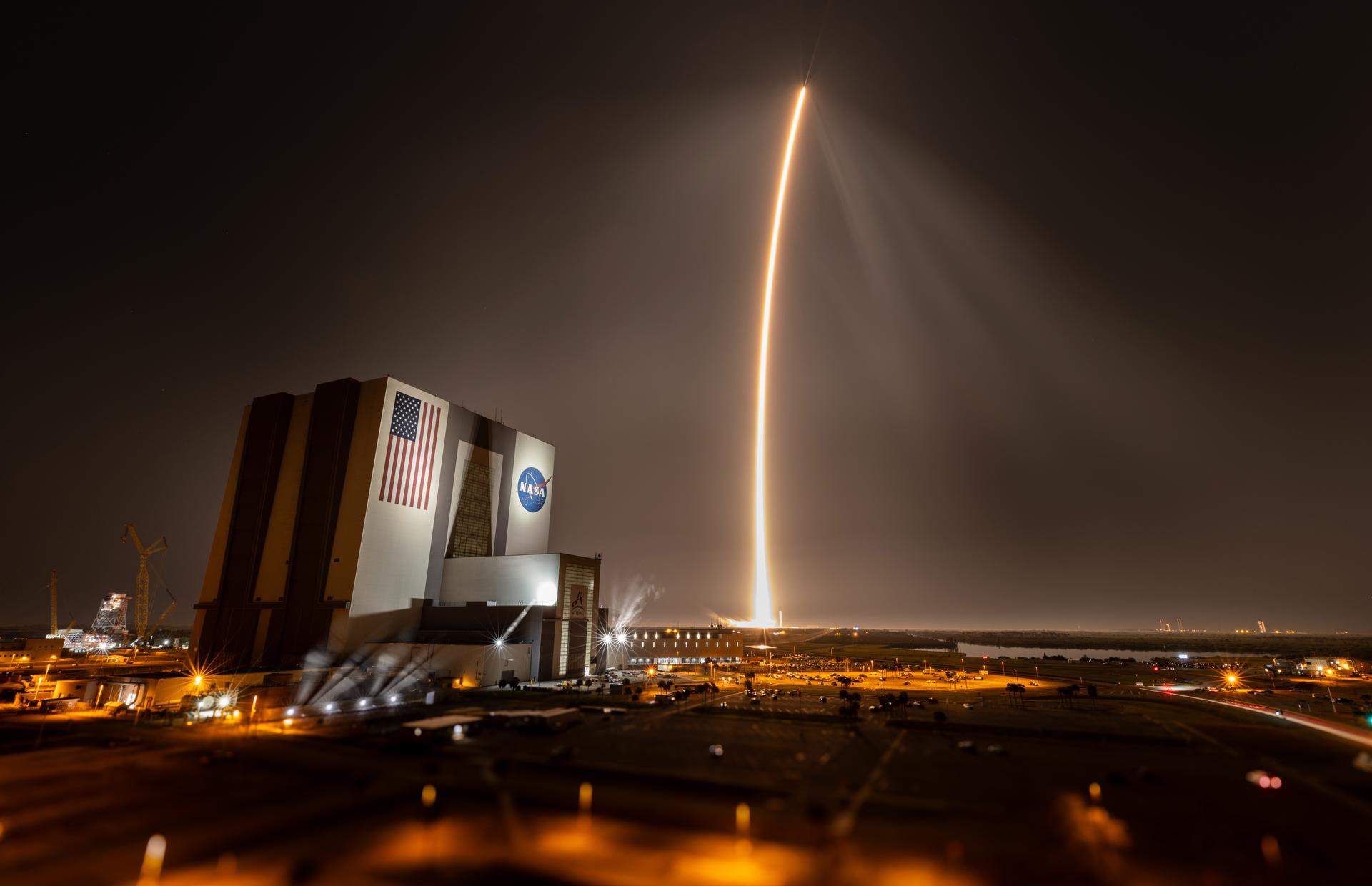
NASA is advancing its lunar exploration efforts with the IM-2 mission, which includes a range of scientific and technological demonstrations aimed at enhancing our understanding of the Moon and supporting future human activity there. The mission launched on February 26 aboard a SpaceX Falcon 9 rocket from Kennedy Space Center, Florida, and is set to land on March 6 at Mons Mouton, located near the Moon’s South Pole.
The IM-2 mission is part of NASA’s Commercial Lunar Payload Services (CLPS) initiative, designed to collaborate with private industry for the development of technologies that facilitate lunar exploration. Janet Petro, NASA’s acting Administrator, emphasized that these missions are foundational for future explorers who aim to establish a sustainable human presence on the Moon and beyond. By leveraging partnerships with American industry, NASA is not only fostering innovation but also solidifying its leadership in space exploration.
Once on the lunar surface, the IM-2 mission will carry out research focused on detecting volatiles in the lunar soil, a critical step in understanding potential resources on the Moon. Additionally, the lander will feature a Laser Retroreflector Array (LRA), which will provide a reliable reference point for future missions, enhancing navigation and positioning. Various technological instruments aboard the lander aim to establish a robust surface communication system and operate a propulsive drone designed to hop across the terrain.
Accompanying the IM-2 mission is NASA’s Lunar Trailblazer spacecraft, which will map the distribution of water on the Moon. This two-year mission is intended to gather data on the forms of water present and how they change over time. Such observations will not only increase knowledge of lunar water cycles but will also assist future missions in identifying advantageous locations for human and robotic endeavors on the Moon.
The key instruments on the IM-2 mission include:
1. **Polar Resources Ice Mining Experiment-1 (PRIME-1)**: This experiment will explore the Moon’s subsurface to locate lunar resources. It involves two essential tools: a drilling apparatus for soil sample collection, and a mass spectrometer for analyzing gas composition from these samples. The data obtained will be vital in understanding the Moon’s resources and surface capabilities.
2. **Laser Retroreflector Array (LRA)**: The LRA features eight retroreflectors for precise laser ranging between the lander and orbiting spacecraft. This passive optical device will act as a permanent location marker, contributing to long-term lunar navigation.
3. **Micro Nova Hopper**: Launched as part of NASA’s Tipping Point initiative, this autonomous propulsive drone will hop across the lunar surface for high-resolution surveys. Specifically designed to explore permanently shadowed regions, it aims to uncover critical data for sustaining human exploration on the Moon.
4. **Nokia Lunar Surface Communications System (LSCS)**: Also developed under the Tipping Point initiative, this 4G/LTE network aims to foster cellular communication capabilities for future lunar infrastructures. It will facilitate the transmission of HD video and telemetry data between the lander, a Lunar Outpost rover, and the Micro Nova hopper.
In summary, the IM-2 mission encapsulates NASA’s ongoing commitment to pioneering lunar research and technology development. By enhancing our understanding of the Moon’s resources and establishing necessary communications and surveying tools, the mission lays the groundwork for sustainable human exploration beyond Earth.
The content above is a summary. For more details, see the source article.