


Key Takeaways
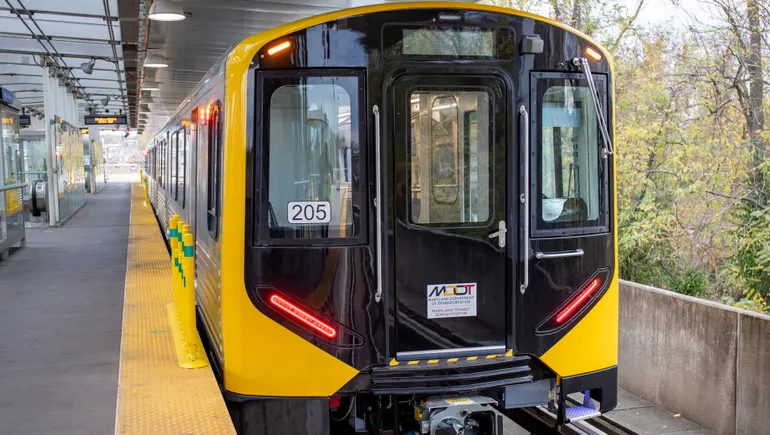
- Six out of 78 new stainless steel Hitachi rail cars began service in Baltimore on January 8, replacing outdated models.
- The modern cars offer faster boarding, more space for bicycles, and enhanced lighting features.
- The $400 million project, funded by federal grants, aims to modernize Baltimore’s transportation network and improve service reliability.
New Rail Cars Enhance Baltimore’s Metro System
The Baltimore metro subway system has launched its first six of 78 new stainless steel rail cars, marking a significant upgrade from the outdated rolling stock dating back to 1983. These modern vehicles started service on January 8 and are part of a broader initiative expected to see full delivery by 2027.
Equipped with wider doors for quicker boarding, increased bicycle storage, and brighter lighting, the Hitachi rail cars aim to improve the overall passenger experience significantly. Additionally, a new wireless communications-based train control and signaling system enhances the reliability and efficiency of the train operations.
Baltimore’s subway line has been operational for over 40 years, stretching 15.5 miles from downtown to Owings Mills, Maryland. Recent data indicates that monthly ridership fluctuated between 350,000 and over 500,000, demonstrating the system’s importance to local commuters. In conjunction with the subway, the Maryland Transit Administration manages an extensive network that includes local and commuter buses, light rail, commuter rail, and a paratransit system.
Maryland Department of Transportation Acting Secretary Kathryn Thomson emphasized the significance of the new rail cars and control system as a long-term investment in a modern, reliable, and safe transport network. This was echoed by Giampaolo Nuonno, Hitachi’s general manager for North America, who noted that these trains represent substantial advancements in service reliability, efficiency, and passenger experience.
Hitachi is fulfilling the contract at its $100 million facility in Hagerstown, Maryland, which is capable of producing up to 20 rail cars per month and will provide employment for 460 individuals at full operational capacity.
The $400 million investment to upgrade rail vehicles is primarily supported by federal grants and is seen as crucial for bolstering transportation efficiency in the Baltimore region. A report issued by the Central Maryland Transportation Alliance highlights existing challenges, stating that public transportation often lacks reliability and fails to effectively connect residents to vital employment hubs. This investment aims to address those shortcomings and create a more dependable transit system for the community.
The content above is a summary. For more details, see the source article.









