Key Takeaways
- By mid-July 2026, nearly 850 wildfires were active across Canada, with over 180 in Ontario.
- Smoke from the Ontario fires significantly impacted air quality, particularly in Toronto, contributing to health risks amid a heat wave.
- As of July 14, 2026, wildfires have burned 1.9 million hectares in Canada, remaining below totals from the extreme fire years of 2023 and 2025.
Fire Season in Canada Intensifies
After a sluggish start to Canada’s 2026 fire season, activity increased by late June due to dry and warm weather, aligning closer to the 25-year average. By mid-July, almost 850 wildfires were reported nationwide, according to the Canadian Interagency Forest Fire Centre, with Ontario experiencing the highest concentration of over 180 active fires.
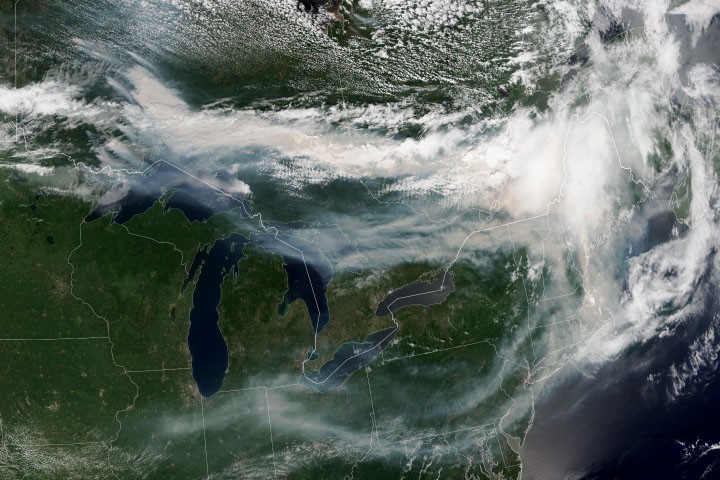
On July 14, images captured by NOAA-21 displayed smoke rising from the Ontario wildfires. The smoke spread primarily southeast, affecting the southern regions of Ontario, along with parts of Quebec and the northeastern United States, causing ominous sky colors and making the sun appear orange.
The smoke’s effects on air quality varied significantly with altitude. In regions where smoke lingered higher in the atmosphere, air quality remained satisfactory. However, in areas where the smoke settled closer to the ground, conditions worsened significantly. Toronto, for example, reported unhealthy air quality levels as per AirNow data. Concurrently, southern Ontario was contending with a heat wave, which intensified the risks to public health.
The primary source of smoke was from wildfires in Northwestern Ontario, where eight fires expanded dramatically on July 13 and 14. This escalation prompted evacuation orders for several nearby communities.
As of July 14, 2026, Canada’s wildfires have collectively burned 1.9 million hectares (approximately 4.7 million acres) since the onset of the fire season, which remains considerably lower than figures recorded during the severe fire years of 2023 and 2025. Experts continue to monitor seasonal fire predictions for Canada, the United States, and Mexico to assess potential risks for the remainder of the season through July, August, and September.
The content above is a summary. For more details, see the source article.